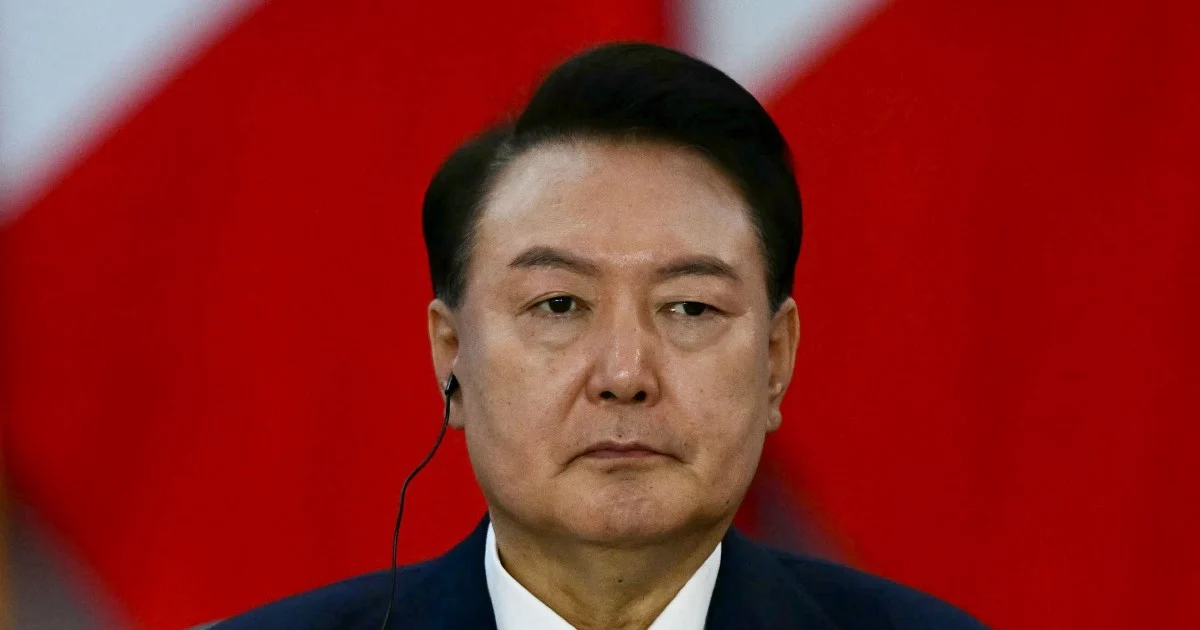
South Korea's highest court faces a defining moment as it prepares to deliver a landmark verdict on Thursday regarding former president Yoon Suk Yeol and the sweeping allegations surrounding his abrupt martial law declaration. The Constitutional Court's decision represents one of the most consequential rulings in the nation's recent judicial history, with ramifications that will reverberate through South Korean politics for years to come.
The case centres on Yoon Suk Yeol's decree imposing martial law, an extraordinary measure that plunged the country into political turmoil and triggered widespread chaos across government institutions. The alleged criminal conduct extends beyond the initial declaration itself to encompass the turbulent period that followed, during which the military and security forces implemented the controversial measure. For Malaysian observers, this represents a cautionary tale about the concentration of executive power and the fragility of democratic institutions under pressure.
Yoon's administration has repeatedly denied any wrongdoing, maintaining that the martial law declaration was a legitimate exercise of presidential authority undertaken in response to perceived threats. His legal team has constructed arguments around the constitutionality of the measure and the specific circumstances that prompted such drastic action. However, prosecutors and opposition figures contend that the declaration violated constitutional norms and represented an overreach of presidential powers that undermined democratic governance.
The Constitutional Court's investigation has scrutinised multiple dimensions of the incident, from the decision-making process that preceded the announcement to the implementation protocols that unfolded in real time. Judicial examination has focused on whether proper legal procedures were followed, whether civilian oversight mechanisms functioned as intended, and whether the proportionality of the response matched any genuine emergency. These questions extend beyond Korea's borders, as democratic nations worldwide grapple with balancing executive authority against institutional safeguards.
The timing of the ruling carries significant weight within South Korea's political calendar. The nation continues navigating complex legislative negotiations while confronting divisions that the martial law crisis both revealed and exacerbated. International observers have watched closely as South Korea's institutions respond to this unprecedented challenge to constitutional order. The verdict will test whether the judicial system can operate independently under extraordinary pressure.
For the broader Southeast Asian region, the case offers instructive lessons about institutional resilience. Malaysia and other regional democracies face analogous tensions between executive discretion and constitutional limits during periods of political instability. How Seoul's courts navigate this situation may inform debates about constitutional interpretation and the judiciary's role during crises across the region.
The Constitutional Court must balance competing imperatives: maintaining respect for legitimate presidential authority while simultaneously upholding constitutional boundaries and rule of law. A conviction could establish powerful precedent against executive overreach, though it would also signal that even sitting or recently-departed leaders remain answerable to judicial scrutiny. Conversely, acquittal might be interpreted as tacit approval for similar measures under future circumstances, potentially emboldening future administrations.
Political observers note that the court's composition and decision-making process have themselves become topics of public scrutiny. Questions about judicial independence, potential political pressure, and the legitimacy of the court's mandate inevitably surface during cases of such magnitude. South Korean civil society groups have mobilized across ideological lines, each hoping the outcome aligns with their vision of constitutional governance.
The practical consequences of Thursday's ruling extend throughout South Korean institutions. A conviction could trigger cascading legal proceedings against military and security officials involved in implementing martial law. Administrative and legislative responses may follow, potentially producing reforms to prevent similar episodes. Conversely, an acquittal would require society to process and move beyond the crisis through alternative means.
For international relations, South Korea's handling of this case demonstrates the nation's commitment to constitutional governance despite internal divisions. Strong institutions that hold powerful figures accountable strengthen democratic legitimacy and international standing. Allies like the United States and strategic partners throughout the region will interpret the verdict as indicative of South Korean institutional robustness.
The verdict also carries implications for South Korea's ongoing internal reconciliation. The nation must eventually bridge the political divides that the martial law crisis exposed and amplified. Whether the court's decision facilitates or complicates this process remains uncertain. Public acceptance of the ruling will depend substantially on perceptions of judicial impartiality and procedural fairness.
As Seoul's Constitutional Court prepares to announce its decision, the watchful international community and deeply invested South Korean citizenry anticipate a ruling that will clarify the boundaries of executive power within constitutional democracies. The judgment represents more than a determination of guilt or innocence for one individual; it constitutes a defining statement about the character and strength of South Korean democracy itself.

