South Korea is witnessing the final chapter of a culinary tradition that has endured for centuries, as a landmark ban on the breeding, slaughter and sale of dogs for meat edges ever closer to full implementation in February 2027. The legislation, approved in January 2024 after decades of contentious debate, represents a seismic shift in attitudes towards an industry that has been woven into the country's cultural fabric since at least the Joseon Dynasty. For many South Koreans, the forthcoming prohibition marks not merely a legal change but a profound transformation in how the nation views the animals increasingly kept as companions rather than consumed as food.
The three-year grace period granted to farmers when the law passed has already triggered a mass exodus from the industry. According to South Korea's Ministry of Agriculture, Food and Rural Affairs, more than 80 per cent of the approximately 1,500 known dog meat farms had ceased operations by May 2026, leaving fewer than 300 still functioning. This rapid contraction reflects both the government's generous incentive scheme and shifting social attitudes, particularly among younger South Koreans who view dog consumption with increasing ambivalence. The administration has offered compensation of up to 600,000 won per dog alongside low-interest loans and comprehensive transition support including job retraining and employment counselling—measures designed to ease the economic burden on farming families dependent on this sector.
The reality on the ground tells a story of economic hardship and uncertainty. At Seoul's Gyeongdong Market, one of the few remaining commercial hubs for dog meat distribution, prices have surged dramatically as supply dwindles and demand contracts. Prices have nearly tripled from approximately 20,000 won per kilogram in 2024 to 60,000 won today, yet vendors report that customers continue to evaporate. The market dynamics reveal a sector in terminal decline, where escalating costs fail to offset collapsing customer numbers. Vendors are reluctant to discuss their situation publicly, citing the sensitivity of the topic and the stigma increasingly attached to the trade.
The impact on dog meat restaurants—institutions that have served their communities for generations—is particularly acute. Lee Deok-sung, who has operated a dog meat stew restaurant within sight of Seoul's bustling Dongdaemun Market for 45 years, describes the current summer season as a commercial disaster. The traditional timing of boshintang consumption, concentrated during South Korea's three hottest days of summer known as boknal, has historically provided an annual revenue boost. This year's boknal falls on July 15, July 25 and August 14, marking what may well be the last opportunity for restaurants to capitalise on this seasonal tradition before the ban takes effect. Despite raising prices from 16,000 won to 25,000 won per bowl, Lee struggles to cover daily operating costs and cannot guarantee her survival beyond the next year.
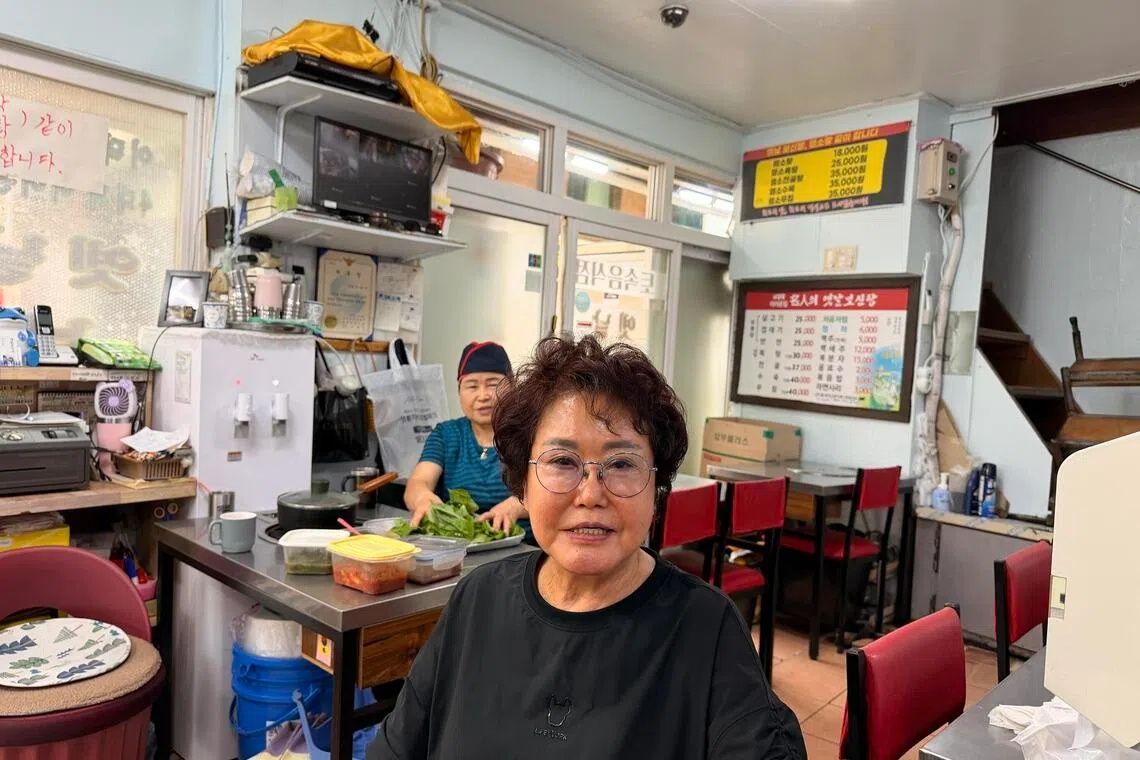
Across a narrow alley from Lee's establishment sits Lee Kyung-ja's boshintang restaurant, another well-established institution with over 40 years of history. The neighbouring locations have long attracted dedicated consumers who view them as authentic culinary destinations. Yet both restaurants face an existential crisis as clientele dwindles and the economic calculus becomes increasingly untenable. Notably, both establishments began experimenting with black goat stew in 2026, attempting to develop an alternative product that mimics dog meat's texture and gamey flavour. However, this strategic pivot has largely failed to gain traction. Existing customers explicitly prefer dog meat, citing superior taste, while the restaurants struggle to build a new customer base from scratch. Lee Kyung-ja, now 75 years old, contemplates retirement if conditions further deteriorate when the ban takes effect, acknowledging the formidable challenge of rebuilding clientele at her advanced age.
Underlying these commercial pressures are deeply ingrained cultural beliefs about dog meat's nutritional and medicinal properties. Traditional Korean medicine practitioners continue recommending dog meat to patients recovering from serious illnesses, suggesting that the practice retains legitimacy within certain health frameworks despite increasing Western influence. Historical evidence suggests dog meat consumption dates back at least to the Joseon Dynasty, with one of the most significant references appearing in the Donguibogam, a 17th-century medical compendium compiled by royal physician Heo Jun. This authoritative text characterised dog meat as a warming food with purported properties to restore energy and invigorate the body—a conceptualisation that has endured across generations. The practice became substantially more prevalent during Japan's colonial occupation from 1910 to 1945 and in the destitute years following the Korean War, when mass poverty and acute food scarcity forced millions to seek affordable protein sources.
The transformation in South Korean society towards animal welfare is exemplified by individuals like musician Annie Ko, whose adoption of a rescued Labrador named DeeJay in 2015 illustrates the changing attitudes driving legislative change. DeeJay, rescued from a confinement farm in Wonju after spending his first three months in cramped conditions alongside his siblings, experienced immediate relief and security upon entering Ko's home. The incident itself became emblematic of broader moral awakening regarding animal treatment. Ko was working with Humane World for Animals, a non-profit organisation that has successfully rescued approximately 2,800 dogs from farms and facilitated their adoption overseas in countries including the United States, Britain and Canada. DeeJay remains the sole survivor from his litter to remain in South Korea, highlighting how rescue operations have fundamentally altered the fate of animals once destined for slaughter.
The ban's implications extend beyond South Korea's borders, positioning the nation as a regional leader in animal welfare standards at a time when attitudes across East Asia remain mixed. While countries like China and Vietnam continue dog meat consumption at considerable scale, South Korea's legislative action represents a significant cultural and political statement. The law reflects generational shifts in urban attitudes, rising influence of animal rights advocacy, and the increasing economic and cultural integration with Western societies where dog consumption carries profound moral opprobrium. For multinational businesses and international observers, South Korea's transition signals an evolving market landscape where traditional practices increasingly encounter regulatory constraints.
The economic transition assistance provided by the government—while substantial by some measures—may ultimately prove insufficient for many affected workers. The restaurant sector, in particular, faces challenges beyond what retraining programmes can address. Customer loyalty built over decades cannot be transferred to alternative products simply through improved preparation techniques. The black goat meat initiative, despite its theoretical promise as a culinary substitute, has failed to resonate emotionally or gastronomically with established consumers. This mismatch between supply-side innovation and demand-side preference illustrates the broader challenge facing the industry: the prohibition addresses moral concerns about animal treatment but leaves significant economic adjustment costs concentrated among those dependent on the trade.
As South Korea approaches February 2027, the trajectory of complete industry elimination appears virtually certain. The combination of declining farm numbers, collapsing restaurant patronage, and skyrocketing prices creates conditions where business viability has become marginal. The final boknal celebrations before the ban's full implementation will likely witness diminished participation, marking the gradual rather than dramatic sunset of a practice embedded in Korean society for centuries. For policy makers elsewhere in Asia considering similar restrictions on animal consumption practices, South Korea's experience demonstrates both the feasibility of legislative prohibition and the real human costs borne by communities dependent on such industries. The coming years will reveal whether transition support adequately cushions workers from the economic disruption or whether the ban's implementation exposes gaps in the government's commitment to affected families.

