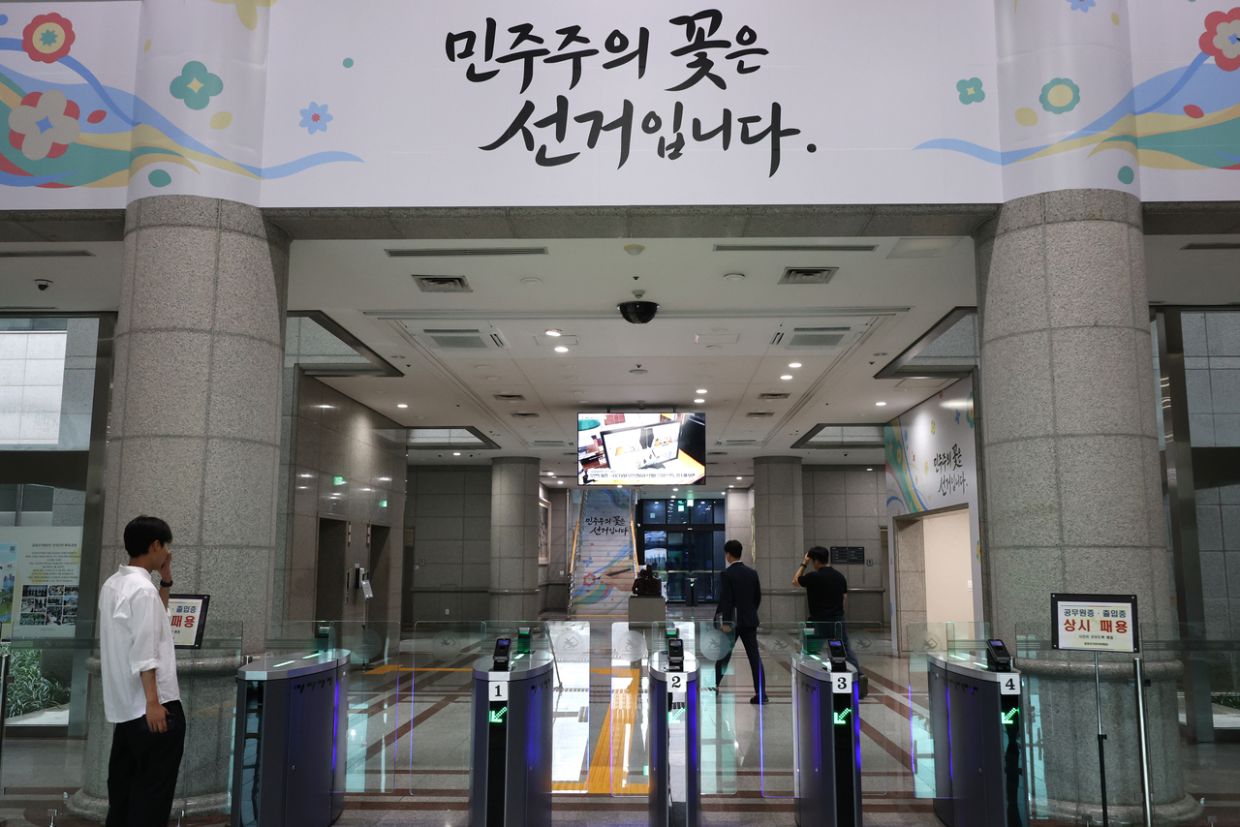
South Korean law enforcement has moved aggressively to investigate the National Election Commission following allegations that officials deliberately altered computer records to conceal voting irregularities. The raid on Thursday targeted the commission's main office in Gwacheon, a suburb south of Seoul, as part of an expanding inquiry into systematic problems that marred the June 3 local elections and undermined public confidence in the electoral process.
The operation represents a significant escalation in scrutiny of South Korea's premier election authority, which is mandated to ensure the integrity and transparency of all national and local polling exercises. The joint prosecution-police task force, which has been coordinating the investigation, secured a search and seizure warrant based on intelligence suggesting that certain commission employees had engaged in data falsification. These officials allegedly modified statistical information stored within the organisation's internal computer systems to obscure administrative errors related to voter registration figures and polling station management.
The core issue triggering the investigation stems from widespread ballot shortages that occurred across multiple polling locations on election day itself. Frustrated voters encountered situations where their designated polling stations had insufficient ballots in stock, forcing many to abandon their attempt to vote. This operational failure directly prevented citizens from exercising their fundamental democratic right, raising serious questions about the commission's preparedness and resource allocation ahead of the elections.
For Malaysian observers, the incident illuminates vulnerabilities that can emerge within electoral institutions regardless of a country's level of institutional development. South Korea, typically regarded as a mature democracy with robust institutional safeguards, nonetheless confronted internal misconduct at a critical agency. The discovery that officials would manipulate digital records to obscure rather than remedy errors suggests an institutional culture problem extending beyond simple administrative incompetence. This underscores how even well-established electoral bodies require constant vigilance and independent oversight.
The investigation's expansion also carries regional implications. Southeast Asian nations, including Malaysia, maintain close observation of democratic governance standards across Northeast Asia. When a sophisticated electoral system experiences data manipulation scandals, it provides cautionary evidence that no democratic infrastructure operates automatically or maintains integrity without active accountability mechanisms. Malaysia's own election management bodies benefit from recognising that institutional credibility demands transparent responses to irregularities rather than concealment.
The decision to involve both prosecution and police authorities indicates the severity with which South Korean officials regard the alleged misconduct. Rather than treating the matter as a purely administrative or internal disciplinary issue, the joint task force approach signals determination to establish whether criminal conduct occurred. This sends a message that election authorities operate under the same legal frameworks as other public institutions and cannot expect preferential treatment when systematic rule-breaking is suspected.
The timing of the raid, occurring days after the elections themselves, reflects how quickly problems surfaced and attracted official attention. Multiple reports from polling stations created a paper trail that investigators could follow, ultimately leading to suspicions about data manipulation. This highlights how modern electoral operations, despite their complexity, leave digital footprints that forensic examination can uncover. However, it also demonstrates that detection mechanisms alone prove insufficient without enforcement mechanisms to pursue those responsible.
The ballot shortage phenomenon raises distinct concerns about operational management within the commission. Whether shortages stemmed from miscalculation during supply chain planning, inadequate inventory systems at individual polling locations, or deliberate resource misallocation requires thorough investigation. The subsequent data manipulation, if confirmed, suggests officials chose concealment over remediation—a choice indicating either panic about potential consequences or a cynical calculation that falsified records would escape scrutiny.
For Malaysian electoral observers, the case illustrates why independent electoral commissions require structural protections beyond mere statutory authority. The National Election Commission possessed formal mandate and resources, yet these alone did not prevent either operational failures or subsequent cover-up attempts. Effective safeguards require redundant oversight, whistleblower protections, regular independent audits, and cultures within institutions that reward transparency over protection of institutional reputation.
The investigation's outcome will determine whether individual employees face criminal prosecution or whether systemic failures requiring institutional reform emerge as the primary concern. Either scenario carries lessons for electoral management worldwide. If prosecutions proceed against specific officials, it demonstrates that personal accountability mechanisms function in South Korea's legal system. If the investigation reveals institutional dysfunction, it suggests the commission requires structural overhaul before public confidence can be fully restored.
The broader context matters for regional democratic practice. Electoral commissions occupy unique positions where technical competence, administrative capacity, and ethical commitment must align perfectly. When any element fails, consequences ripple through the entire democratic process. South Korea's decision to conduct thorough investigation and public prosecution of suspected wrongdoing, rather than managing the matter internally, reflects democratic values that prioritise institutional integrity over reputational protection.
As the investigation proceeds, Malaysian stakeholders should monitor how South Korean authorities balance individual accountability with institutional reform. The case will likely influence regional thinking about best practices in electoral governance, oversight mechanisms, and responses to institutional failures. South Korea's experience demonstrates that even established democracies must remain vigilant against complacency in electoral administration.

