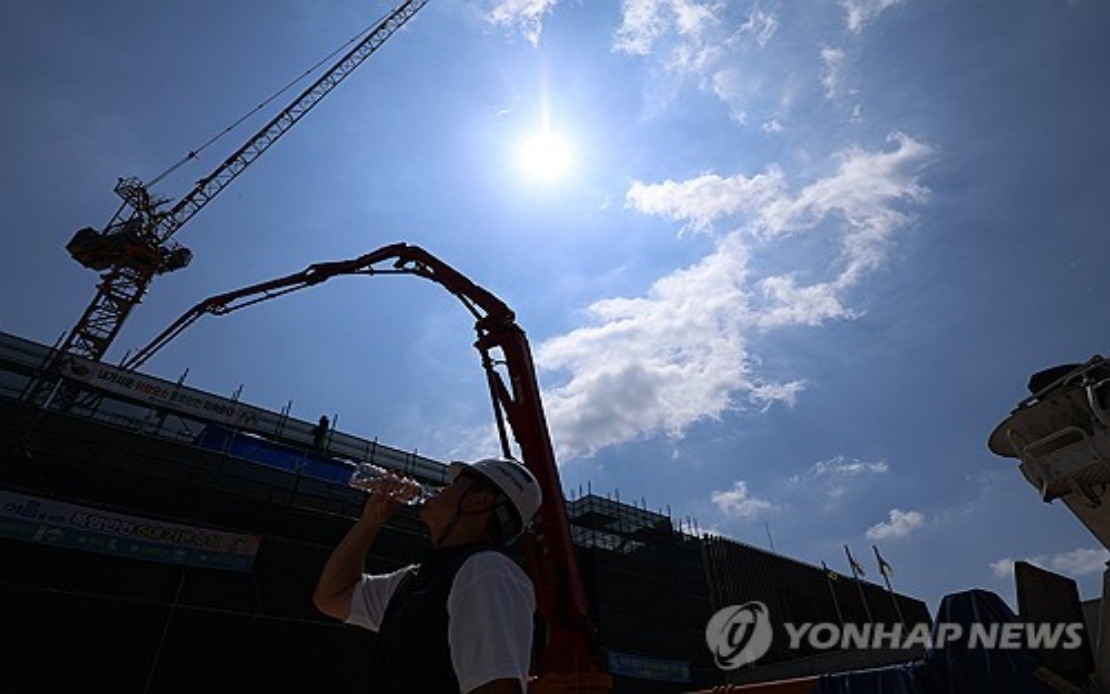
South Korea is facing an unprecedented heat crisis, with authorities escalating their response across the Greater Seoul region as temperatures continue their relentless climb. On Wednesday, the Korea Meteorological Administration expanded its serious heat wave warnings, placing nearly half of the capital region's weather advisory areas under the highest alert level. The expansion brought the total number of affected districts to 20 out of 46 land weather advisory zones in the broader Seoul metropolitan area, underscoring the severity of conditions gripping the nation's most densely populated region.
The fresh round of top-tier warnings took effect at 11 am, extending coverage to southern Incheon and nine cities and districts across Gyeonggi Province. The affected areas include Gwangmyeong, Yeoncheon and Hwaseong, among others, reflecting how the dangerous heat has moved beyond the capital itself to engulf surrounding municipalities. Significantly, the warning system also activated for Cheongyang in South Chungcheong Province, marking a watershed moment in the crisis. This represents the first time such a severe alert has been implemented in the central Chungcheong provinces, indicating that the heat wave's reach now extends well beyond Seoul's immediate orbit into the broader central region.
The trajectory of this heat emergency has accelerated dramatically over recent days. Just 24 hours earlier, on Tuesday, all of Seoul itself was placed under the top-tier warning for the first time since the alert system was introduced on June 1. The speed of deterioration from warning areas to maximum alert status across the entire capital demonstrates how quickly conditions have deteriorated. This is not merely a weather event but a public health emergency requiring coordinated regional response at multiple administrative levels.
The Korea Meteorological Administration's criteria for issuing serious heat wave warnings are stringent, reflecting the genuine danger posed by extreme temperatures. The agency activates the highest alert when apparent temperatures—the combination of actual heat and humidity that determines how hot conditions feel—are forecast to reach 38°C or above. Alternatively, warnings trigger when daily maximum temperatures exceed 39°C in areas where the highest apparent temperature has already reached 35°C or higher for two or more consecutive days. These thresholds are not arbitrary; they represent the point at which human physiology begins to experience acute stress.
The absolute heat records being set across South Korea reveal the extraordinary nature of this weather pattern. The southeastern city of Yangsan recorded a peak temperature of 42.5°C, the highest measurement since modern weather observations began in 1904—more than a century and a quarter of continuous record-keeping. This represents not merely an annual anomaly but a genuine climatic extreme that transcends normal seasonal variation. For Malaysian readers accustomed to tropical heat, it is worth noting that South Korea's recorded temperature and humidity profiles create a different physiological challenge; the combination of extreme heat with lower baseline humidity and a population accustomed to cooler conditions creates acute health risks.
The human cost of this heat wave has become increasingly visible in casualty statistics. The Korea Disease Control and Prevention Agency reported 2,221 heat-related hospitalizations between May 15 and the Monday preceding this report. More gravely, the agency documented 19 fatalities attributable to heat exposure during the same period. These figures underscore that extreme heat is not an inconvenience but a killer, particularly among vulnerable populations including the elderly, those with pre-existing health conditions, and workers exposed to outdoor elements during peak temperature hours.
The expansion of warnings to Chungcheong Province carries broader significance for how South Korea's regional emergency response systems are functioning. The central provinces have historically experienced less intense heat stress than coastal areas, and the first-ever top-tier alert in Cheongyang suggests that the geographic footprint of dangerous conditions has expanded in ways that challenge standard preparedness protocols. Regional authorities in areas not previously accustomed to such extreme alerts may face resource constraints or organizational inexperience in managing population-wide heat emergencies.
For Southeast Asian observers, South Korea's heat crisis offers instructive parallels and contrasts. While Malaysian and other tropical Southeast Asian nations routinely experience high temperatures, the crisis unfolding in Seoul reflects a dangerous climate pattern shift—heat waves that break historical records in temperate regions. The speed and intensity of heat wave development in South Korea suggests that climate change is generating extreme weather phenomena at higher latitudes with accelerating frequency. This has implications for how neighboring countries, including those in Southeast Asia, should calibrate their own heat preparedness strategies.
The outbreak illustrates how even wealthy, technologically advanced nations with sophisticated infrastructure face serious challenges when weather extremes exceed historical experience. South Korea's response—rapid alert escalation, public health coordination through disease control agencies, and meteorological guidance—represents a model of crisis management, yet the ongoing expansion of warnings and rising casualty figures indicate that even coordinated responses struggle against heat's relentless progression. For a region like Southeast Asia, where heat stress is endemic rather than anomalous, understanding how these crisis management frameworks operate under genuine extremes offers valuable lessons in scaling existing heat health programs.

