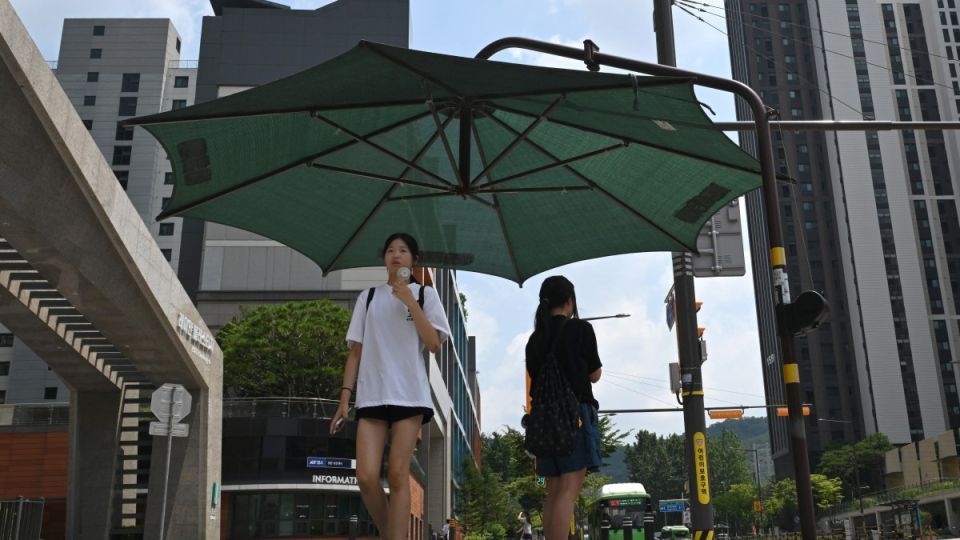
South Korea's unprecedented heatwave has prompted major employers across construction, heavy industry and shipbuilding to fundamentally reshape their operations, introducing longer rest periods, advanced temperature monitoring and expanded cooling facilities. Yet the crisis has simultaneously laid bare a stark divide in workplace safety: whilst multinational corporations deploy sophisticated protective infrastructure, workers at smaller enterprises and outdoor worksites remain dangerously exposed to record-breaking temperatures that have already claimed lives.
The scale of the challenge became evident as temperatures soared to 42.5 degrees Celsius in Yangsan, South Gyeongsang Province, whilst Seoul remained under consecutive heatwave warnings. Official data presented by ruling People Power Party representative Kim Wi-sang revealed that between 2022 and June 2024, the Korea Workers' Compensation and Welfare Service recognised 195 heat-related workplace incidents, resulting in 20 deaths. Notably, 13 cases had already been recorded by late June—before the traditionally deadlier July and August months—including four fatalities.
This regulatory escalation reflects a pivotal shift in South Korea's approach to workplace accountability. A district court's landmark conviction of a construction company under the Serious Accidents Punishment Act for a subcontractor employee's heatstroke death established a legal precedent that has reverberated through boardrooms nationwide. The decision signalled to employers that heat-related fatalities now carry potential criminal liability, fundamentally changing risk calculus for corporate leadership.
Large construction firms have responded with considerable ingenuity. Hyundai Engineering & Construction incentivises workers to utilise designated rest areas, whilst Lotte E&C has deployed Internet of Things monitoring systems across approximately 80 sites to measure thermal stress every five minutes and categorise heat exposure into five risk tiers. Daewoo E&C has implemented no-penalty protocols allowing workers experiencing heat illness symptoms to cease labour immediately. Some conglomerates have tailored interventions for vulnerable populations, with Hyundai E&C distributing emergency guides in 22 languages alongside cooling vests and electrolyte solutions for migrant employees.
Heavy industrial operations that cannot simply halt during extreme weather have instituted rigorous work-and-rest rhythms calibrated to perceived temperature thresholds. Posco, operating continuously-firing blast furnaces, mandates 15-minute rest intervals following 45 minutes of labour when thermal stress exceeds 35 degrees Celsius, reducing to 10-minute breaks after 50 minutes when temperatures exceed 31 degrees. Hyundai Steel implements comparable schedules. Shipbuilders have similarly extended breaks: Hanwha Ocean has doubled morning and afternoon rest periods from 10 to 20 minutes throughout August, whilst extending lunch breaks by half an hour when temperatures exceed 28 degrees and by a full hour above 31.5 degrees.
HD Hyundai Heavy Industries has lengthened lunch periods from 60 to 90 minutes and operates more than 270 cooling facilities across its shipyards, providing workers with cooling vests and electrolyte replacements. Samsung Heavy Industries established a dedicated heat-response task force, whilst SK hynix has extended rest periods during extreme conditions. Coupang has substantially upgraded ventilation and air-conditioning infrastructure at its logistics centres.
However, these comprehensive protections remain almost exclusively the preserve of major corporations with capital to invest in infrastructure and operational flexibility. Analysis of the 195 recognised incidents reveals that more than half occurred at workplaces employing fewer than 50 people, with 42 cases at businesses with fewer than five employees. Labour experts emphasise that smaller operations typically lack dedicated safety personnel, adequate cooling systems and sufficient rest facilities, fundamentally disadvantaging their workforces during thermal emergencies.
Seasonal migrant workers represent a particularly vulnerable cohort. Last month, a Thai agricultural worker died whilst harvesting in Haenam, South Jeolla Province, whilst a Vietnamese national succumbed to heat exposure whilst farming in Goesan, North Chungcheong Province. These deaths underscore how outdoor occupations and precarious employment arrangements leave foreign workers—often excluded from standard occupational protections—acutely exposed to climatic hazards.
Representative Kim has called for a significant policy reorientation, urging government to move beyond concentrating safety efforts on large workplaces and instead strengthen enforcement and practical protections specifically targeting small outdoor enterprises and seasonal migrant labour. His intervention reflects growing recognition that whilst corporate voluntarism has produced noteworthy innovations, regulatory frameworks must be substantially strengthened to protect economically marginal workers who remain outside these protections.
For Southeast Asian observers, South Korea's experience offers instructive lessons. The region's rapidly industrialising economies, many with substantial construction sectors and agricultural employment, face comparable heat stresses intensified by climate change. South Korea's corporate solutions—IoT monitoring, tiered work schedules, cooling infrastructure—represent transferable technologies, yet its continuing gap between large and small employer protections suggests that technological innovation alone cannot substitute for comprehensive regulatory enforcement and labour market protections that extend equally to all workers regardless of company size or employment status.
The broader implication is that extreme heat is becoming a structural occupational hazard requiring systematic institutional responses rather than corporate charity. As climate patterns intensify across Asia, the division between protected workers at multinational facilities and vulnerable employees at smaller enterprises threatens to become increasingly entrenched unless governments intervene decisively with enforceable standards, inspection regimes and direct support for small employers and seasonal workers.
South Korea's current trajectory suggests that without deliberate policy correction, workplace heat inequality will simply reflect and reinforce broader economic inequalities. The challenge facing policymakers across East and Southeast Asia is therefore not merely responding to extreme weather but ensuring that climate adaptation benefits all workers equally, particularly those at greatest occupational risk.

