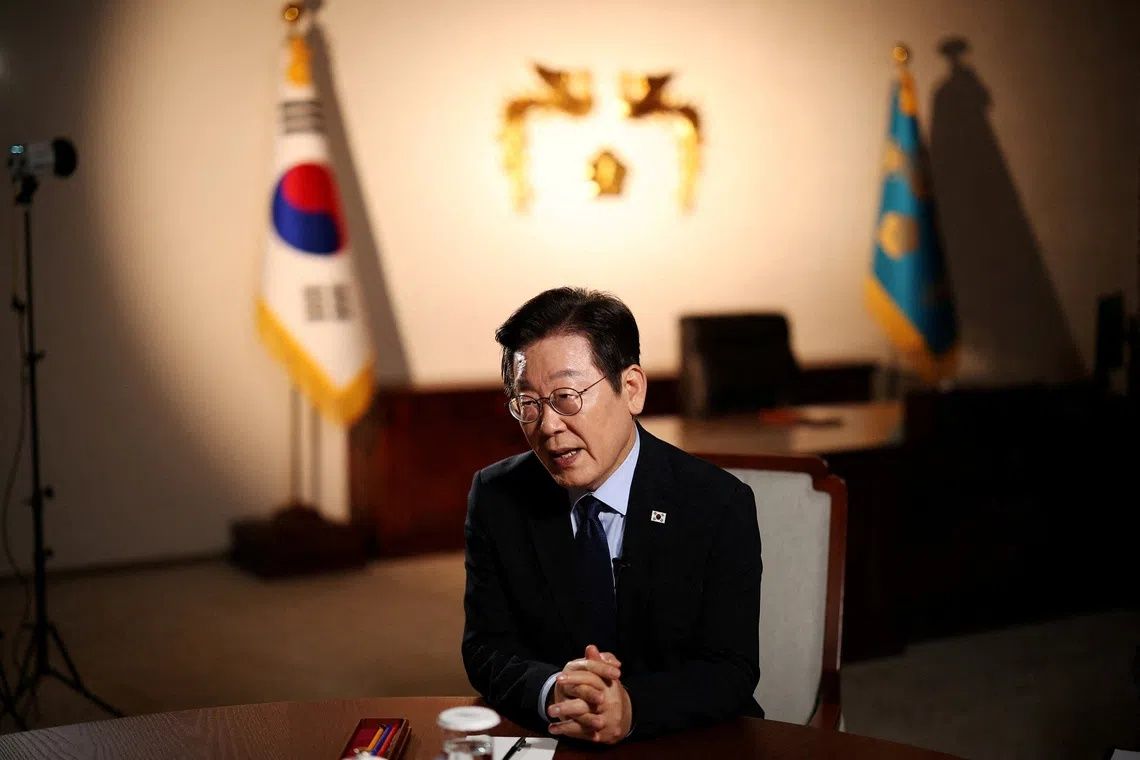
South Korean President Lee Jae Myung has signalled backing for a significant constitutional overhaul that would reshape the country's presidential system, according to officials at the presidential Blue House. The proposed reform would permit presidents to serve four-year terms with the possibility of seeking re-election, a marked departure from the current framework that restricts the office to a single five-year mandate. Accompanying this core change would be measures designed to redistribute power away from the executive branch toward the National Assembly, addressing longstanding criticism of what observers have termed South Korea's "imperial presidency".
The presidential office indicated on Friday that this particular constitutional model enjoys the broadest foundation of public support among various reform proposals circulating in political circles. This positioning suggests that Lee's team views the proposal as having genuine electoral and societal legitimacy, rather than representing a narrow partisan interest. The assertion that the four-year, re-eligible model commands the widest acceptance appears designed to lend credibility to the reform agenda and distinguish it from alternative constitutional structures that might concentrate power differently or reduce presidential flexibility.
A senior Blue House official articulated that the President recognises the validity of concerns regarding executive overreach in South Korea's political system. This acknowledgement carries significance given that many commentators have criticised successive administrations for wielding excessive presidential authority, a pattern that has contributed to the country's contentious post-tenure prosecutions and governance disputes. By voicing alignment with demands to limit presidential power, Lee appears to be positioning the constitutional reform as a measure that addresses genuine structural problems rather than merely benefiting the current administration.
The proposed shift to parliamentary empowerment represents a fundamental rebalancing of institutional relationships. Strengthening the National Assembly would theoretically create more robust checks on executive decision-making and enhance legislative oversight capabilities. Such redistribution of authority could reshape how policies are formulated and implemented, potentially requiring greater consensus-building between the presidency and parliament. For a country accustomed to assertive executive leadership, this represents a substantial institutional recalibration with profound implications for future governance dynamics.
Constitutional amendments in South Korea require substantial legislative support to proceed, specifically approval from at least 200 lawmakers among the 300-seat National Assembly. This supermajority requirement means that meaningful reform cannot be achieved through partisan means alone; rather, it demands genuine cross-party cooperation and broad political consensus. The Blue House official explicitly referenced this necessity, emphasising that constitutional discussions must occur within the National Assembly framework and cannot be pursued unilaterally by the executive. This framing suggests that Lee's administration recognises the constitutional and political constraints governing such fundamental changes.
The mention of needing political consensus speaks to the contentious nature of constitutional reform in South Korean politics. Previous attempts at constitutional revision have frequently stalled or become battlegrounds for partisan competition, reflecting deeper ideological and factional divisions within the legislature. Any successful reform would require buy-in from the opposition Democratic Party and other legislative groupings, necessitating negotiations that extend beyond the presidential office's sphere of direct influence. The acknowledgement of this requirement suggests realistic assessment of the political hurdles ahead.
For regional observers, South Korea's constitutional trajectory carries relevance beyond its borders. As a major democracy in East Asia, constitutional design choices in Seoul influence broader regional discussions about executive-legislative relationships and presidential power limitations. The model being advocated here—term limits combined with re-eligibility and parliamentary strengthening—represents one approach to balancing executive effectiveness with institutional checks. Other regional democracies, including those in Southeast Asia grappling with similar questions about executive concentration, often monitor how established democracies like South Korea navigate such fundamental reforms.
The current system's single five-year presidential term has produced distinctive governance patterns. Presidents cannot seek re-election, theoretically removing incentives for perpetual campaign-mode decision-making but also potentially encouraging lame-duck behaviour during final years. This structural feature has influenced how South Korean leaders approach second-term domestic politics and has been associated with the post-tenure legal vulnerabilities that several former presidents have faced. A shift to renewable four-year terms would introduce different incentive structures and political dynamics that analysts and policymakers will need to evaluate carefully.
The timing of this announcement reflects ongoing political evolution in South Korea. As the Lee administration navigates its tenure, positioning on constitutional reform establishes markers for the presidential legacy and shapes political trajectories heading toward the next elections. The emphasis on public support for the four-year model suggests strategic messaging designed to build momentum for reform discussions while the administration still holds executive authority. Whether this positioning translates into concrete legislative movement remains uncertain, dependent on political circumstances and opposition party calculations regarding their own interests in constitutional structure.
Implementing such constitutional changes would require not only legislative passage but also likely a national referendum, depending on how the amendment process is structured. This would necessitate sustained public engagement and political education about the merits and drawbacks of the proposed system. South Korean voters, having experienced various constitutional arrangements throughout the country's democratic history, bring substantial experience to such deliberations. The assertion that the four-year re-eligible model commands broad public acceptance will likely face testing through political debate and public opinion research as reform discussions potentially intensify in coming months.

