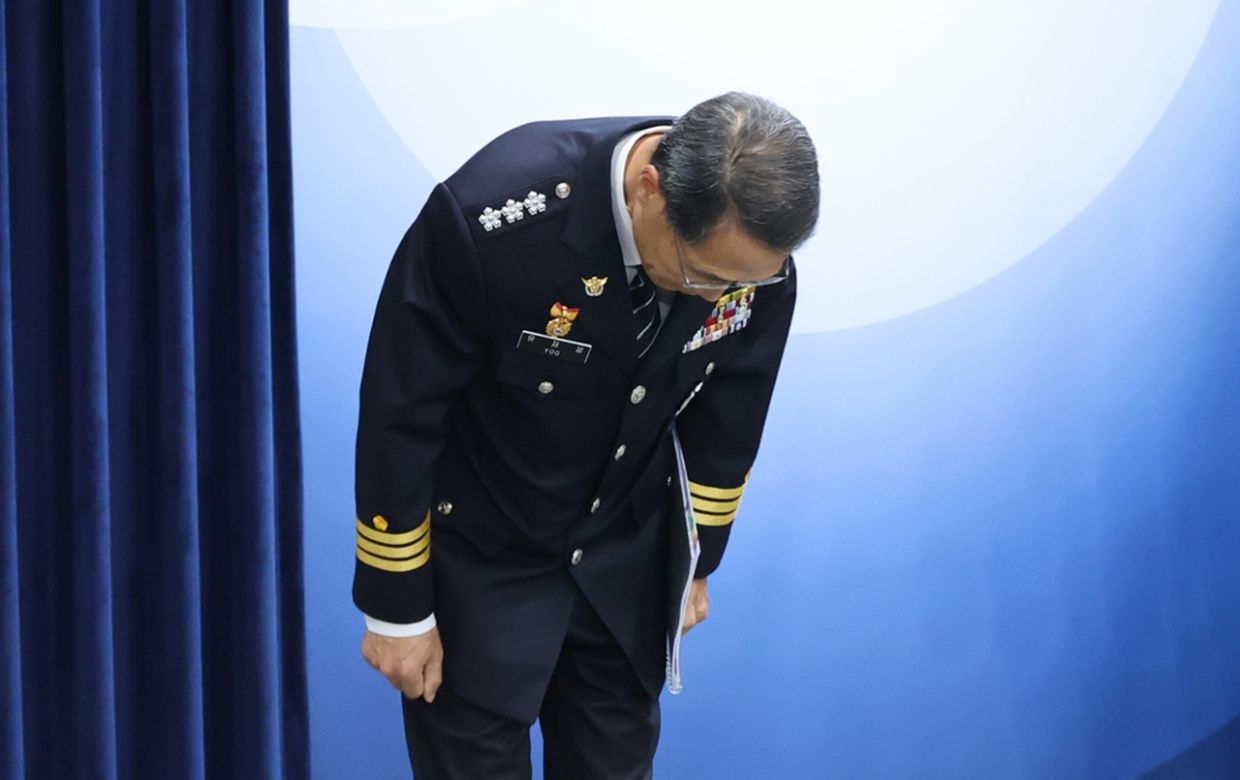
South Korea's police force faces a critical moment of institutional reckoning as Acting National Police Agency Commissioner General Yoo Jae-sung unveiled an ambitious reform agenda aimed at restoring public confidence in law enforcement. The announcement comes as the National Police Agency grapples with a deepening scandal centred on the investigation of suspect Jang Yoon-gi, who stands accused of murdering a teenage girl in Gwangju in May. The case has exposed troubling vulnerabilities within the police system, particularly allegations that investigators deliberately shared sensitive information with Jang's father, a serving police officer, and failed to preserve crucial evidence. The mounting public backlash reflects broader concerns about institutional integrity and the potential for powerful connections to compromise criminal investigations.
Yoo's pledges represent an acknowledgment that the police establishment must undertake fundamental changes to its investigative methodology and internal accountability mechanisms. Speaking at a press briefing at Government Complex Seoul, the acting commissioner framed the scandal not merely as an isolated incident but as an opportunity for comprehensive institutional transformation. His statement that "the police will take this case as an opportunity to overhaul their investigative practices with a deep sense of urgency" signalled recognition that public trust, once eroded, requires demonstrable systemic change rather than superficial gestures. The timing of these pronouncements reflects intensifying pressure from media scrutiny, civil society organisations, and political actors demanding accountability from senior police leadership.
The proposed investigative reform task force represents the centrepiece of the agency's response strategy. Scheduled to commence operations by the end of July, this seven to ten-member body will be deliberately structured to incorporate substantial external participation, with outside experts comprising more than half of the panel's composition. This composition model deliberately introduces institutional distance between the reform process and existing police bureaucracy, a structural choice designed to enhance credibility among sceptical observers. The task force's mandate extends beyond procedural improvements to encompass personnel reforms addressing inappropriate relationships between officers and local communities, a practice that appears to have enabled the alleged information leak to Jang's father. Additionally, the body will examine protocols for investigating cases involving socially disadvantaged populations, acknowledging that vulnerability may correlate with investigative inadequacy.
Complementing these internal measures, the police agency is establishing a dedicated internal affairs investigation unit operating under the National Office of Investigation. This division will pursue serious duty-related crimes allegedly perpetrated by police personnel without regard to rank or seniority, ostensibly addressing the perception that high-ranking officers enjoy de facto immunity from investigation. The significance of rank-neutral investigation authority cannot be overstated in a hierarchical bureaucratic context where deference to senior officials traditionally constrains institutional oversight. The second major accountability innovation involves creating an oversight body under the Korean National Police Commission comprising approximately 100 civilian investigators empowered to examine alleged human rights violations and misconduct within police investigations. This expansion of civilian authority over police conduct represents a substantial dilution of police self-regulation, requiring legislative amendment to the Police Act.
Yoo acknowledged that legislative approval remains necessary for implementing the civilian oversight body, noting that a related amendment has already been submitted to the National Assembly. He committed to presenting police perspectives throughout the legislative deliberation process, indicating that the agency recognises this reform requires democratic legitimacy rather than unilateral bureaucratic implementation. The commissioner emphasised that the proposed oversight body must be designed with sufficient authority to generate personnel and disciplinary recommendations, suggesting that toothless civilian oversight would fail to achieve its legitimising purpose. This recognition reflects understanding that genuine institutional reform requires vesting civilian bodies with meaningful enforcement capacity. For South Korean readers accustomed to powerful executive bureaucracies, this represents a notable shift toward horizontal accountability mechanisms.
The reform agenda extends to management practices through potential expansion of the police rotation system, which currently applies to superintendent-level officers and some senior inspectors. The Interior Ministry has proposed broadening this rotation requirement across all ranks, ostensibly to prevent the long-term entrenchment of relationships that facilitate misconduct. However, Yoo indicated that the police agency plans to consult rank-and-file officers before finalising this expansion, acknowledging practical implementation challenges. Current rotation policies provide official residences to transferred superintendent-level and senior officers, a significant accommodation whose expansion to lower-ranking personnel would impose substantial fiscal burdens whilst raising fairness questions. The commissioner's commitment to seeking a "reasonable plan" that simultaneously restores public confidence and secures officer cooperation reflects the delicate balance required when implementing reforms that impose tangible burdens on affected personnel.
Yoo emphasised that supporting measures must accompany any rotation policy expansion to mitigate undue hardship on frontline officers. He indicated willingness to implement readily deployable measures immediately whilst reserving complex reforms for more extended task force deliberation. This phased approach suggests pragmatism regarding institutional change, recognising that attempting simultaneous implementation of numerous demanding reforms risks generating widespread officer resentment that could undermine reform legitimacy. The commissioner's acknowledgment that universal rotation would create "practical difficulties" implicitly concedes that bureaucratic resistance to ambitious restructuring represents a genuine constraint on reform feasibility.
The scandal itself warrants careful examination by Southeast Asian observers, as it illuminates challenges confronting police institutions navigating tension between hierarchical traditions and modern accountability expectations. The alleged leaking of investigation details to Jang's father exploited familial and professional connections within police structures, a dynamic recognisable across regional law enforcement contexts. The case demonstrates how institutional cultures emphasising loyalty and respect for seniority can inadvertently create conditions enabling misconduct, particularly when investigating cases involving socially connected individuals. Yoo's explicit commitment to examining investigative procedures affecting socially vulnerable populations acknowledges the intersection between institutional power asymmetries and investigative competence.
Regarding Jang's father's personnel status, Yoo announced that the police would await the special investigation team's final findings before concluding their internal inspection and determining follow-up actions. This sequential approach suggests recognition that premature administrative closure could appear evasive or politically motivated. The decision to link conclusions on Jang's father's case to external investigation findings rather than independent police determination also reflects consciousness of legitimacy requirements. For neighbouring jurisdictions wrestling with similar police accountability challenges, South Korea's visible struggle to establish credible reform mechanisms offers both cautionary lessons and potential models for institutional innovation.

