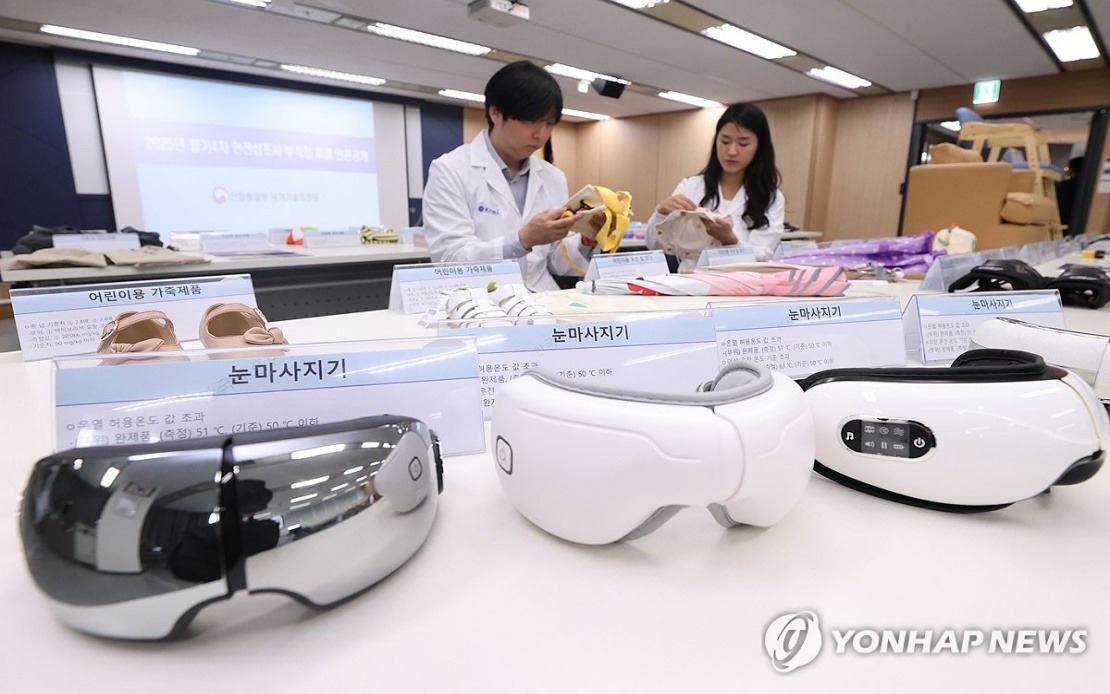
South Korea has grappled with an escalating consumer safety crisis, with product recalls climbing to 2,656 cases in 2025—a 5 per cent jump from the 2,537 cases documented in 2024. The upward trend underscores mounting vulnerabilities in the country's retail ecosystem, particularly as cross-border e-commerce has democratized access to goods while simultaneously enabling the distribution of substandard and dangerous products. The Fair Trade Commission's latest data, released in August, reveals a regulatory challenge that carries significant implications for consumer protection standards across the region, especially as Southeast Asian nations increasingly adopt similar online trading models.
The most alarming statistic emerging from the FTC's report concerns consumer protection violations. Cases involving breaches of the Framework Act on Consumers surged by approximately 42 per cent, reaching 851 instances in 2025 compared to the previous year. This dramatic surge reflects a troubling pattern: products that have already triggered recalls in other countries are being systematically funneled into South Korea's domestic online marketplaces. The phenomenon highlights a critical gap in enforcement mechanisms and cross-border information sharing. Retailers—whether knowingly or through negligence—exploit regulatory arbitrage opportunities, moving contraband items from markets with strict oversight to jurisdictions with slower response times or less coordinated enforcement.
The rise in hazardous imported goods sold through digital platforms represents a structural challenge that traditional regulatory frameworks struggle to address. Online marketplaces operate at speeds that government agencies find difficult to match. Sellers can upload thousands of products in minutes; monitoring and removal procedures take considerably longer. The FTC's acknowledgment that many recalled products from overseas are appearing on local e-commerce platforms suggests that either sellers lack awareness of international recall databases, or more troublingly, they deliberately sidestep compliance mechanisms to capitalize on price differentials and regulatory gaps. The economic incentives for this behavior are substantial, particularly for goods that command lower selling prices in developed economies due to safety concerns.
Recognizing the severity of the problem, South Korean authorities have mobilized a coordinated response. The FTC announced expanded surveillance operations conducted jointly with relevant government agencies to intercept hazardous imports before they reach consumers. Additionally, the government has initiated a system whereby it promptly suspends sales of products subject to recalls in overseas markets or those failing domestic safety testing. This approach involves requesting online marketplace operators—including major platforms like Coupang, Gmarket, and Naver—to actively block and remove flagged items. Such cooperation is essential, as these platforms serve as gatekeepers controlling which sellers and products gain visibility to millions of potential purchasers.
The sectoral breakdown of recalls provides further insight into which product categories pose the greatest consumer risk. Industrial consumer goods dominated the recall landscape with 1,282 cases in 2025, representing an 8.6 per cent increase from 2024. This category encompasses appliances, electronics, furniture, and other household items—precisely the types of products frequently sold through cross-border e-commerce channels where quality control remains uneven. Small appliances and electronics from unverified manufacturers represent particularly high-risk items, as defective electrical components can pose serious fire and electrocution hazards. The prevalence of industrial goods recalls suggests that consumers purchasing directly from international sellers, often lured by significantly lower prices, face elevated exposure to such dangers.
Pharmaceutical and medical device recalls present a different but equally consequential concern. While pharmaceutical recalls, including those for herbal medicines, declined by 13.5 per cent to 295 cases, medical device recalls increased by 8.5 per cent to 308 cases. The decline in pharmaceutical recalls may reflect stricter import controls for medications or improved domestic manufacturing standards. However, the uptick in medical device recalls—encompassing everything from diagnostic equipment to mobility aids and therapeutic devices—suggests expanding gaps in quality assurance within this sector. Medical devices carry particular urgency because their malfunction can directly threaten patient health and, in some cases, prove fatal. A faulty glucose meter or blood pressure monitor, for instance, could lead to misdiagnosis and inappropriate treatment decisions.
For Malaysian and broader Southeast Asian policymakers, South Korea's experience offers cautionary lessons as the region's e-commerce penetration deepens. Malaysia, Indonesia, and Thailand have witnessed explosive growth in online purchasing, yet regulatory capacity remains unevenly developed. The proliferation of marketplace platforms—from regional giants like Shopee and Lazada to specialized retailers—has created oversight challenges similar to those confronting Seoul. Consumers across Southeast Asia frequently purchase directly from international sellers via platforms, exposing themselves to products that may have failed safety standards in their countries of origin. The regulatory fragmentation within ASEAN compounds this challenge; a product recalled in Singapore may continue circulating freely in Vietnam or the Philippines.
The FTC's emphasis on cooperation with online marketplace operators highlights an emerging governance model wherein governments rely increasingly on private platform companies to enforce regulatory standards. While pragmatic, this approach raises questions about accountability and consistency. Marketplace operators have limited incentives to rigorously police sellers if enforcement increases compliance costs or reduces merchant recruitment. Furthermore, the international character of e-commerce means that responsibility for safety often becomes diffused across multiple jurisdictions and entities. A product sold through a Malaysian-registered marketplace seller but manufactured in China and shipped via Singapore creates complex questions about which authority bears responsibility for consumer protection.
The data also underscores the evolving nature of consumer risk in digital economies. Traditional retail environments, dominated by established brands and vetted distributors, inherently filter out many dangerous products simply through gatekeeping mechanisms. Online marketplaces, by contrast, democratize the ability to become a seller, enabling small traders and individual entrepreneurs to reach millions of customers with minimal vetting. While this democratization has genuinely positive aspects—enabling small businesses and alternative manufacturers to thrive—it simultaneously reduces structural safety barriers. Consumers accustomed to encountering only established brands in physical stores may not adjust their trust calculus when shopping online, assuming marketplace platforms maintain equivalent quality control.
The 42 per cent surge in consumer protection violations is particularly significant because it suggests regulatory frameworks themselves may be inadequate for contemporary retail realities. The Framework Act on Consumers, designed for a traditional retail and distribution environment, may inadequately address the speed, scale, and international character of digital commerce. South Korea's regulatory response—enhanced surveillance and rapid sales suspension mechanisms—represents incremental improvement, but fundamentally reactive rather than preventative. More effective approaches might include mandatory seller verification programs, algorithmic monitoring of price anomalies that signal potentially counterfeit or hazardous goods, and enhanced coordination with international trade partners to track recalled products across borders.
Looking forward, South Korea's escalating recall statistics suggest that consumer protection in digital markets will require sophistication beyond what most regional governments currently possess. The integration of artificial intelligence for anomaly detection, blockchain-based product authentication systems, and cross-border regulatory agreements could substantially reduce hazardous product circulation. Yet implementing such systems demands resources, technical expertise, and political will that many developing economies find challenging. For Southeast Asian nations following trajectories similar to South Korea's, the current moment offers an opportunity to learn from and potentially leapfrog earlier regulatory mistakes, implementing protective frameworks before consumer harm escalates to levels requiring costly remedial action.

