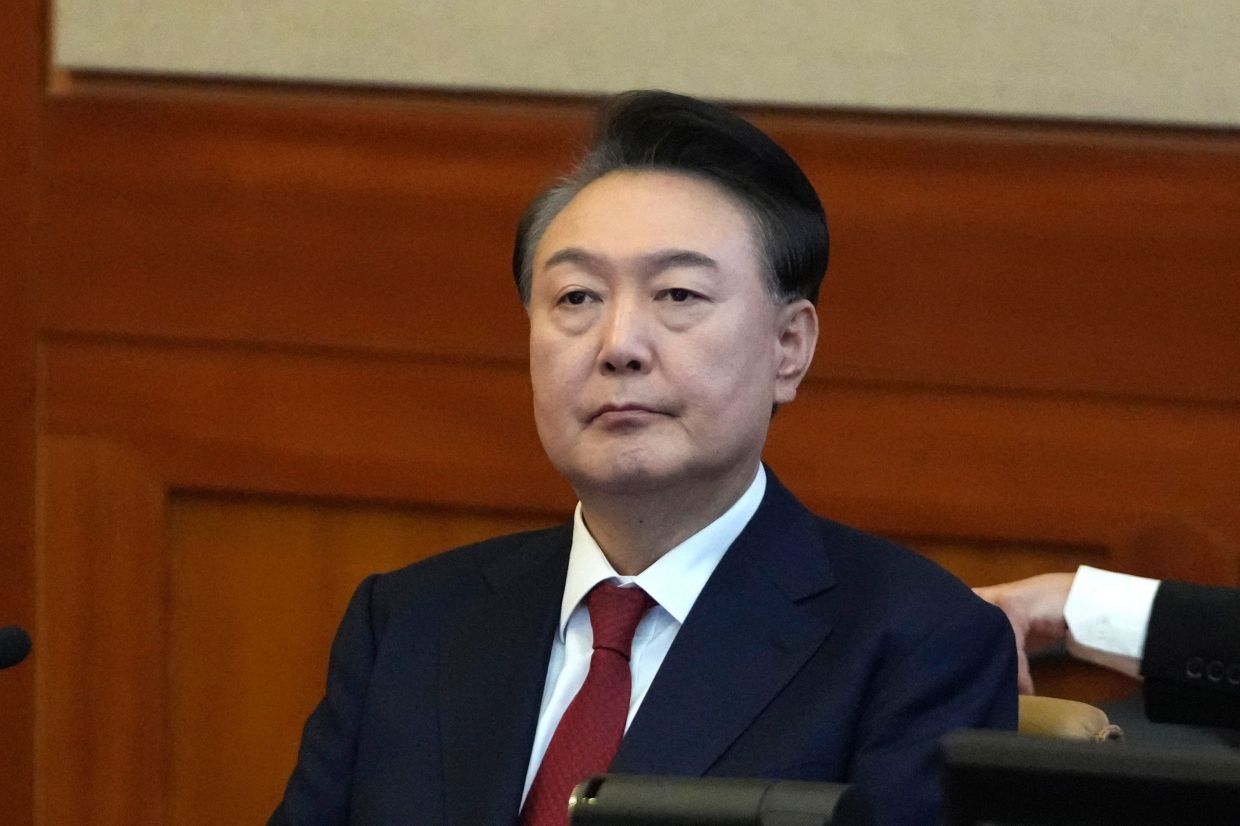
South Korea's Supreme Court has delivered a final verdict on Wednesday, July 9, upholding a seven-year prison sentence against ex-president Yoon Suk Yeol for his role in orchestrating the country's most destabilising political episode in recent memory. The ruling marks the conclusion of the court's examination of charges connected to Yoon's botched December 2024 martial law announcement and the turbulent sequence of events that followed, cementing the legal consequences for a decision that shook the nation and briefly suspended civilian governance.
The Supreme Court's affirmation carries particular weight given that all rulings from South Korea's highest judicial body are final and binding, offering no further avenue for appeal. A presiding judge declared during televised proceedings that "all appeals are dismissed," and stated categorically that the lower court's original judgment "contained no errors". This verdict represents the culmination of a legal journey that began with a lower court conviction in January, followed by an appeals court review in April that not only upheld the sentence but increased it from five to seven years while adding supplementary guilty verdicts.
The charges against Yoon encompassed a constellation of serious allegations demonstrating systematic attempts to circumvent democratic processes. Prosecutors contended that he had obstructed proper cabinet deliberations by assembling only a handpicked group of ministers for consultation immediately before announcing martial law, rather than convening the full cabinet as protocol dictates. The ex-president also faced accusations of orchestrating the creation and destruction of false martial law documents that bore forged signatures purportedly from the prime minister, attempting to lend spurious legitimacy to his declaration. Additionally, investigators alleged he directed government officials to disseminate misleading communications to international media outlets and instructed a military commander to delete sensitive records from secure defence communications systems.
Yoon's legal team responded swiftly to the Supreme Court's decision, issuing a statement expressing "deep regret" and accusing the judiciary of having reached its conclusion "without sufficient deliberation". The defence contingent indicated that they would pursue constitutional challenges to the ruling and lodge formal complaints challenging the verdict's validity. This defiant posture reflects Yoon's broader assertion throughout his legal proceedings that his martial law declaration was fundamentally motivated by national interest and necessity, a narrative he has maintained despite mounting judicial rejection.
The immediate political fallout from Yoon's December 2024 declaration cannot be overstated. His shock late-night televised address, which announced the suspension of civilian rule, catapulted South Korea into uncharted constitutional territory. Though martial law remained in effect for merely six hours before the legislature convened in emergency session and voted decisively to nullify it, the episode reverberated throughout South Korean society and beyond. The stock market experienced significant declines, international observers expressed surprise and concern, and the public discourse became consumed by questions regarding institutional stability and executive overreach.
The charges of obstruction also centred on Yoon's deployment of presidential security personnel to physically prevent his own arrest after lawmakers had formally rescinded the martial law declaration. This confrontation underscored the breakdown of institutional norms and highlighted the tension between executive authority and constitutional constraints. The prosecution had initially sought a substantially harsher sentence of ten years, making the seven-year term represent a partial victory for Yoon's defence team, though such framing offers cold comfort given the severity of the outcome.
Paralleling this conviction, Yoon confronts additional serious legal jeopardy in a separate case wherein a court sentenced him to thirty years imprisonment for an extraordinary charge: sending drones across the demilitarised zone into North Korean territory with the apparent intent to provoke or manufacture a security crisis that would justify his martial law declaration. This allegation, if proven, suggests premeditation and deliberate crisis fabrication on a shocking scale. Yoon's justification for the martial law itself has shifted somewhat through his public statements, initially claiming necessity to neutralise purported "anti-state forces" and subsequently invoking vague assertions of threats emanating from North Korea.
The political consequences of Yoon's martial law attempt materialised fully when he was formally removed from office in April 2025, an outcome that triggered presidential elections ultimately won by Lee Jae Myung of the centre-left Democratic Party. This electoral result represents a significant shift in South Korean politics, suggesting voters punished Yoon's party and chose instead a centrist alternative, though the political landscape remains fractured and contentious. For Malaysian and Southeast Asian observers, the episode illustrates the fragility of democratic institutions even in established democracies with robust constitutions and longstanding democratic traditions.
The Supreme Court's unwavering confirmation of Yoon's conviction signals that South Korea's judicial system has withstood intense political pressure and maintained institutional independence in examining grave charges against a former head of state. The judiciary's refusal to overturn lower court findings despite claims of insufficient deliberation suggests that the evidence presented satisfied legal standards of proof across multiple judicial levels. This consistency across three tiers of South Korean courts strengthens the legitimacy of the verdict in the eyes of international observers monitoring the case.
For the broader region, the Yoon affair carries significant implications regarding democratic governance and constitutional limits on executive power. South Korea's handling of this crisis—through judicial rather than military or extrajudicial means—demonstrates how established democracies navigate existential institutional threats. The case will likely inform regional conversations about protecting democratic safeguards and maintaining checks on presidential authority, particularly relevant for Southeast Asian nations navigating their own democratic transitions and institutional challenges.
Yoon's continued insistence that his martial law declaration was undertaken "solely for the sake of the nation" rings increasingly hollow as courts across the judicial hierarchy reject this rationale and impose substantial penalties. His additional thirty-year sentence awaiting final adjudication suggests that the full legal reckoning for the martial law episode remains incomplete. Meanwhile, South Korea's new administration under Lee Jae Myung must contend with a fractured political landscape and questions about how the nation rebuilds institutional trust following the most serious constitutional crisis of its democratic era.

