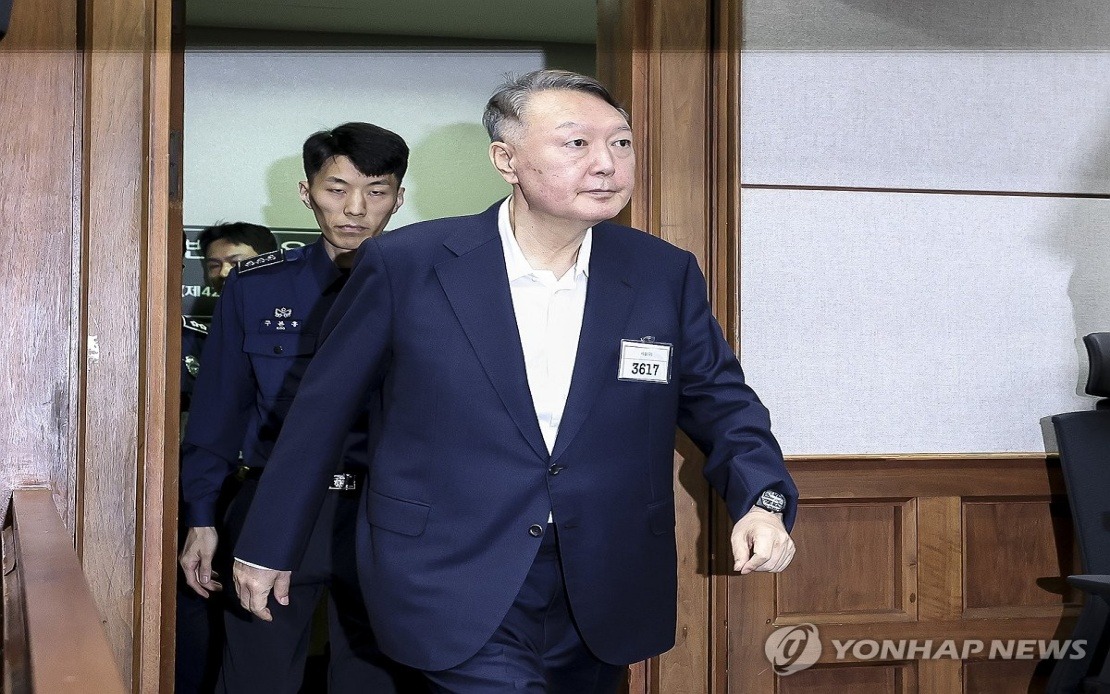
South Korea's Supreme Court has greenlit live television coverage of its verdict in the obstruction of justice case against former President Yoon Suk Yeol, marking a significant moment in the nation's ongoing political crisis. The ruling, set for delivery at 2 pm Thursday, represents the country's highest court's initial judgment addressing charges that directly emerged from Yoon's controversial martial law decree issued on December 3, 2024. This decision carries particular weight for regional observers tracking democratic accountability in one of Asia's major economies.
The special counsel's office, headed by Cho Eun-suk, petitioned for public broadcast access just days earlier, seeking to ensure transparency in a case of extraordinary national importance. Yoon's defence counsel strongly opposed the televised proceedings, contending that permitting cameras into the courtroom would expose their client to unfair prejudicial coverage and irreparable damage to both his right to impartial adjudication and his personal standing. The court's rejection of these objections signals judicial confidence in the integrity of broadcast coverage to serve the public interest without compromising trial fairness—a calculation reflecting evolving attitudes toward transparency in high-profile political cases across East Asia.
Underlying the obstruction charge is an allegation that Yoon instructed his security detail to physically prevent investigators from executing a lawful detention warrant against him in January 2025, just weeks after his martial law gambit unravelled. This confrontation between executive protection and law enforcement raised fundamental questions about the limits of presidential authority and the sanctity of judicial processes, resonating with similar tension points that Malaysian observers might recognise in their own constitutional order. The circumstances revealed fractures within South Korea's institutional checks and balances at a critical juncture.
Beyond obstruction, the Supreme Court will eventually address a broader constellation of charges against the former leader. These include allegations that Yoon violated the constitutional rights of nine Cabinet members by declining to convene a preparatory session before implementing the martial law declaration, preventing them from having formal notice or input into his decision-making process. He additionally faces accusations of falsifying state documents—specifically the martial law proclamation itself—by retroactively altering its language after the decree had been rescinded, apparently to obscure procedural irregularities and procedural deficiencies in how it was issued and lifted. The act of destroying the revised document compounds the paper trail concerns.
The lower court in April delivered a seven-year prison sentence following guilty verdicts on these charges, representing a middle ground between the special counsel's recommended ten-year term and lighter sentencing that some observers had speculated might materialise. An appellate panel subsequently augmented that punishment by two additional years, signalling judicial seriousness about the gravity of Yoon's conduct. These escalating sentences reflect the courts' evident concern that high-level obstruction and document tampering warrant substantial consequence, particularly when executed by a sitting or recently sitting head of state.
Simultaneously, a separate appellate court continues hearing Yoon's principal trial on the more serious charge of orchestrating an insurrection through his martial law manoeuvre. That proceeding resulted in a life sentence during its initial phase, though Yoon's legal team is mounting vigorous appeals. For Malaysian readers monitoring South Korean developments, the parallel advancement of multiple trial tracks underscores how complex institutional implosion can be, requiring courts to manage overlapping jurisdictions, charges, and proceedings simultaneously while maintaining legal coherence.
The strategic authorisation of live broadcast deserves scrutiny for what it reveals about South Korean judicial philosophy in an era of mass communication. By declining to sequester proceedings behind courtroom doors, the Supreme Court is effectively asserting that the public has a democratic stake in witnessing how justice unfolds when the accused holds such elevated prior status. This stance contrasts with jurisdictions—including some in Southeast Asia—where high-profile political trials remain partially shielded from immediate public sight. The decision implies confidence that transparent proceedings strengthen rather than undermine public confidence in judicial independence, a premise worth considering as nations worldwide grapple with sustaining faith in institutions during polarised moments.
Broadcasters will utilise equipment provided by the court itself, ensuring standardised technical quality and institutional control over the visual record. This arrangement maintains judicial authority over the visual narrative whilst accommodating media access, a compromise that protects the integrity of the proceedings without returning to complete opacity. For Southeast Asian newsrooms accustomed to varying restrictions on court coverage, South Korea's model suggests one permutation of how transparency and judicial dignity might coexist in practice.
Yoon's incarceration while proceedings continue adds urgency to these verdicts and appeals. The obstruction conviction carries implications beyond the immediate sentence, functioning as a judicial statement that even former presidents cannot expect to escape accountability when they allegedly direct security personnel to thwart law enforcement. The Supreme Court's willingness to broadcast this verdict signals institutional confidence that the public record will vindicate the court's reasoning and bolster rather than erode legitimacy. How regional democracies calibrate similar transparency questions will shape public perception of institutional health during politically turbulent periods.

