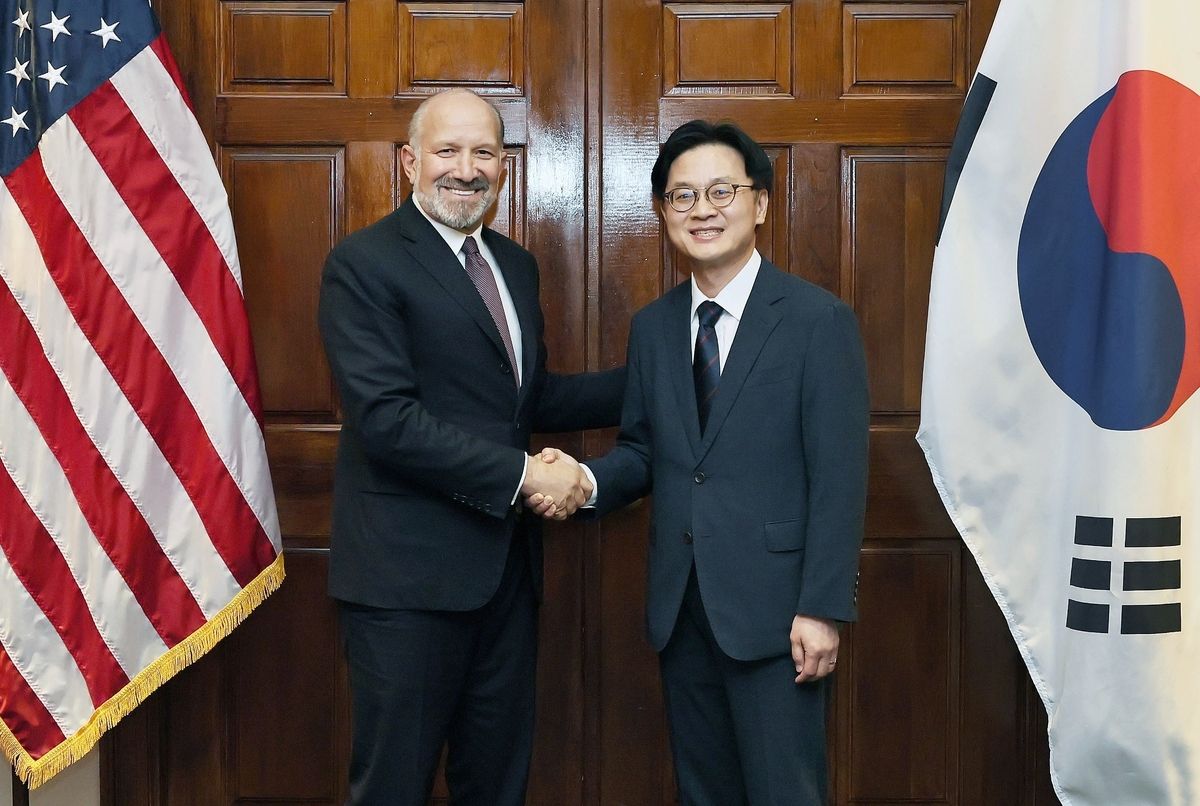
South Korea's Industry Minister Kim Jung-kwan is heading to the United States this week in a strategic diplomatic move timed to address mounting tensions over trade relations between Seoul and Washington. The visit, spanning from July 22 to 25, comes at a particularly delicate moment as the U.S. government prepares to announce additional tariffs under Section 301 of the Trade Act. This timing is no coincidence—South Korea is working to maintain stable bilateral trade ties while navigating the uncertainty of an American investigation into labour practices that could result in significantly higher tariffs on Korean goods.
The core purpose of Kim's journey centres on inaugurating the South Korea-U.S. Shipbuilding Partnership Center in Washington, a facility that formalises decades of cooperation between the two nations' maritime industries. This initiative builds on a May agreement struck between Seoul's trade ministry and the U.S. Commerce Department, reflecting both countries' commitment to deepening partnerships in a strategically important sector. The shipbuilding partnership represents more than symbolic gesture—it demonstrates Seoul's willingness to invest in American capabilities and create tangible opportunities for bilateral commercial engagement at a time when the overall trade relationship faces headwinds.
During his visit, Kim will hold high-level meetings with U.S. Commerce Secretary Howard Lutnick and Energy Secretary Chris Wright, positioning the discussion around mutual economic benefits rather than defensive posturing. These conversations will emphasise South Korean investment flowing into the United States, a particularly salient topic given Seoul's passage of a new law in June designed to facilitate strategic investment in America. By highlighting the economic contributions Korean companies make to American jobs and communities, Kim seeks to create diplomatic counterweight to protectionist pressures that have intensified under the current U.S. administration.
The tariff threat hanging over these talks stems from an ongoing U.S. investigation into trade practices related to forced labour, a investigation that Korean media reports suggest could substantially increase duties on South Korean exports. This represents a significant shift in how trade disputes are being framed—moving beyond traditional concerns about market access or dumping to encompass labour standards and supply chain practices. For South Korea, which relies heavily on global exports to fuel its economy, the prospect of higher tariffs across multiple sectors poses real risks to growth and employment.
Kim's engagement with members of Congress alongside formal executive branch meetings reflects Seoul's understanding that trade policy in Washington is shaped not only by administration officials but by legislative sentiment as well. Building relationships with key congressional figures can help moderate protectionist impulses and ensure that Korea's perspective is heard in policy discussions. The strategy essentially attempts to broaden Seoul's appeal beyond a single administration to embrace the full range of American political actors who influence trade outcomes.
The energy and resources dimension of these talks also deserves attention, particularly given the geopolitical shifts affecting supply chains across Asia. South Korea, with limited domestic mineral resources, depends on stable international relationships to secure critical materials for everything from semiconductors to batteries. Discussions with Energy Secretary Chris Wright likely touch on diversifying South Korea's sourcing strategies and potentially strengthening ties to American sources of minerals and energy, reducing reliance on other suppliers that may face sanctions or political complications.
For Malaysian and Southeast Asian observers, this Korean diplomatic manoeuvre offers instructive lessons about managing trade relationships with a more protectionist United States. Like South Korea, many countries in the region export significant volumes to America and face similar Section 301 investigations or tariff threats. Kim's approach—combining investment announcements, sectoral partnership initiatives, and high-level political engagement—represents a playbook for countries seeking to stabilise trade ties without capitulating to demands they find unreasonable.
The shipbuilding partnership also has regional dimensions worth noting. South Korean and other Asian shipbuilders have dominated global markets for decades, and initiatives to shift some production or create joint ventures in America respond directly to American concerns about competition. Similar arrangements in other sectors could emerge as a model for managing trade tensions, allowing foreign competitors to invest in American operations while still pursuing profitable activities.
Seoul's broader strategy reveals recognition that the era of unconditional market access is ending, and that countries must now negotiate for both trade rights and investment opportunities simultaneously. The June law facilitating Korean investment in America is not merely economic policy but geopolitical strategy—it creates stakes for American actors in maintaining good relations with South Korea, from corporate executives with Korean partners to labour unions that benefit from manufacturing jobs.
The timing of Kim's visit, just as the tariff decision looms, also suggests Seoul is attempting to influence the final outcome through personal diplomacy and relationship-building. While such efforts rarely prevent tariffs entirely, they can sometimes moderate their severity or secure carve-outs for particular sectors or companies. The shipbuilding partnership inauguration provides a positive anchor point for conversations that might otherwise be confrontational.
Ultimately, Kim's mission reflects South Korea's vulnerability as a trade-dependent economy navigating an increasingly fractious global trading system. The emphasis on investment, partnership, and bilateral cooperation rather than appeals to free trade principles reflects an adjustment to new realities—countries now must offer something tangible to American interests rather than simply arguing that trade benefits everyone. Whether this approach succeeds in moderating the pending tariff announcement remains uncertain, but it demonstrates Seoul's strategic sophistication in managing great power relationships.

