A powerful magnitude 7.7 earthquake that struck Flores has prompted East Nusa Tenggara Governor Melki Laka Lena to declare a 14-day emergency, initiating rapid mobilisation of rescue operations and infrastructure restoration efforts across the affected region. The declaration underscores the vulnerability of Indonesia's eastern archipelago to seismic activity and the need for coordinated disaster management systems. Prime Minister Lawrence Wong of Singapore has formally conveyed condolences to Indonesia's President Prabowo Subianto following the devastating tremors, reflecting the region's commitment to mutual support during natural disasters. This earthquake comes amid broader concerns about disaster preparedness across Southeast Asia, where rapid population growth and uneven infrastructure development continue to complicate emergency response.
Simultaneously, Indonesia's government is addressing stability concerns in strategically important regions. Coordinating Minister for Political and Security Affairs Djamari Chaniago has made a public appeal for all segments of society to maintain peace in Aceh and security stability in Papua, emphasising that political grievances must be channelled through lawful and peaceful mechanisms rather than confrontational means. This dual focus on natural disaster management and social stability reflects Jakarta's broader challenge of maintaining territorial cohesion whilst responding to immediate crises. The government's emphasis on non-violent avenues for political expression suggests ongoing concerns about separatist movements and communal tensions in these resource-rich but historically restive provinces.
Laos is positioning itself as a digital frontrunner within the region, with preparations underway for Lao Digital Week 2026, scheduled to take place in Vientiane from October 21–25. The initiative aims to showcase digital solutions that enhance public service delivery, support business innovation, and build artificial intelligence competency amongst the workforce. For a developing nation, this strategic pivot towards digitalisation reflects Laos's determination to leapfrog traditional infrastructure deficits and participate fully in the Southeast Asian digital economy. The conference promises to demonstrate how smaller economies can harness emerging technologies to improve governance and economic competitiveness without waiting for comprehensive traditional infrastructure development.
Judicial cooperation across the Mekong region is being strengthened through the 8th Judicial Conference of the Border Provinces of Vietnam, Cambodia and Laos, where legal experts committed to sharing knowledge and experiences whilst tackling cross-border legal challenges. Such frameworks are essential for managing everything from water rights disputes to transnational crime, disease control, and environmental protection in shared river systems. The focus on border area cooperation addresses practical problems that affect millions of people living in frontier communities where weak institutional capacity can undermine rule of law and create governance vacuums that facilitate trafficking and informal economic activity.
Myanmar's agricultural and food production sectors are receiving targeted policy support to address domestic edible oil shortages. The Myanmar Edible Oil Millers Association has announced a loan facility scheme enabling companies to establish soybean oil mills, with capital made available for purchasing essential oil-expelling machinery. This initiative tackles import dependency and creates employment whilst supporting rural livelihoods dependent on agricultural processing. Complementing this agricultural focus, Myanmar authorities are implementing systematic water chlorination programmes across Yangon Region's water supply networks to safeguard public health by maintaining prescribed residual chlorine levels. These parallel efforts—in agricultural production and public health—demonstrate how governments must address interconnected development challenges simultaneously.
Philippines weather forecasters issued alerts as the southwest monsoon or 'habagat' prepared to drench most of the archipelago, bringing heavy rainfall and potential flooding risks during the early week. The country's exposure to seasonal weather patterns demands robust early warning systems and disaster preparedness, particularly for agricultural regions where monsoon rains directly impact crop production and food security. Meanwhile, sports developments saw University of the East and University of the Philippines securing victories in the 2026 UAAP VALORANT tournament opening round at MVP Studios in Mandaluyong City, highlighting the region's growing engagement with esports as a mainstream competitive arena attracting institutional and sponsorship support.
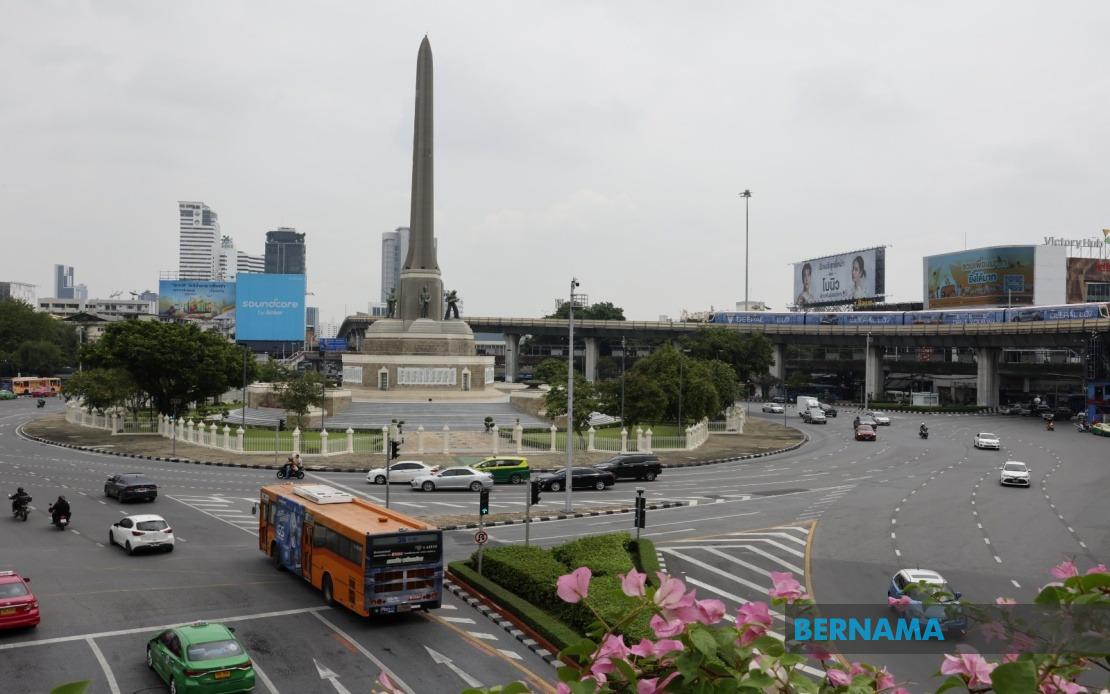
Thailand's marriage equality law continues reshaping social policy frameworks, with the government now establishing comprehensive death benefit provisions to ensure equal protection for all married couples regardless of gender composition. Deputy government spokesperson Ploythalay Laksameesaengjan emphasised the administration's commitment to modernising benefit entitlements and service systems to accommodate social diversity. This legislative modernisation positions Thailand as a regional leader on LGBTQ+ rights whilst requiring substantial public sector adaptation to implement equitable service delivery. Beyond domestic reforms, Thailand is asserting itself strategically regarding Myanmar's long-delayed Dawei deep-sea port project, with Russian interest in regional infrastructure investment creating new geopolitical dynamics affecting Myanmar's integration into broader economic frameworks.
Vietnam is embracing artificial intelligence integration across multiple governance domains. Ho Chi Minh City has become the first Vietnamese city and 57th globally to join the Cities for Better Health network, targeting obesity reduction through enhanced disease prevention, improved health literacy programmes, and community-wide wellness initiatives. Meanwhile, Can Tho City is deploying AI-powered public service systems including smart reception robots, virtual assistants, and automated question-and-answer platforms to streamline administrative processing. These technological adoptions address fundamental governance challenges affecting citizen satisfaction whilst potentially freeing human resources for more complex service provision.
Singapore's investment community is increasingly sophisticated in deploying artificial intelligence tools for portfolio analysis and market insights. Users at prominent brokerages including Moomoo, Tiger Brokers and Longbridge are leveraging AI capabilities to interpret market volatility, identify emerging investment opportunities, and make data-informed trading decisions. This technological sophistication amongst retail investors reflects Singapore's maturation as a financial hub and the democratisation of analytical tools once available only to institutional players. The trend exemplifies how Southeast Asia's wealthier economies are positioning themselves within global digital finance ecosystems, potentially widening investment opportunity gaps between technologically advanced populations and those with limited access to such analytical infrastructure. These developments collectively demonstrate Southeast Asia's concurrent navigation of natural disaster response, social modernisation, digital transformation, and economic adaptation, each country pursuing distinct strategies whilst maintaining regional cooperation frameworks that acknowledge mutual interdependencies in an increasingly complex geopolitical and environmental landscape.

