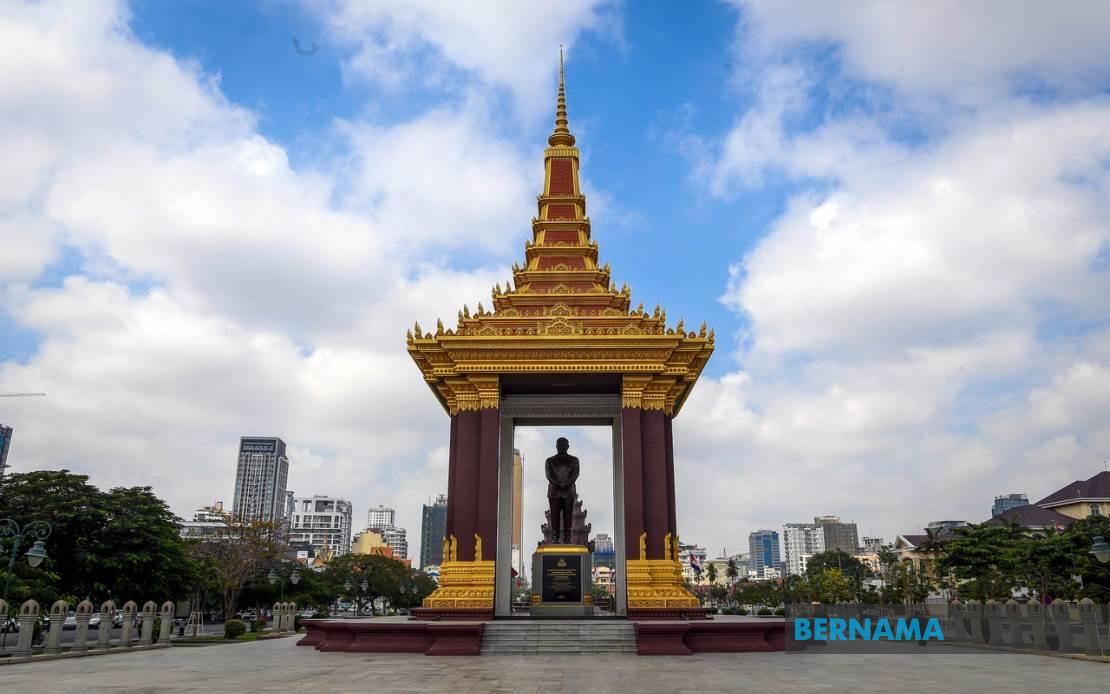
Across Southeast Asia this week, governments demonstrated a recurring theme: the region's growing willingness to court Beijing while simultaneously pursuing domestic modernisation agendas that reflect global trends in sustainability and technology. Cambodia typified this balance as Premier Li Qiang's visit underscored China's strategic importance to Phnom Penh's development trajectory. The "ironclad friendship" rhetoric, though familiar diplomatic language, carries weight in a region where infrastructure investment and economic patronage remain instruments of influence. For Malaysia, watching Cambodia's deepening alignment with Beijing offers lessons about positioning within great power competition—a complexity amplified by Cambodia's simultaneous entry into the World Artificial Intelligence Cooperation Organisation. This dual engagement signals that Southeast Asian states are learning to navigate between traditional bilateral relationships and emerging multilateral frameworks, recognising that AI governance structures will shape future economic competitiveness.
Cambodia's role as a founding signatory to the AI Cooperation Organisation represents a subtle but significant shift in global technology governance. Rather than defaulting exclusively to Western-led frameworks, the kingdom is positioning itself within a structure likely to reflect perspectives from China and other major economies with distinct technological philosophies. For Malaysian policymakers, this underscores an uncomfortable reality: hesitation to join such forums may carry opportunity costs. As artificial intelligence increasingly mediates everything from trade to security, nations that abstain from shaping global governance standards risk having standards imposed upon them.
Indonesia's announcement of plans for up to 50 ethanol plants demonstrates how President Prabowo Subianto is leveraging the nation's agricultural abundance toward energy independence. The E20 fuel program—mandating 20 percent bioethanol blending—transforms a commodity problem into a strategic asset. Indonesia produces 60 percent of global palm oil, and ethanol production from agricultural feedstocks offers a pathway to reduce both import dependence and domestic carbon emissions. This initiative holds implications for Malaysia, which competes fiercely with Indonesia in the palm oil sector. Should Indonesia successfully scale ethanol production while maintaining agricultural output, it gains a competitive edge in the lower-carbon fuel market, potentially reshaping regional energy security dynamics.
Simultaneously, Indonesia's commitment to developing a national electric motorcycle reflects President Subianto's broader industrial policy: capturing value across the automotive supply chain while addressing urban pollution in Southeast Asia's rapidly growing cities. Indonesia's massive domestic market—with motorcycle ownership deeply embedded in transportation culture—provides an ideal testing ground for electric alternatives. Malaysia's own automotive ambitions, centred on higher-value passenger vehicles, risk leaving the more voluminous two-wheeler segment to Indonesian manufacturers who are moving faster to electrification. The regional implication is clear: industrial policy momentum matters as much as existing capabilities.
Myanmar's approach to coastal management through integrated green, blue, and circular economy frameworks suggests that even amid political turbulence, long-term economic planning continues. The strategy to protect coastal ecosystems while promoting sustainable development acknowledges that Myanmar's future prosperity depends on environmental stewardship. However, implementation remains uncertain given the country's fractious political situation. The parallel announcement regarding the MSME Development Fund's support for cotton cultivation indicates an attempt to revitalise traditional industries while modernising production—a more modest but potentially more achievable goal than wholesale economic transformation.
Thailand's persistent struggle with informal sector economics emerged clearly in the Commerce Ministry's 40-baht khao kaeng scheme. The program, designed to subsidise affordable meals, foundered because market vendors were already selling at that price point without government support. This reveals a fundamental economic reality: Thailand's informal economy operates with margins so tight that state intervention cannot meaningfully reduce prices without addressing underlying structural issues like supply chain efficiency and input costs. For Malaysia, where hawker economics similarly drive urban food cultures, the lesson is cautionary: subsidies without productivity improvements often achieve populist optics rather than substantive relief.
Singapore's anti-drug operations, resulting in 100 arrests and S$34,000 in seizures during one month, underscore the island's enforcement rigour. Prime Minister Lawrence Wong's emphasis on mother tongue languages as cultural anchors contrasts with the region's broader drift toward English-language education. This tension—between cultural preservation and economic pragmatism—preoccupies all of Southeast Asia. Malaysia, with its own complex linguistic and cultural landscape, faces similar pressures to balance heritage education with skills demanded by global markets.
The Philippines' weather patterns and sports headlines occupy news space that elsewhere focuses on strategic policy, yet this distinction itself matters. The Philippines' regulatory environment for major policy announcements appears less dense than neighbouring states, or coverage reflects different editorial priorities. The country's vulnerability to monsoon-driven weather variations—and resultant agricultural impacts—remains economically significant even as international coverage emphasises infrastructure mega-projects and geopolitical positioning.
Thai student Pavin Pattanavekin's success in global coding contests at grade 3 level signals the region's emerging technological talent pipeline. Even as larger narratives about infrastructure and energy unfold, individual accomplishments in mathematics, science, and programming foreshadow future competitive advantage. Southeast Asia has long complained of brain drain toward developed economies; accelerating digital education at primary levels may gradually rebalance that dynamic if coupled with career opportunities at home.
Collectively, this week's news from seven Southeast Asian nations reveals a region simultaneously pursuing three distinct pathways: deepening alignment with Beijing across multiple sectors, rapid domestication of green energy and electric vehicle technologies, and defensive efforts to preserve cultural and social stability amid rapid change. Malaysia's engagement with these trends remains reactive rather than strategic. Cambodia's confident move into AI governance frameworks, Indonesia's ambitious industrial policy execution, and Thailand's pragmatic acknowledgment of economic constraints all suggest that survival in the coming decade requires clarity about comparative advantage and willingness to make difficult trade-offs. Southeast Asia's golden age, if it materialises, will reward nations that move decisively rather than those that hedge indefinitely.

