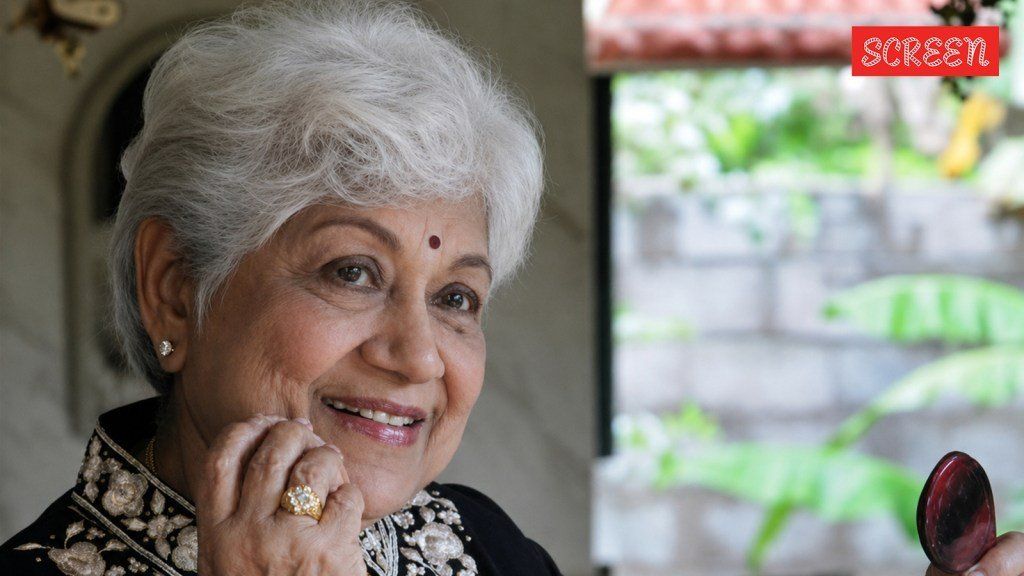
Sowcar Janaki, one of South India's most celebrated and prolific actresses, passed away on Friday after a short illness at a private hospital in Chennai. The 94-year-old veteran, whose real name was Sankaramanchi Janaki, had been admitted to intensive care before her death from age-related ailments. The announcement came from Nassar, president of the South Indian Artistes' Association, who confirmed that her remains would be kept for public viewing at Cenotaph Road in Teynampet from 5 pm that day.
With nearly 400 films to her credit, Sowcar Janaki represented a singular achievement in Indian cinema—a performer who transcended linguistic and cultural boundaries at a time when such versatility was far from common. Beginning her journey in 1950, she built an extraordinary body of work across Tamil, Telugu, Kannada, and Malayalam films, later extending her reach into television. This multilingual portfolio remains testament to her exceptional talent and the universal appeal of her craft. Her final Tamil film appearance came in 2020 with Biskoth, while her Telugu cinema farewell was in 2023 with Anni Manchi Sakunamule, allowing her career to span more than seven decades without interruption.
The Indian government recognized her immense contributions to the arts by awarding her the Padma Shri, one of the country's highest civilian honours. Beyond this, her accolades included the Filmfare Lifetime Achievement Award, two Nandi Awards, and the Kalaimamani Award, each marking critical moments in a career built on consistency, integrity, and artistic excellence. These honours were not mere recognitions of quantity but acknowledgment of the depth and influence she brought to every role she inhabited.
The loss reverberated immediately through South Indian cinema, with prominent figures across film industries rushing to express their grief and share memories of her distinctive presence. Tamil Nadu Chief Minister M. K. Stalin, himself a celebrated figure from the film world, released a statement highlighting how Sowcar Janaki had secured an enduring place in the affections of cinema-goers across generations. He emphasized her remarkable journey of playing varied and memorable characters, noting that her passing represented a profound loss not merely to the entertainment sector but to the cultural fabric of the region. In his tribute, the chief minister reflected on her success across linguistic boundaries and the numerous accolades that punctuated her career trajectory.
Actor Kamal Haasan, who had collaborated with her extensively over four decades beginning with the film Paarthaal Pasi Theerum, offered a particularly intimate tribute. He recalled how their on-screen chemistry—with her often cast as his mother and he as her child—had formed a significant portion of his early career, working under the mentorship of legendary director K. Balachander, who favoured her consistently. Haasan's emotional remembrance underscored the maternal quality she brought to her roles, describing her as indispensable to South Indian cinema and an embodiment of motherhood itself.
Telugu cinema icons also joined the chorus of remembrance. Jr. N.T.R. posted a tribute acknowledging how Sowcar Janaki had left an unmistakable imprint on Telugu and Indian film industries, while megastar Chiranjeevi penned a lengthy message in his native language honouring her illustrious journey spanning nearly seven decades. Chiranjeevi emphasized her natural acting prowess and the way she had breathed authentic life into diverse and complex characters, earning herself a cherished place in audience hearts across the Telugu-speaking world. His tribute highlighted the cross-linguistic significance of her work and its enduring resonance.
Actress Radhika Sarathkumar remembered Sowcar Janaki as a strong-willed pathbreaker and independent spirit, noting that she had been a close friend and admirer of Radhika's father, the late actor Mr. Radha. This personal connection underscored how Sowcar Janaki's influence extended beyond professional collaborations, shaping genuine relationships built on mutual respect within the film fraternity. Other luminaries including Prabhudeva and Vishnu Manchu added their voices, with Vishnu Manchu urging younger generations to study her legacy and understand the calibre of her contributions to Indian cinema.
The timing of her death marks the end of an era in South Indian cinema. Her final decade of work proved that she remained engaged with the industry until very recently, refusing to fade from the spotlight despite her advanced age. The release of Anni Manchi Sakunamule in 2023 when she was already 93 demonstrated her continued vitality and commitment to her craft. This resilience and dedication have become part of her enduring legend, particularly for audiences and practitioners across Southeast Asia who have followed South Indian cinema's evolution.
Sowcar Janaki's passing represents a significant cultural moment for the region. Her career predates the modern era of cinema and witnessed the entire transformation of South Indian film industries from their nascent stages through digitalization and globalization. For Malaysian film enthusiasts and those across Southeast Asia who consume South Indian cinema as part of their regional entertainment diet, her work represents a golden age when technical limitations were overcome by sheer artistic merit and screen presence. Her films continue to be discovered by new generations through streaming platforms and retrospective screenings.
The actress's legacy extends beyond her filmography. She represented a model of longevity in an industry often characterized by brief careers and forgotten faces. Her ability to remain relevant and sought-after across seven decades, multiple languages, and evolving industry standards offers a masterclass in versatility and professionalism. For aspiring actors across South India and the wider Southeast Asian region, her example demonstrates how excellence, consistency, and artistic integrity can build a career that transcends commercial cycles and generational shifts, ultimately securing immortality on celluloid.
As tributes continue to flow from colleagues, collaborators, and admirers, the vacuum left by her departure becomes increasingly apparent. The South Indian film fraternity has lost not merely an actress but a living link to its own history, a breathing archive of decades of cinematic tradition. For Malaysian audiences who have grown up watching South Indian cinema, Sowcar Janaki represents not just another performer but a symbol of the artistic richness and cultural depth that continues to make these industries globally significant and endlessly captivating.

