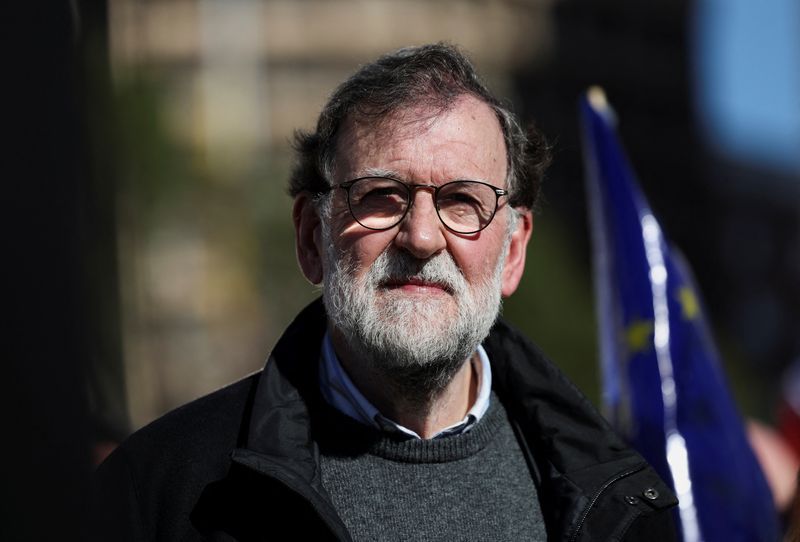
Spain's Foreign Minister Jose Manuel Albares issued an official apology on Tuesday for a provocative column written by conservative former Prime Minister Mariano Rajoy that cast doubt on the national identity of France's men's soccer team ahead of their World Cup semi-final clash. Albares characterised the piece as containing "the poison of racism and xenophobia" and emphasised that such views do not represent the Spanish mainstream, signalling serious diplomatic concern over remarks that threatened to overshadow a high-stakes international sporting competition.
Rajoy, who served as Spain's premier from 2011 to 2018, published his column in the online publication El Debate on Friday, expressing admiration for France's squad quality whilst simultaneously questioning its authentic "Frenchness" in what appeared to be a veiled criticism of players with African and Afro-Caribbean backgrounds. His phrase "France has a squad of the very highest calibre. Mind you, there are no French players in it" prompted immediate diplomatic fallout, highlighting longstanding sensitivities around identity and belonging in European politics.
The Foreign Minister's rebuke reflected a measured but unambiguous stance from Madrid's government. Speaking to Cadena SER radio, Albares drew a clear moral line, stating that "it's a very serious matter to go around using skin colour to determine who can be a citizen and who cannot." This language deliberately emphasised the fundamental wrongness of conflating ethnic or ancestral origin with national identity, a principle increasingly central to European discussions about integration and citizenship in multicultural societies.
Spanish Prime Minister Pedro Sanchez, who was in Paris for France's National Day festivities when the controversy erupted, added his own condemnation. In a post on social media platform X, Sanchez criticised "those who measure nationality by a person's surname, birthplace or skin colour," pointedly describing Rajoy's remarks as "shamefully xenophobic." The simultaneous criticism from both Spain's foreign and prime ministerial offices underscored official Madrid's desire to distance itself from the rhetoric, suggesting awareness that such comments risked damaging bilateral relations at a sensitive diplomatic moment.
Rajoy himself remained unavailable for immediate comment, leaving his party to provide damage control. Borja Semper, a spokesperson for Rajoy's People's Party (PP), characterised the column as written without malicious intent and suggested it represented sarcastic commentary rather than genuine racist sentiment. However, this defence appeared to carry limited persuasive weight given the explicit nature of the original statement and the broader context of escalating xenophobic discourse within Spanish and broader European politics.
The controversy unfolded against a backdrop of similar incidents plaguing the tournament. Days earlier, Paraguayan Senator Celeste Amarilla had published inflammatory remarks on social media following Paraguay's elimination, attacking France captain Kylian Mbappe with explicitly racist language. Amarilla described the star player as a "colonised Cameroonian, desperately trying to pass himself off as French," accusations that fundamentally questioned Mbappe's claim to national identity through explicitly racial terms. Mbappe responded with dignified restraint, defending not only himself but also the players from Paraguay, characterising Amarilla's conduct as "despicable and unworthy of her position."
In Paris, the response to Rajoy's column demonstrated rare political unity across France's normally fractious political spectrum. Foreign Minister Jean-Noël Barrot declared the remarks "pathetic," insisting in an interview with BFM TV that "France has no skin colour," and asserting that contrary statements represented "a sign of idiocy, racism, or both combined." Even the far-right National Rally, typically positioned in opposition to the government, condemned Rajoy's words. Spokesman Julien Odoul told FranceInfo television that the comments were "scandalous, shameful, deplorable," going further to characterise Rajoy himself as a racist.
The incidents underscore deeper tensions within European football and politics regarding demographic change and national identity. France's national team, like many in western Europe, reflects increasingly multicultural populations with players of diverse ancestral backgrounds. For some conservative commentators, this diversity appears to challenge historical conceptions of national identity rooted in ethnic or cultural homogeneity. The controversy thus transcends sporting commentary, touching fundamental questions about who belongs within the nation-state and on what terms citizenship is granted.
For Malaysia and Southeast Asian observers, the episode offers instructive parallels. Debates about national identity, citizenship, and belonging occupy similarly contested terrain across the region, particularly in societies marked by ethnic and religious diversity. The international backlash against Rajoy's remarks and the swift official condemnations from Spain and France suggest that contemporary European political norms increasingly reject explicit ethnic gatekeeping, even when dressed in cultural language. This contrasts with persistent identity politics in some Asian contexts, where comparable questions remain less settled.
The French Football Federation responded to the Amarilla incident by filing criminal complaints, signalling that such conduct now carries legal consequences in European jurisdictions. Paraguay's government, meanwhile, hastily distanced itself from Amarilla's remarks, describing them as contrary to national values. These institutional responses demonstrate how international sporting competitions increasingly serve as forums where broader social tensions surface and where nations face diplomatic consequences for tolerating xenophobic rhetoric from public figures.
The semi-final between Spain and France proceeded against this politically charged backdrop, with both nations apparently keen to shift focus toward the competition itself. However, the accumulating incidents suggested that questions of identity and belonging have penetrated professional soccer at the highest levels, with consequences extending beyond the pitch into international relations. The episode illustrates how sport, whilst often discussed in purely athletic terms, remains fundamentally entangled with politics, national identity, and competing visions of who belongs within modern democratic societies.

