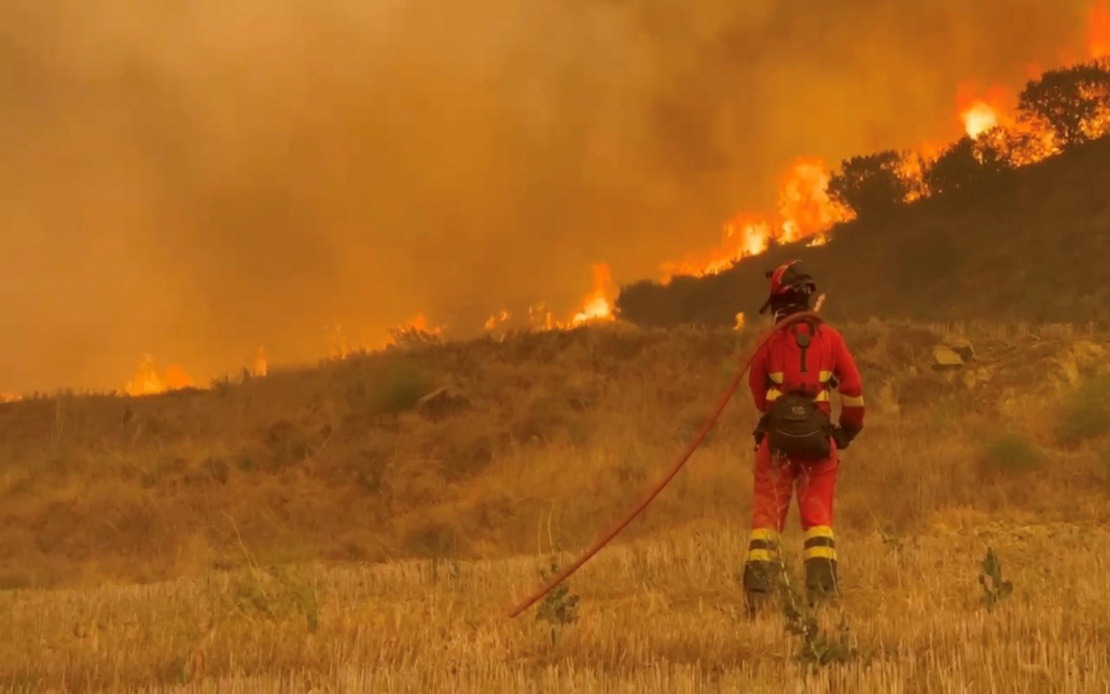
Spain is grappling with its most destructive wildfire season to date, as a massive blaze sweeping across the northeastern province of Zaragoza continues to defy containment efforts. The fire, which ignited on Wednesday in the Cinco Villas region, has already charred approximately 12,000 hectares of land and forced authorities to evacuate more than 1,100 people from surrounding communities. As of Friday, the blaze remained "quite active" with "significant" overnight expansion, presenting an ongoing challenge for Spanish emergency responders.
The scale of the evacuation reflects the fire's rapid and unpredictable spread. Authorities have ordered the departure of residents from five municipalities within Zaragoza province and one adjacent locality in neighbouring Navarre. The fire has created a continuous perimeter spanning roughly 60 kilometres, restricting movement across the affected region and prompting the closure of several major roads. Despite the scale of the crisis, authorities have managed to restore electricity supplies to all impacted towns, though the region remains under partial lockdown as firefighting operations intensify.
Combating this disaster has required substantial resources and coordination. By Thursday, Spanish authorities had mobilised approximately 400 ground personnel alongside 19 aircraft to assault the advancing flames. Overnight operations focussed particularly on defending the town of Uncastillo and surrounding residential areas from the approaching fire front. The speed and ferocity of the blaze demonstrate the extreme conditions currently prevailing across eastern Spain, where multiple simultaneous fires are testing emergency services capacity.
The Zaragoza fire is not an isolated incident. In the northern province of Guadalajara, a separate wildfire near La Mierla has consumed roughly 900 hectares and similarly forced evacuations and movement restrictions on neighbouring communities. These concurrent blazes have stretched Spanish firefighting resources to critical levels, necessitating additional military support. The regional government invoked its authority to deploy Spain's Military Emergency Unit, which dispatched approximately 100 personnel to reinforce civilian firefighting operations and provide logistical support.
A third significant fire erupted north of Madrid near Lozoyuela, though emergency services reported more favourable conditions compared to the Zaragoza and Guadalajara fires. Nevertheless, this blaze remains neither fully controlled nor contained, requiring continued vigilance and resource allocation. The concurrent nature of these fires across Spain's eastern and central regions suggests broader climatic and environmental factors at play, stretching existing firefighting infrastructure beyond normal operational capacity.
The fires have also triggered legal investigations. Civil Guard officers arrested a man suspected of deliberately igniting the Madrid-region wildfire. In response, the regional government announced its intention to participate formally in legal proceedings as a civil party, signalling a serious approach to holding the perpetrator accountable. This arrest underscores a troubling reality: while natural factors contribute substantially to wildfire propagation, human activity—whether negligence or deliberate arson—remains an aggravating variable in Spain's fire season.
Environmental conditions have created an ideal storm for rapid fire spread. Spain has experienced abnormally high temperatures, persistent strong winds, and critically low humidity levels in recent weeks. Paradoxically, abundant spring rainfall earlier in the year accelerated vegetation growth, providing the fires with plentiful fuel. This combination of opposing seasonal patterns—wet spring followed by arid, windy summer—has created conditions where fires can propagate with exceptional speed and intensity once ignition occurs.
Examining deeper systemic drivers, climate scientists and environmental experts have identified structural vulnerabilities in Spain's landscape that amplify wildfire risk. Changing climate patterns have intensified the frequency and severity of fire-conducive weather systems across Mediterranean Europe. Simultaneously, the abandonment of rural agricultural areas and pastoral management has allowed vegetation to accumulate unchecked, effectively pre-staging massive fuel loads awaiting ignition. Together, these long-term trends represent a troubling realignment of Spain's environmental baseline toward conditions more favourable to catastrophic wildfires.
For Malaysian and Southeast Asian observers, Spain's wildfire crisis carries sobering implications. Tropical regions including Malaysia face distinct but equally severe fire vulnerabilities, particularly during drought periods when peatlands become combustible and vegetation dries to critical thresholds. The intersection of climate change, land-use transformation, and inadequate preventative land management visible in Spain's current crisis mirrors challenges confronting Southeast Asia. The intensive resource requirements demonstrated by Spain's response—hundreds of personnel, dozens of aircraft, military mobilisation—illustrate the escalating costs of fire suppression when prevention fails. As global temperatures warm and weather patterns grow more volatile, regions from Kalimantan to Peninsular Malaysia may increasingly confront Spanish-scale catastrophes unless proactive landscape management and climate adaptation strategies receive sustained political investment and enforcement. Spain's present struggle serves as both cautionary example and operational manual for Southeast Asian policymakers contemplating comprehensive fire management reform.

