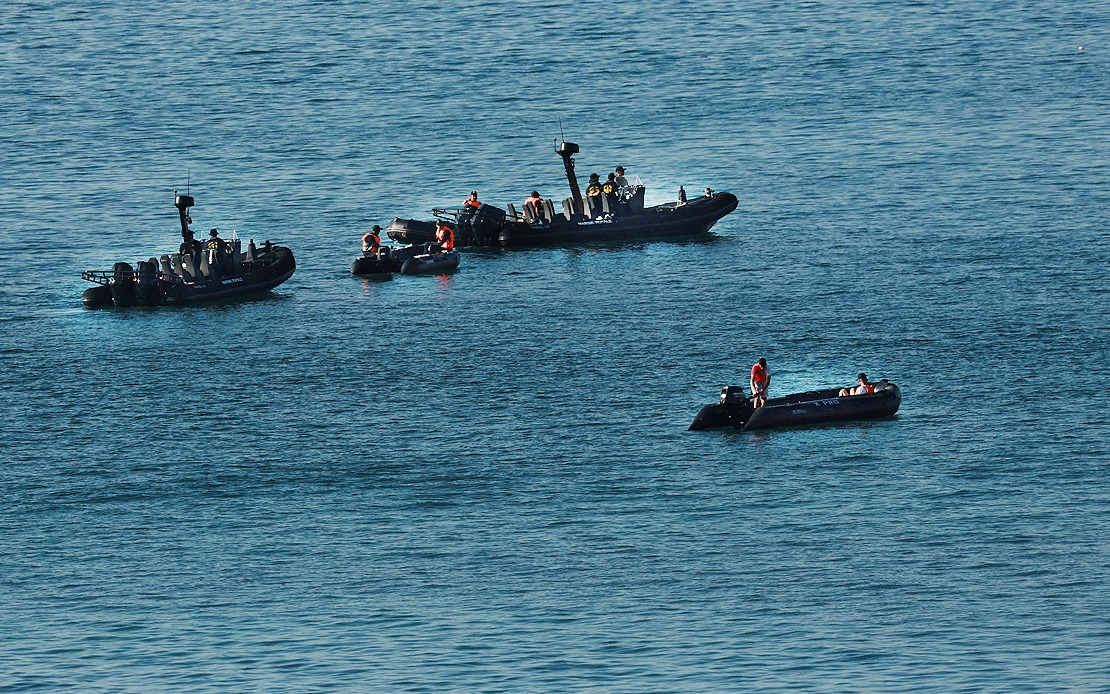
Spanish authorities are intensifying search operations in the waters surrounding Ceuta, the Spanish enclave on Morocco's northern coast, as recovery efforts continue following a catastrophic surge in migrant crossings that has claimed the lives of at least 67 people. The focus on locating additional bodies reflects the scale of the human tragedy that unfolded when tens of thousands of migrants attempted to reach European Union territory by swimming across the narrow strait separating Morocco from Spanish soil. The operation represents one of the most significant maritime incidents involving migrants attempting to enter Europe in recent years, underscoring the deadly consequences of irregular migration routes across the Mediterranean and North African corridors.
The sheer volume of people who entered Ceuta during the crisis period was staggering. Approximately 50,000 migrants successfully crossed from Morocco into the Spanish territory within just a few days, overwhelming the infrastructure of a region with a permanent population of only 85,000 residents. This massive influx transformed Ceuta from a relatively stable border enclave into a humanitarian flashpoint, straining local services and prompting immediate governmental responses at both the national and European levels. The speed and scale of the migration wave suggests that organised networks may have coordinated the crossing attempt, though the specific catalysts for this sudden surge remain subjects of investigation and diplomatic inquiry between Spain and Morocco.
In response to the ongoing emergency, local authorities have taken the precautionary step of preparing specialized facilities that can accommodate up to 200 additional bodies. This grim preparation indicates official expectations that the death toll may increase significantly as recovery operations continue. The establishment of such capacity underscores the humanitarian dimension of border security challenges, forcing governments to balance enforcement priorities with dignified treatment of the deceased. For Malaysia and other Southeast Asian nations grappling with their own maritime migration pressures, Ceuta's experience demonstrates how rapidly border situations can escalate and the importance of coordinated regional responses to prevent loss of life.
While the immediate crisis appears to be stabilizing, with Spanish authorities reporting that most migrants have voluntarily returned across the border to Morocco, the political fallout continues to reverberate across Spain and the European Union. Several senior EU leaders have publicly criticized the left-wing government in Madrid, suggesting that authorities either failed to anticipate the surge or mishandled the response once the crossing began. These critiques reflect broader tensions within Europe over migration policy, burden-sharing among member states, and the perceived adequacy of border controls. The controversy has elevated migration from a technical administrative matter to a high-profile political liability for the Spanish government, particularly as it confronts criticism from both conservative EU partners and humanitarian advocates.
Central to understanding both the crisis and Spain's response is a consequential ruling by the Spanish Supreme Court that fundamentally altered the legal incentives facing migrants attempting entry. The court determined that individuals who irregularly cross Spain's borders through unfortified sections, particularly maritime routes, retain the right to individual asylum assessments under EU law. This judicial decision created what Spanish officials characterize as a loophole in border enforcement, effectively signaling that those who successfully reach Spanish territory via seaborne routes face lower barriers to remaining in the country compared to other entry points. The ruling inadvertently transformed maritime routes into relatively more attractive pathways for migrants, contributing to the concentration of crossing attempts at Ceuta.
Spain's response to close this legal and practical vulnerability reveals the sophisticated interplay between judicial rulings, executive enforcement, and physical infrastructure in modern border management. Authorities have initiated a project to construct a physical barrier in the waters off Ceuta, installing buoys that demarcate a maritime boundary intended to prevent irregular crossings. This infrastructure-based approach aims to complement legal and policy measures by creating visible, tangible obstacles to crossing attempts. The initiative reflects a broader European trend toward technological and physical solutions to migration management, though such approaches remain controversial among humanitarian organizations and immigration advocates who question their long-term effectiveness and human rights implications.
The buffer barrier strategy serves multiple purposes beyond mere physical obstruction. By clearly delineating Spanish territorial waters and establishing a visible demarcation line, Spanish authorities create documentary and operational clarity regarding where crossing attempts occur and which jurisdiction applies to enforcement actions. This technical precision becomes important when interpreting legal standards and justifying enforcement decisions that might otherwise face judicial challenge. The buoy system essentially makes the border more legible and defensible in both physical and legal terms, reducing ambiguity that might otherwise benefit migrants seeking asylum through judicial arguments about irregular but not clearly demarcated crossing points.
From a regional perspective, the Ceuta crisis illuminates challenges facing multiple Southeast Asian nations managing their own maritime borders and migrant flows. Malaysia, Indonesia, Thailand, and other countries in the region regularly confront similar pressures from irregular migration, often involving routes through maritime zones where enforcement and legal jurisdiction become complicated. The Ceuta experience demonstrates how seemingly technical judicial rulings can have cascading effects on migration patterns, creating unintended incentive structures that migrants can exploit. Southeast Asian policymakers can draw lessons regarding the importance of coordinating legal frameworks, enforcement capacity, and physical infrastructure to prevent the kind of sudden surge that overwhelmed Ceuta's authorities.
The role of Morocco in both precipitating and resolving the crisis deserves examination. Spanish and EU officials will scrutinize whether Moroccan authorities adequately managed their side of the border to prevent such a massive coordinated crossing. Relations between Spain and Morocco regarding migration enforcement have historically been complex, involving questions about burden-sharing, development assistance, and reciprocal cooperation. The Ceuta surge may prompt renewed diplomatic engagement and potentially revised bilateral agreements governing border management and coordinated efforts to prevent irregular migration. For other regional powers, the episode underscores how border security challenges increasingly require multilateral and bilateral coordination rather than unilateral enforcement.
Looking forward, Spain faces the task of implementing its barrier infrastructure while navigating ongoing political criticism and legal challenges that will inevitably arise. EU partners are likely watching closely to assess whether Spanish responses effectively reduce crossing attempts without creating new humanitarian crises or legal complications. The success or failure of Ceuta's recovery and prevention efforts will influence how other European nations approach their own migration challenges. Meanwhile, the 67 confirmed deaths in Ceuta's waters serve as stark reminders of the human costs associated with irregular migration, compelling policymakers across Europe and beyond to develop approaches that combine effective border management with humanitarian protection for vulnerable populations seeking better lives through dangerous routes.

