The escalating dispute between Spain and Italy over internal border controls marks a significant rupture in European Union protocol, with Madrid announcing Friday that it would reimpose temporary checks on passengers arriving from Italian ports and airports starting Saturday through at least September 7. The decision represents a direct tit-for-tat response to Rome's unilateral move to reinstate border screening for Spanish arrivals, a step the Spanish government characterised as both unjustified and damaging to the principles of free movement that underpin the bloc's Schengen area.
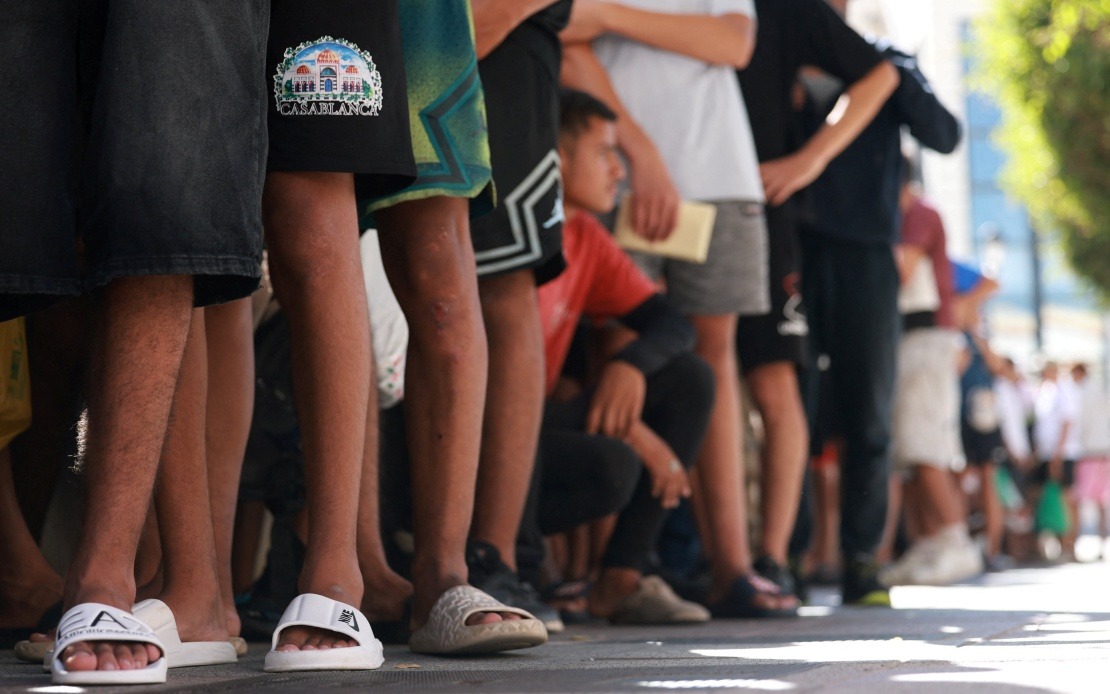
The immediate trigger for this diplomatic friction stems from a humanitarian crisis unfolding in Ceuta, Spain's autonomous enclave on the North African coast. At the end of July, approximately 80,000 migrants surged into the territory in a single dramatic episode, straining reception infrastructure and overwhelming local resources. While roughly 75,000 of these arrivals subsequently returned voluntarily to Morocco, between 3,000 and 5,000 individuals remain stranded in inadequate facilities, creating what Ceuta's regional president Juan Jesus Vivas described on Thursday as a severe humanitarian emergency.
Rome justified its border reinstatement by invoking national security concerns and the need to manage the potential secondary movement of asylum seekers and migrants deeper into the EU interior. Italian Prime Minister Giorgia Meloni announced the controls on July 31, framing them as essential safeguards against uncontrolled migration flows. The Italian government further clarified that its measures exempt Spanish nationals and other EU citizens travelling by air or sea, targeting specifically third-country nationals arriving overland or by other routes. Officials insisted that border authorities would attempt to minimise disruption to legitimate cross-border commerce and travel, positioning the controls as targeted rather than blanket restrictions.
However, Madrid's response on Friday painted a starkly different picture, accusing Italy of acting unilaterally without prior notification or coordination with other EU partners. Spanish officials labelled the Italian measures discriminatory and contrary to broader European Union interests, directly contradicting Rome's framing of the move as a proportionate security precaution. The Spanish government formally demanded that Italy withdraw its border controls immediately, suggesting the Italian position was both politically motivated and operationally unjustified. This public disagreement underscores fundamental divergences within the EU on how member states should respond to migration pressures without undermining Schengen principles.
Italy's statement made clear that Rome would not be swayed by what officials described as external pressure or ultimatums, particularly regarding matters deemed central to national security and border management. This defiant posture signals that European Commission appeals for restraint or mediation may prove ineffective, at least in the immediate term. The Italian government appears willing to absorb diplomatic friction rather than retreat from its position, reflecting the growing salience of migration control in domestic European politics and the capacity of elected leaders to resist institutional pressure when domestic constituencies demand stronger border measures.
The reimposition of internal checks within the Schengen area represents a significant step backward from nearly three decades of borderless travel that defined modern European integration. While temporary measures and exceptional circumstances have occasionally warranted such closures, particularly during security emergencies or health crises, their deployment in response to migration pressures sets a troubling precedent. Southeast Asian observers, particularly those from nations grappling with their own cross-border migration challenges, may view this EU rupture as instructive, highlighting how even wealthy, institutionally mature blocs struggle to maintain unified responses when individual member interests diverge from collective commitments.
The Ceuta emergency itself reflects longer-term dynamics reshaping migration patterns across the Mediterranean and into Europe. Morocco's economic and social conditions, compounded by regional instability and climate pressures, continue driving migration pressures northward. The sudden mass movement into Ceuta at the end of July, while unprecedented in scale for that particular enclave, sits within a broader context of sustained migratory pressure on southern European borders. Spain's vulnerability to these flows, given its geographic position and historical role as a primary entry point for migrants from North Africa, explains both the urgency of Madrid's concerns and the political capital invested in managing perceptions of border security.
The humanitarian dimensions of this dispute warrant underscoring. The thousands of migrants remaining in Ceuta's inadequate reception facilities face uncertain futures, caught between Spanish authorities unable to accommodate them and Moroccan authorities who may be reluctant to facilitate rapid readmission. This human dimension risks being overshadowed by the technical dispute between EU capitals over border protocols and Schengen principles. International humanitarian organisations have raised alarms about conditions in the enclave, suggesting that resolution of the bilateral dispute remains critical for addressing underlying humanitarian concerns.
For Malaysia and other Southeast Asian nations observing from afar, this European experience offers insights into the vulnerabilities of multilateral frameworks designed to facilitate movement while managing security. As regional mechanisms like the ASEAN Free Flow of Skilled Labour provisions and discussions around enhanced mobility agreements develop, the Spanish-Italian rupture demonstrates how national sovereignty claims and security anxieties can rapidly override institutional commitments when political pressure mounts. The selective nature of the Italian controls—applying to third-country nationals while exempting EU and Spanish citizens—also illustrates how border management tools can be calibrated along nationality lines, a feature relevant to how Southeast Asian nations might design their own mobility arrangements.
Looking ahead, the September 7 sunset date for Spanish checks suggests an expectation that bilateral negotiations might yield resolution within weeks. However, absent substantive progress on managing Ceuta's migrant population or securing Moroccan cooperation in preventing future surges, both nations face political incentives to extend their respective measures. Spanish centre-right and far-right parties have weaponised migration concerns in recent electoral cycles, while Meloni's coalition in Italy has built significant political capital around tough border stances. These domestic political dimensions mean that technical solutions endorsed by EU bureaucrats may face resistance from elected politicians answerable to voters who prioritise border control.
The broader implication extends to confidence in European integration mechanisms themselves. When internal border checks return, even temporarily, they signal that the Schengen consensus has fractured sufficiently to justify reverting to pre-1995 practices. Repeated cycles of this nature—whether triggered by migration, security threats, or health emergencies—gradually normalise the idea that open borders represent a privilege contingent on circumstances rather than a foundational commitment. This psychological and institutional erosion may ultimately prove as consequential as any single bilateral dispute.

