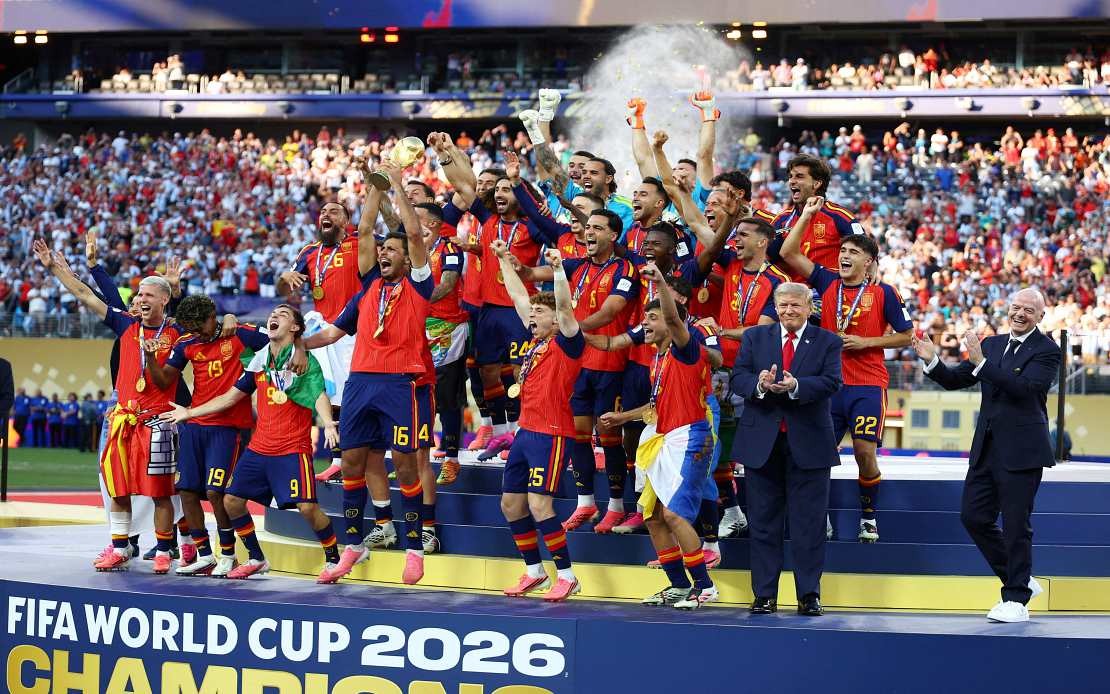
Spain's triumphant World Cup-winning squad touched down in Madrid on Monday afternoon to launch an unprecedented celebration of the nation's second men's World Cup championship. The team, captained by Rodri, arrived at the capital's airport at 12.50 pm local time, marking the beginning of a day-long schedule of official receptions and public displays designed to honour their achievement on the international stage.
The magnitude of the victory made the homecoming particularly momentous for Spanish football enthusiasts across the country. In the tournament's final held in the United States, Spain secured the title through an extra-time victory against Argentina, with Ferran Torres scoring the decisive goal that clinched the competition. The win represents a landmark moment for Spanish football, cementing the nation's status as a major force in international sport and delivering the trophy that had eluded the team since their first World Cup success.
The official welcome began with a reception hosted by King Felipe VI at the Royal Palace during the afternoon hours, signalling the state's recognition of the team's accomplishment. This formal ceremony provided an opportunity for the monarchy to acknowledge the players' dedication and the pride they had brought to Spain through their performance on the world's largest football stage. Prime Minister Pedro Sánchez, who had witnessed the final match in person at the New Jersey stadium, later expressed his sentiments on social media, posting that "We Are World Champions" and praising the national team's exceptional performance.
Following the palace reception, the celebrations expanded into a public spectacle that showcased the depth of national support for the team. An open-top bus parade through Madrid's streets allowed hundreds of thousands of supporters to line the routes and express their appreciation directly to the players. This traditional method of celebration has become synonymous with major sporting victories across Europe, providing a tangible connection between the athletes and the communities they represent.
The day's festivities were designed to reach their crescendo at Cibales Square, where organisers scheduled a major public event commencing at 6 pm. The team was expected to arrive at the venue around 9 pm, allowing time for preliminary entertainment and for crowds to gather in anticipation of the players' appearance. The choice of this location, one of Madrid's most iconic public spaces, underscored the significance attributed to the championship victory within Spanish society.
For the players themselves, the homecoming represented a moment to share their achievement with the supporters who had followed the team's progress throughout the tournament. Defender Marc Cucurella articulated this sentiment when speaking to media ahead of the return, noting that many Spanish fans had been unable to travel to the United States for the final match. He expressed the team's eagerness to celebrate collectively, acknowledging that "we deserve a good celebration" and demonstrating the players' recognition of the emotional investment the public had made in supporting their World Cup campaign.
The royal family's attendance at the final match in New Jersey, alongside the Prime Minister, reflected the highest levels of official endorsement and the national importance accorded to the tournament. This conspicuous presence demonstrated that the World Cup victory transcended the realm of sports entertainment and held significance as a matter of national pride and prestige. The combination of political leadership and royal representation underscored how major international sporting achievements function as moments of national unity and collective identity in contemporary Spain.
From a regional perspective, Spain's victory holds implications for European football's competitive balance. The success reaffirms the strength of Spanish football's technical and tactical traditions at the highest level of competition. For Southeast Asian nations like Malaysia, watching how European football powers organize their domestic competitions and engage their fan bases provides instructive examples of sports administration and public engagement, particularly as Malaysian football continues to develop its professional infrastructure and audience engagement strategies.
The scale of the planned celebrations also reflects the economic and social benefits major sporting victories generate. Tourism, merchandise sales, and media coverage surrounding the championship extend well beyond the tournament itself, generating sustained economic activity and international attention for Spain. The public parade and square festivities serve as investments in civic morale and social cohesion, phenomena that resonate across different national contexts when communities celebrate collective achievements.
As the celebrations unfolded in Madrid, Spain's World Cup triumph would likely influence global football for seasons to come, potentially inspiring tactical innovations and player development approaches across other national federations. The tournament's conclusion marked not merely the end of a competition but the beginning of a legacy that would shape discussions about modern football's evolution and the qualities necessary for sustained international success at the sport's highest level.

