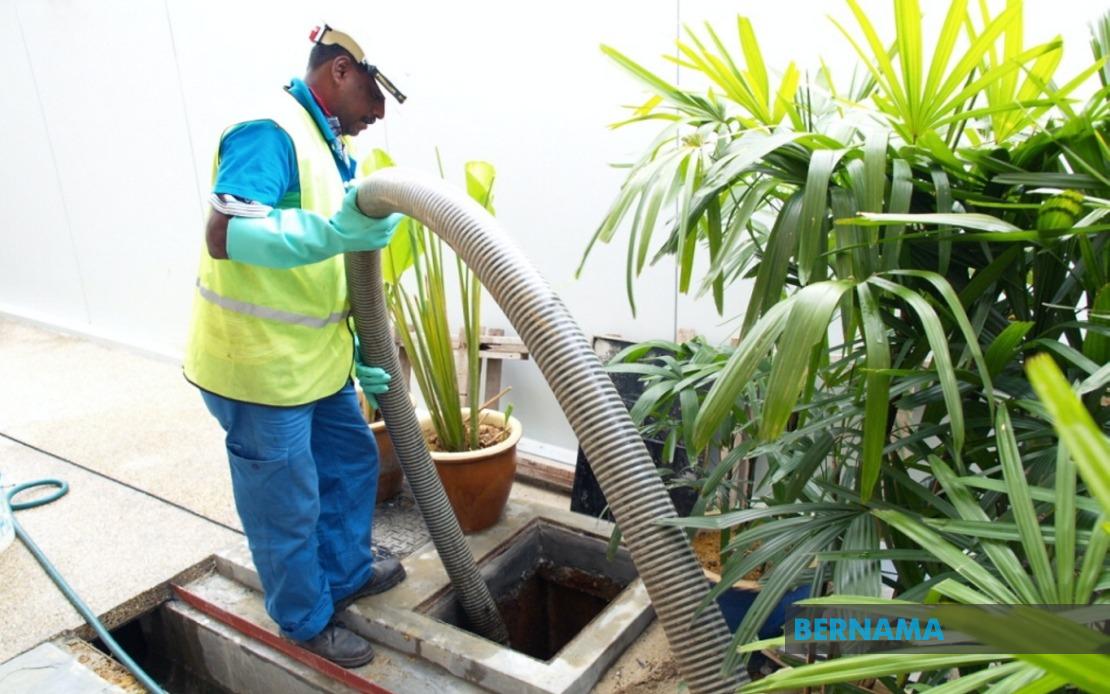
The National Water Services Commission (SPAN) has cracked down on environmental and health violations in Sungai Petani, issuing 270 compliance notices to property owners who have failed to properly maintain their septic tank systems. The enforcement operation, which unfolded between August 4 and 6, targeted 341 premises across the commercial and residential zones of the Kedah town, uncovering a systemic pattern of regulatory non-compliance that officials say poses serious risks to public health and water quality.
According to Ainal Yusman Mohamad Yusop, director of SPAN's Operations Division Enforcement Section, the inspections revealed that 242 commercial establishments and 99 residential properties had collectively breached maintenance requirements set by Indah Water Konsortium Sdn Bhd (IWK), the licensed service provider responsible for managing wastewater infrastructure in the region. Each premise owner found in violation received a formal notice requiring immediate corrective action, marking a significant escalation in regulatory pressure against environmental negligence in the area.
The investigation uncovered a startling reality about the age and condition of Sungai Petani's built environment. The majority of inspected buildings date back to the 1970s and 1980s, a period when many Malaysian towns experienced rapid but uneven infrastructure development. More troubling was the discovery that septic tank systems at these locations had languished without proper servicing for extended periods, with some records indicating that maintenance work had not been performed since the late 1990s—gaps spanning more than two decades in several cases.
The enforcement action carries significant legal weight. Under Section 65(1)(c) of the Water Services Industry Act 2006 (Act 655), property owners bear explicit responsibility for maintaining their septic systems by engaging licensed service providers or permit holders to carry out desludging operations. This statutory obligation creates a clear legal framework that SPAN and IWK can now leverage to compel compliance across the town. For those who had simply overlooked their responsibilities, the notices serve as a formal reset; for those who have been deliberately skirting the rules, they represent the opening move in a potential enforcement cascade.
Property owners who received notices have been granted a fourteen-day window to respond and take corrective action. This grace period reflects a graduated enforcement philosophy that gives premises owners an opportunity to remedy violations voluntarily before facing more severe consequences. However, SPAN has made explicit that non-compliance will trigger escalating measures, including the issuance of formal offence notices and potentially full investigations that could lead to prosecution.
The financial penalties for continued defiance are substantial enough to focus minds. Anyone convicted of violating the relevant provision of Act 655 faces a fine of up to RM50,000, a sum that would represent a significant cost to most small and medium-sized businesses. For commercial operators running tight margins, this penalty structure effectively converts septic tank maintenance from an optional expenditure into a mandatory one, shifting the economic calculus in favour of compliance.
The Sungai Petani operation signals a broader tightening of environmental enforcement in Malaysia's water services sector. As municipalities across the country grapple with aging infrastructure and growing populations, the performance of septic systems has become increasingly critical to public health and environmental protection. Improperly maintained tanks can contaminate groundwater, create public health hazards, and contribute to environmental degradation—externalities that ultimately affect entire communities.
For Malaysian readers in similar towns with older building stock, the Sungai Petani enforcement serves as a timely reminder that regulators are moving beyond passive compliance monitoring towards active, systematic inspections. Property owners in other localities who have deferred septic tank maintenance should view this operation as a warning sign that similar drives could reach their areas. The coordination between SPAN and IWK demonstrates that authorities are developing the institutional capacity to conduct large-scale, coordinated enforcement operations rather than relying solely on reactive complaint-based systems.
The presence of so many premises with septic systems dating back fifteen or more years without maintenance also raises questions about the effectiveness of previous compliance notification systems. If IWK issued notices to these property owners in the past without resulting in corrective action, it suggests that the escalation to formal SPAN enforcement notices may have been long overdue. The operation illustrates how regulatory gaps can compound over time, creating concentrations of violations that eventually require intensive enforcement responses rather than ongoing routine oversight.
Looking ahead, the fourteen-day compliance window will likely determine the effectiveness of this enforcement drive. If the majority of property owners respond by engaging licensed service providers and completing desludging work, the operation will have achieved its deterrent purpose without requiring prosecution. However, if significant numbers of premises ignore the notices, SPAN's follow-through with offence notices and investigations will test the regulator's capacity to pursue cases through what could potentially become a lengthy administrative and legal process.
For the broader Malaysian context, this Sungai Petani operation reflects evolving regulatory priorities in the water services sector. As the country's urban and semi-urban areas continue to age and regulations around environmental protection tighten, property owners—whether commercial operators or homeowners—should anticipate increased scrutiny of basic infrastructure maintenance. The combination of statutory responsibility, formal enforcement mechanisms, and significant financial penalties creates a regulatory environment where neglect is no longer merely a sustainability issue but a legal exposure.

