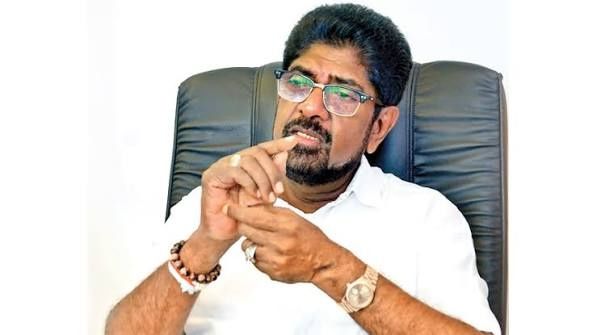
Keheliya Rambukwella, a former minister in Sri Lanka's government, has been detained by anti-corruption investigators on suspicion of engineering the theft of a historically significant granite artifact from the island nation's royal heritage. The Commission to Investigate Allegations of Bribery or Corruption (CIABOC) announced the arrest on Tuesday, saying the prominent political figure conspired to remove what is known as a moonstone—an ornately carved circular rock that once formed part of the ceremonial threshold leading into the palace of Veera Parakrama Narendrasinghe, a Sinhala king whose reign ended in 1739. The alleged crime occurred in December 2022, several months into a period of severe economic and social upheaval across Sri Lanka.
The moonstone represents far more than a valuable artifact to Sri Lankans and historians of South Asian royal architecture. These carved granite stepping stones, which traditionally marked entrances to palace complexes, embodied symbolic and spiritual significance within the kingdom's cultural framework. The removal of such an object during a time of national crisis raises questions about the protection of national heritage during periods of institutional weakness. Rambukwella's alleged involvement in orchestrating its disappearance extends beyond simple theft; CIABOC has charged that he actively conspired with others to facilitate the removal while simultaneously obstructing police investigations into the matter. The allegations paint a picture of deliberate interference with the course of justice during his tenure in government.
Beyond the moonstone case, Rambukwella now faces prosecution for a second, seemingly unrelated charge involving misuse of government resources. Investigators have determined that he utilized state funds to employ six individuals for his private business operations, a clear breach of public trust and proper conduct expected of elected officials. This charge underscores a pattern of allegedly blending personal interests with government authority—a recurring concern in Sri Lankan politics where institutional oversight mechanisms have struggled to function effectively. The timing of this discovery alongside his involvement in the theft investigation suggests that anti-corruption authorities are conducting a more comprehensive examination of his time in office.
The arrest assumes greater significance when viewed against the backdrop of a separate, ongoing judicial proceeding that has already ensnared Rambukwella in an even more serious scandal. While serving as the nation's health minister, he authorized the procurement of medications for public hospitals that proved to be counterfeit or fraudulent. Most notably, police investigations revealed that a supposed life-saving cancer treatment purchased for state facilities was ultimately nothing more than water—a discovery that speaks to the depths of institutional corruption that plagued Sri Lanka's healthcare system during its economic collapse. Law enforcement have presented evidence to the court documenting his authorization of these dangerous purchases, establishing his direct involvement in decisions that potentially endangered patients' lives.
The counterfeit medicine scandal extends far beyond Rambukwella's personal accountability. Multiple senior officials from the health ministry have been formally charged in connection with the drug procurement scheme, suggesting a broader institutional failure rather than isolated wrongdoing. This systemic corruption occurred precisely when Sri Lanka could least afford such criminal negligence. Following the nation's declaration of bankruptcy in April 2022 and a consequent default on its massive US$46 billion foreign debt, the country descended into a severe shortage of essential medications and medical supplies. Healthcare institutions struggled to source genuine pharmaceuticals at any price, making the procurement of fraudulent drugs particularly egregious—it represented not merely financial malfeasance but a direct threat to public health during a period of acute vulnerability.
Rambukwella's career trajectory reflects the challenges facing Sri Lanka's institutional reform efforts. His progression from health minister, overseeing a portfolio that should demand the highest ethical standards, to defendant in multiple criminal proceedings illustrates how thoroughly corruption had penetrated the highest levels of government. The health ministry position is inherently one demanding integrity and public-spirited decision-making; the authorization of counterfeit cancer treatments violated both professional ethics and basic humanitarian principles. His simultaneous involvement in heritage theft and financial misconduct suggests a broader disregard for public obligations and the rule of law.
The anti-corruption commission's willingness to pursue these cases reflects shifting political dynamics in Sri Lanka following the country's severe economic crisis. When nations face existential threats to their survival, public tolerance for corruption often evaporates, creating political space for previously marginalized accountability institutions to operate. CIABOC's proactive investigation and arrest of such a prominent figure suggests that reform momentum may be building, though sustained progress remains uncertain given the historical weakness of Sri Lankan anti-corruption mechanisms. The commission's ability to follow through with prosecution and secure convictions will ultimately determine whether these arrests represent genuine institutional change or merely performative action.
For Southeast Asia more broadly, the Sri Lankan case offers instructive lessons about governance during economic crises. When nations face external debt defaults and currency collapses, institutional checks on corruption often simultaneously weaken—precisely when ethical standards need strengthening most. Officials facing budgetary constraints may be tempted to cut corners or engage in illegal schemes to maintain operations. The moonstone theft during a period of national distress, coupled with fraudulent drug purchases made during acute medicine shortages, exemplifies how crisis creates conditions for spectacular failures of governance. Malaysia and other regional economies can observe Sri Lanka's experience as a cautionary tale about the importance of maintaining robust institutional independence and oversight even during periods of severe economic stress.
The broader implications of Rambukwella's detention extend to questions about political accountability and institutional resilience in South Asian democracies. Sri Lanka's ability to investigate, prosecute, and potentially convict a former minister for crimes committed while in office will signal whether the country's democratic institutions possess sufficient independence and strength to function without political interference. The accumulation of charges—from heritage theft to health minister fraud to misuse of public funds—suggests that anti-corruption authorities have developed substantial investigative capacity. Yet the real test comes in courtroom proceedings where political pressure and institutional bias could potentially undermine justice. How Sri Lanka handles these cases will influence perceptions of institutional credibility not only domestically but throughout Southeast Asia.

