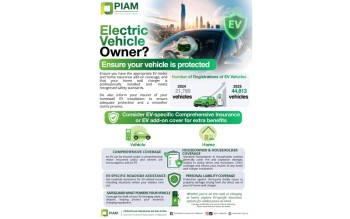
Following a residential fire in Cheras traced to an electric vehicle home charger that caused substantial property destruction, Malaysia's insurance industry has moved to clarify coverage protections and requirements for EV-related incidents. The General Insurance Association of Malaysia (PIAM) has issued guidance addressing widespread uncertainty over whether standard domestic insurance policies adequately protect homeowners against fire hazards linked to electric vehicle charging infrastructure, a concern gaining traction as EV adoption accelerates across the country.
Chua Kim Soon, chief executive of PIAM, confirmed that conventional house owner and fire insurance policies available in the Malaysian market explicitly extend to fire damage regardless of the origin of ignition. This principle applies universally across standard policies, meaning an EV charger fire would fall within standard coverage parameters. However, this protection operates within defined boundaries: it remains contingent on full compliance with the policy document's stipulated terms, conditions, and exclusions. Critically, coverage lapses if evidence emerges of fraudulent claims, deliberate acts of arson or sabotage, or material breaches of the conditions the policyholder agreed to when purchasing the insurance.
The classification of EV charging equipment under insurance policies creates important distinctions that directly affect claim outcomes. Permanent chargers that are hard-wired into a home's electrical infrastructure typically fall under the "buildings" category of standard home policies, treated as fixtures and fittings attached to the property itself. In contrast, portable or unattached charging cables and equipment generally require separate protection through specialised electric vehicle motor insurance policies or supplementary coverage packages that insurers specifically design for EV owners. This distinction matters considerably because misclassification at the time of purchase could create coverage gaps when claims arise.
Insurers across Malaysia impose explicit safety obligations on policyholders as a precondition of coverage. Homeowners must exercise reasonable care in maintaining their electrical systems and comply with established electrical safety standards. When assessing claims—particularly those involving fire or electrical damage—insurers conduct thorough investigations drawing on official reports from fire departments and other statutory authorities. These investigations specifically examine whether fires resulted from deliberate actions such as arson, insurance fraud, or non-compliance with building regulations and safety codes, including instances where homeowners have undertaken unlawful or uncertified electrical work or modifications.
Chua strongly advised homeowners to proactively communicate with their insurance providers immediately upon installing a permanent EV charger. This notification requirement serves multiple protective functions. Declaring electrical upgrades to the insurer ensures that the property's sum insured—the declared value of the building for insurance purposes—accurately reflects current reconstruction costs in today's inflationary environment. Moreover, transparent disclosure prevents potential disputes during the claims process, as insurers cannot later claim they were unaware of material changes to the property's risk profile. Homeowners must also verify that their nominated sum insured accurately captures the updated rebuilding costs, particularly if the property has undergone modifications or now contains modern fixtures that would cost more to replace than when the original policy was written.
The risk of fire or electrical incidents spreading beyond the immediate property presents a crucial consideration, particularly for Malaysians living in terrace houses, townhouses, or high-rise residential buildings. In such configurations, a fire originating from one unit can rapidly propagate to neighbouring properties, potentially causing significant damage to adjacent homes and endangering multiple families. This reality necessitates careful evaluation of public liability limits, which protect homeowners financially if their property damage causes injury or loss to others. While PIAM notes that standard house owner policies conventionally provide public liability coverage capped at RM50,000, this baseline figure may prove inadequate in scenarios where fire spreads to multiple neighbouring units or causes substantial third-party losses. Policyholders have the option to purchase optional extensions that increase their liability ceiling, providing stronger financial protection against potentially substantial claims from affected neighbours.
For electric vehicle owners, a comprehensive insurance review should examine both motor and home policies simultaneously to identify and address coverage gaps. EV owners must ensure their motor insurance covers the vehicle itself, including risks specific to electric powertrains such as battery-related incidents. Simultaneously, the home insurance must adequately protect charging equipment and the residential structure against fire and electrical hazards. Without this integrated approach, owners risk discovering at claim time that critical coverage gaps exist, leaving them to bear substantial uninsured losses. The intersection of EV technology and property insurance represents a rapidly evolving domain where standard policies may not yet fully account for emerging risks, making personalised policy review essential for comprehensive protection.

