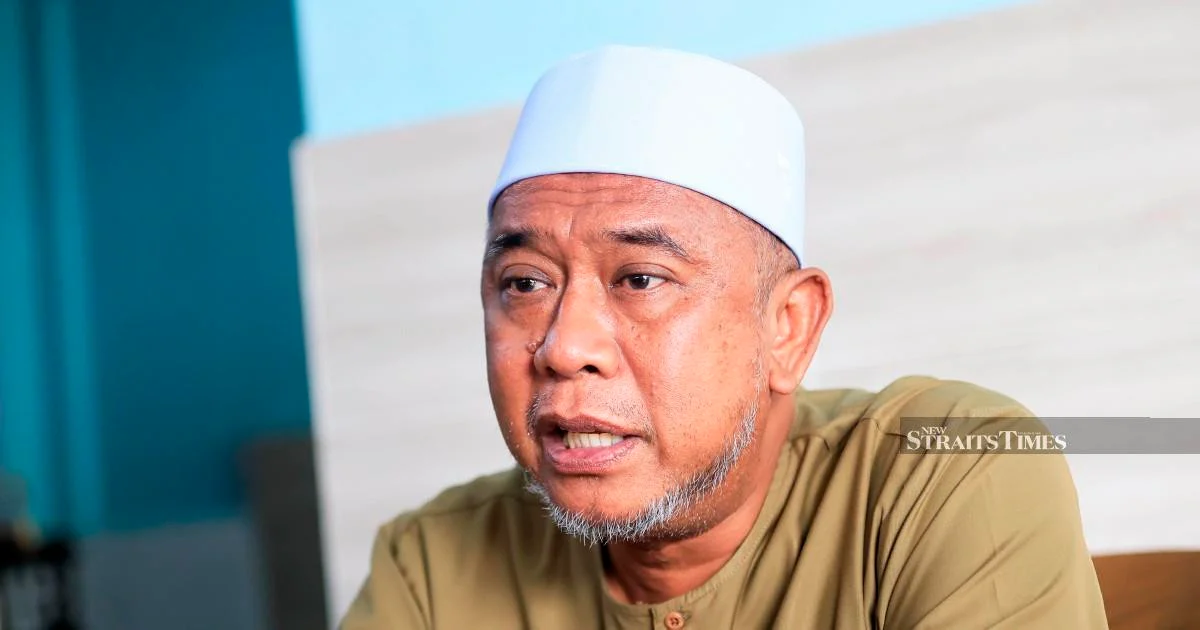
Tensions within the Perikatan Nasional coalition have surfaced publicly during the Johor election campaign, as the Bersatu-backed candidate Abdul Mutalip Abd Rahim openly criticized his coalition partner Pas for communications that he believes are muddying the political message to supporters. Speaking from Kluang, Mutalip expressed frustration at the frequency and content of statements emanating from Pas leadership, suggesting that these pronouncements risk disorienting the very voters the coalition needs to win over in the forthcoming election.
This public spat underscores deeper coordination challenges within Perikatan Nasional as it battles for control of Johor, Malaysia's second-largest state and traditionally a stronghold for Umno. The coalition, which came to power nationally in 2020, has struggled to maintain unity at state level, particularly when electoral prospects become competitive. Johor represents crucial electoral terrain: the state accounts for 56 seats in the state assembly and has significant influence over national political dynamics. A strong performance here could bolster Perikatan Nasional's standing ahead of future national contests, while a poor showing would intensify speculation about fissures within the alliance.
Mutalip's intervention signals that grassroots workers and candidates within the coalition are expressing genuine concerns about mixed messaging during campaign season. When different coalition parties issue separate directives or statements on campaign strategy, candidate positioning, or voter targeting, it creates confusion not only among supporters but also among the party machinery tasked with coordinating ground operations. In a state like Johor, where voter preferences have shifted dramatically over recent election cycles, maintaining message discipline becomes especially important for consolidated political impact.
Pas, the largest component of Perikatan Nasional by organizational membership, has historically operated as an independent force within coalitions. The party brings substantial grassroots reach in rural and small-town areas, particularly in Johor's interior districts. However, this autonomy can become problematic when joint campaigns demand unified positioning. The Islamist party's propensity for issuing clarifications and statements reflects both its ideological emphasis on public communication and, critics argue, occasional coordination gaps with coalition partners.
For Bersatu, which entered Perikatan Nasional relatively recently and carries the political baggage of being seen as Muhyiddin Yassin's personal vehicle, maintaining coalition discipline is critical to establishing credibility as a serious political force. The party lacks the organizational depth of Pas and cannot afford to be overshadowed during coordinated campaigns. Mutalip's public remonstration appears designed to assert Bersatu's voice and prevent Pas from dominating the narrative around Perikatan Nasional's Johor campaign.
The electoral context adds urgency to these internal tensions. Johor's political landscape has become increasingly competitive, with Umno-led Barisan Nasional retaining significant support despite recent national setbacks, while Pakatan Harapan coalition candidates are also contesting multiple seats. In such a fragmented environment, every message matters. Voters in marginal seats—where elections are determined by narrow margins—pay close attention to campaign communications and party positioning. Conflicting signals can depress turnout among coalition supporters or encourage vote-splitting, both catastrophic outcomes for an alliance that needs to maximize its electoral footprint.
This is not the first time Perikatan Nasional's constituent parties have clashed publicly over campaign conduct. Similar tensions emerged during the 2022 national election campaign, when different coalition voices offered varying interpretations of party strategies and candidate eligibility criteria. These episodes revealed structural weaknesses in coalition decision-making mechanisms and highlighted the challenge of managing parties with distinct organizational cultures and political priorities within a unified electoral framework.
For Malaysian voters observing Johor politics, the visible discord within Perikatan Nasional may reinforce existing perceptions of the coalition as an unstable alliance of convenience rather than a cohesive political force united by shared ideological or policy objectives. Coalitions in Malaysian politics thrive when they project competence and unity; public bickering between component parties erodes this image. Conversely, some voters may interpret such tensions as evidence that parties within the coalition are defending their independence and not simply absorbing themselves into a larger structure.
The broader implication for Southeast Asian coalition politics is that multi-party alliances face inherent coordination challenges that intensify during competitive electoral periods. Perikatan Nasional's experience mirrors difficulties faced by coalitions in other regional democracies, where maintaining discipline while respecting each component party's autonomy requires constant negotiation and sophisticated communication strategies. Mutalip's call for Pas to moderate its communications appears to be an attempt to reassert coalition discipline, but whether such public appeals prove effective remains questionable in a political environment where parties jealously guard their public platforms.

