Barisan Nasional leadership is banking on sustained voter enthusiasm heading into Saturday's Negeri Sembilan state election, buoyed by an impressive early voting phase that far exceeded initial expectations. With early voter turnout reaching 88.97 per cent as of 3 pm on July 28, BN chairman Datuk Seri Dr Ahmad Zahid Hamidi has signalled optimism that the electoral momentum will translate into strong participation on polling day. The early voting statistics represent a meaningful indicator of public interest in the 16th state election, coming at a time when Malaysia's political landscape continues to shift following recent realignments at both state and federal levels.
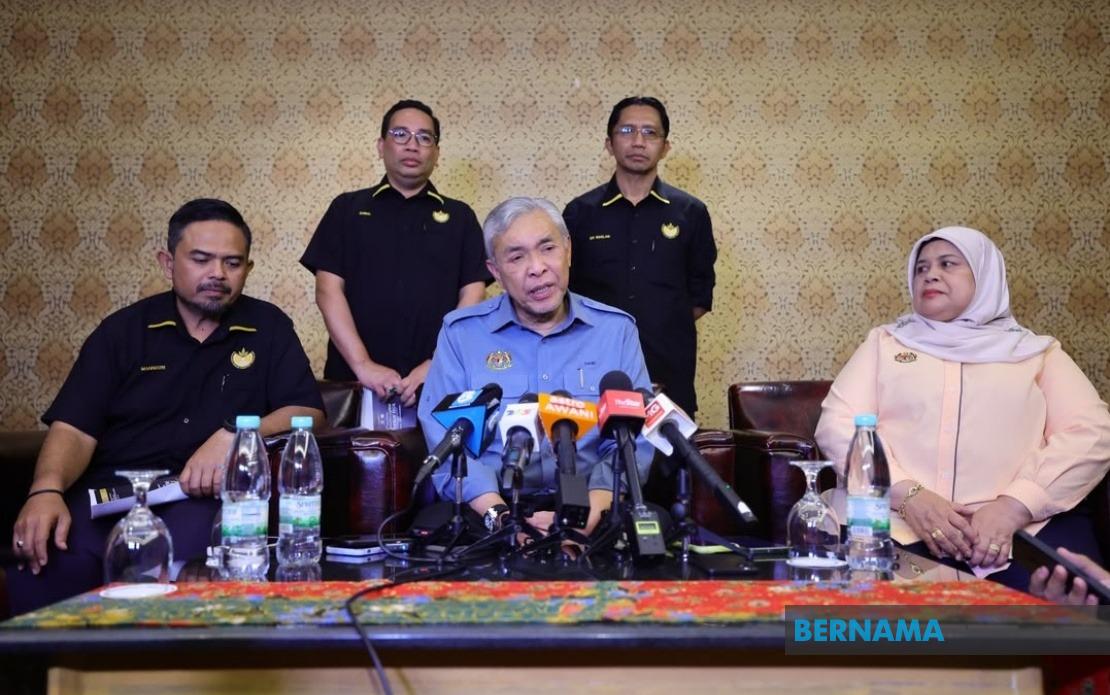
Ahmad Zahid's remarks, made during a press conference in Seremban following his officiation at the RISDA Central Zone Smallholders Convention, underscored BN's interpretation of the early voting phase as a validation of democratic engagement. He commended the 22,339 voters who participated in the early voting window, noting that the Election Commission had provided detailed breakdowns of participation across different voter categories. The BN chairman framed the high turnout as a positive indicator for the health of Malaysia's democratic processes, emphasising that robust voter participation strengthens the legitimacy of electoral outcomes regardless of which coalition emerges victorious.
The early voting cohort comprised two distinct groups with different voting mechanisms. Military personnel and their spouses made up the largest segment, with 11,293 individuals casting ballots in person during the early voting period. Police personnel and their families contributed another 5,174 in-person votes. The remaining early voters, numbering 5,872, submitted postal ballots, reflecting the diverse voting arrangements the Election Commission has established to accommodate voters with mobility constraints or occupational obligations. This stratified approach to early voting has become increasingly important in Malaysia's electoral administration, particularly for security and uniformed personnel whose schedules may not align with standard polling day arrangements.
The overall eligible voter base for Saturday's election stands at 867,151, meaning that the early voting phase captured roughly 2.6 per cent of the total potential electorate. While this percentage appears modest in absolute terms, the 88.97 per cent participation rate among those designated for early voting demonstrates strong engagement within these specific voter categories. Election Commission chairman Datuk Seri Ramlan Harun has articulated a target range of 72 to 75 per cent overall voter turnout for the main polling day, suggesting that if early voting momentum carries through, Negeri Sembilan could see historically competitive participation levels. Such turnout figures would be particularly significant given that state elections in Malaysia often struggle to achieve turnout rates comparable to federal general elections.
Ahmad Zahid's characterisation of Barisan Nasional as an underdog in the Negeri Sembilan contest reflects the coalition's acknowledgment of electoral headwinds in a state where political fortunes have shifted considerably in recent years. The three days remaining in the campaign period represent a crucial window for BN's ground machinery to consolidate support and reach persuadable voters. The coalition's decision to intensify voter outreach during this final stretch suggests internal assessments that the early voting phase, while encouraging, does not guarantee advantage on the main polling day when a broader cross-section of the electorate will vote.
The early voting results carry implications extending beyond Negeri Sembilan's immediate electoral contest. Strong participation among military and police personnel offers insights into how Malaysia's uniformed services view the electoral process and their engagement with democratic participation. These voter segments, typically characterised by lower turnout rates historically, demonstrated markedly higher enthusiasm in this instance, potentially signalling shifting attitudes towards electoral participation within these communities or heightened awareness campaigns targeting them. The composition of early voters also highlights how Malaysia's electoral administration has increasingly accommodated occupational realities that might otherwise suppress participation among essential services workers.
From a broader Malaysian political perspective, Negeri Sembilan represents one of several states where coalition dynamics remain fluid and unpredictable. The state has experienced significant political volatility over recent electoral cycles, with power shifting between coalitions and intra-coalition configurations evolving frequently. The strong early voting turnout may indicate genuine public interest in determining the state's political direction, particularly if this reflects broader patterns across multiple constituencies rather than concentration in specific areas. Ahmad Zahid's public expressions of optimism, while standard political rhetoric, also suggest that internal BN tracking data may be registering positive signals, though his simultaneous characterisation of the coalition as underdog suggests underlying uncertainty about final outcomes.
The Election Commission's provision of real-time voting statistics demonstrates the institution's commitment to transparency in Malaysia's electoral processes. By announcing the 88.97 per cent figure promptly and breaking it down into constituent categories, the commission enables political parties, media, and observers to assess engagement levels with greater granularity. This transparency also prevents speculative narratives and grounds political analysis in verified data. However, the gap between early voting participation and the EC's projected 72 to 75 per cent target for overall turnout suggests some slippage may occur between the highly engaged early voters and the broader electorate voting on Saturday, whether through voter fatigue, competing priorities, or changed circumstances.
For Malaysian voters in other states, the Negeri Sembilan election and its voting patterns offer potential signals about broader electoral mood heading towards potential future general elections. Strong turnout in state contests often correlates with elevated engagement at federal level, though timing variations and issue salience can disrupt such patterns. The uniformed personnel voting behaviour in Negeri Sembilan also merits attention from political analysts examining how Malaysia's essential services workers view their stake in electoral outcomes, an understudied dimension of Malaysian electoral behaviour that could influence tight contests in future elections.
As the final campaign days unfold before Saturday's polls, both Barisan Nasional and opposition coalitions will likely deploy the early voting statistics selectively to motivate their respective supporters. BN's focus on maintaining momentum suggests the coalition intends to emphasise both the legitimacy that high turnout bestows and the narrative that engaged voters favour experienced coalition stewardship. The early voting phase, while undoubtedly important, ultimately represents only an opening chapter in Negeri Sembilan's electoral story, with the main narrative still to be written on polling day when the full diversity of the state's electorate makes its collective choice.

