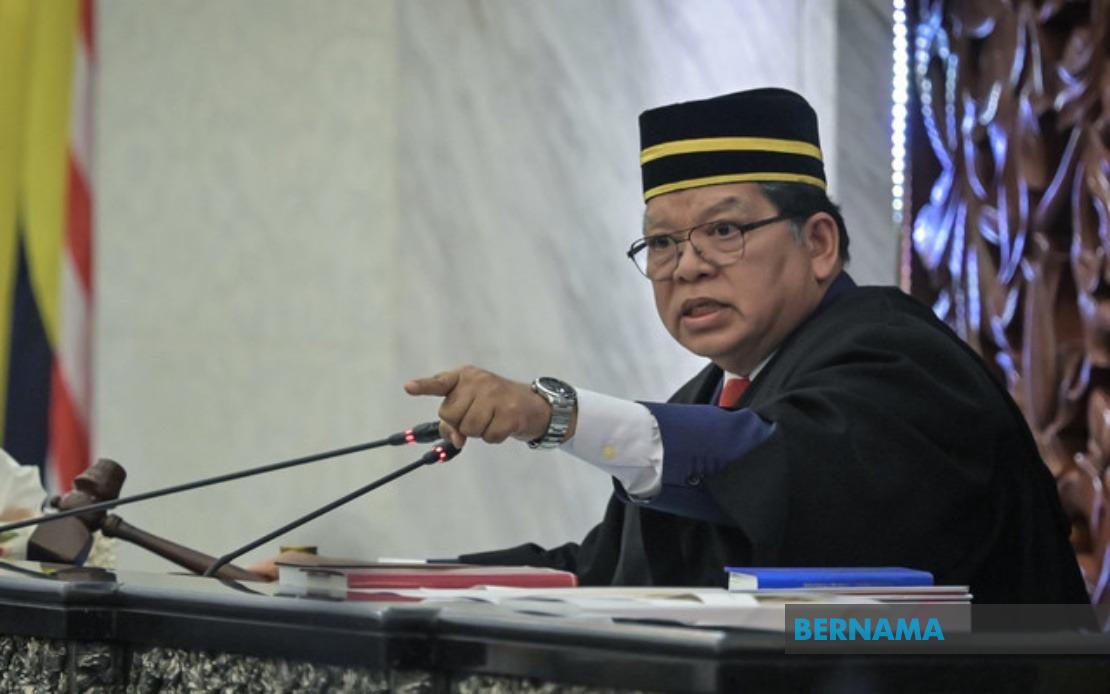
Dewan Rakyat Speaker Tan Sri Dr Johari Abdul has formally confirmed the resignation of Subang Member of Parliament Wong Chen, marking a significant development in Malaysia's political landscape. The Speaker received the resignation notice on August 10, following Wong's public announcement the previous day through social media. This official confirmation sets in motion the constitutional machinery required to address the parliamentary vacancy, with the Speaker already notifying the Election Commission in accordance with established procedures.
Wong Chen's decision to step down represents a deliberate choice to vacate his seat, with the DAP-affiliated politician submitting his resignation letter dated August 5 to the Speaker of Dewan Rakyat. The timing of the announcement through Facebook underscored the modern approach to political communications, though the formal resignation adhered to all constitutional requirements. The notice clearly indicated that his membership of the Dewan Rakyat was to be relinquished effective August 9, a date now formally recorded in parliamentary records.
Under Article 54(1) of the Federal Constitution, the Speaker's notification to the Election Commission triggers a statutory obligation to conduct a by-election within a specified timeframe. This procedural step is mandatory whenever a parliamentary seat becomes vacant due to resignation, and Tan Sri Dr Johari's prompt action demonstrates adherence to constitutional protocols. The Election Commission now bears responsibility for organising and administering the by-election process for Subang, one of Malaysia's long-established parliamentary constituencies.
Subang has held considerable political significance within Malaysia's democratic system, representing an urban constituency that has consistently demonstrated strong voter participation and political engagement. The constituency encompasses parts of Selangor's Klang Valley region and has traditionally been competitive, with Wong Chen's tenure marked by advocacy for transparent governance and anti-corruption measures. His departure creates a notable gap in parliamentary representation that will need to be addressed through the electoral process.
Wong's decision to resign voluntarily distinguishes this situation from other parliamentary vacancies that might arise from death, disqualification, or removal from office. Voluntary resignation by sitting MPs remains a relatively measured response in Malaysian politics, where many MPs typically serve their full term until the next general election. The circumstances surrounding his decision were not elaborated in official statements, leaving observers to speculate about personal, professional, or political considerations that may have influenced his choice.
The by-election process will require the Election Commission to establish polling dates, conduct voter registration verification, and manage campaign activities in accordance with election regulations. Political parties will likely begin positioning themselves immediately, as Subang presents a competitive battleground that could signal broader political trends. The by-election outcome will provide valuable insights into voter sentiment and may influence strategic calculations by major political coalitions operating within Parliament.
From a parliamentary operations perspective, Wong Chen's seat will remain vacant until a successor is elected and sworn in. This creates a temporary reduction in the total number of MP votes available during divisions or confidence motions, though the impact depends on the government's working majority and the political dynamics of any confidence votes. The timing of the by-election, determined by the Election Commission, will thus carry implications for the government's ability to pass legislation or sustain its parliamentary position.
The resignation adds to Malaysia's evolving political complexity as various MPs navigate factional realignments and shifting coalitional arrangements. Wong's departure may also influence internal party dynamics within the DAP, particularly regarding representation of urban, reform-minded constituencies in Selangor. The party will need to select a candidate who can effectively contest in what is likely to be a hard-fought by-election campaign.
For Subang constituents, the by-election represents an opportunity to actively participate in the democratic process by selecting their preferred representative. The constituency's voters will weigh candidates based on their track records, policy positions, and ability to serve the area's interests effectively. This direct engagement with the electoral process underscores how Malaysian democracy operates through regular opportunities for voters to exercise choice at both parliamentary and by-election levels.

