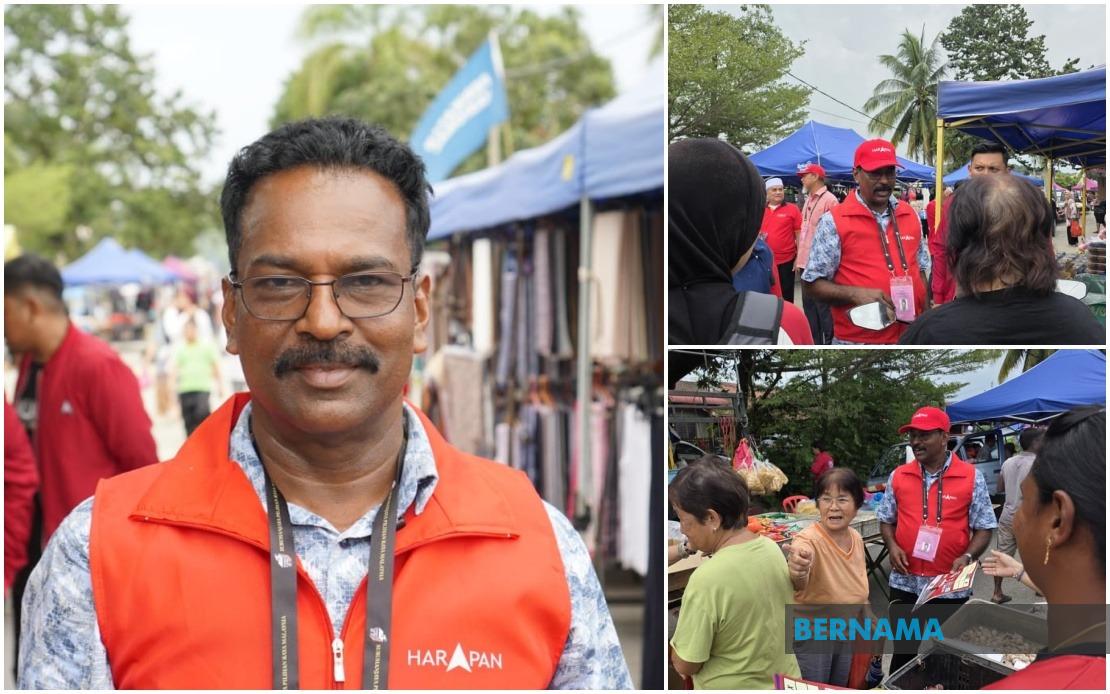
C. Subramani, the Pakatan Harapan candidate for Bukit Kepong in the 16th Johor state election, is banking on a groundswell of grassroots demand for change to deliver a surprise victory in the constituency. The Pagoh native has expressed confidence in his chances following what he describes as encouraging reception during campaigning, as voters increasingly signal dissatisfaction with the status quo and appetite for fresh leadership to address longstanding local challenges.
Subramani's optimism stems partly from his extensive ground engagement across the Bukit Kepong area, where he has undertaken targeted visits to rural and Orang Asli settlements to understand the constellation of problems facing residents. This exercise has revealed critical infrastructure gaps and socioeconomic pressures that have not been adequately addressed by previous administrations. The candidate argues that such direct constituent contact has positioned him to articulate genuine local grievances rather than deliver generic policy platforms disconnected from lived experience.
Central to Subramani's campaign platform is the contention that meaningful progress in Bukit Kepong requires seamless coordination between the state government and federal authorities. He argues that when both levels of administration operate in alignment, federal-agency matters such as education provision, irrigation systems, and drainage can be resolved with greater speed and efficiency. This framing implicitly critiques the current fragmentation of governance, suggesting that jurisdictional overlap and political misalignment have created bottlenecks that frustrate development.
The candidate has articulated a development agenda tailored to community feedback. A signature proposal involves converting the Bukit Kepong Gallery into a historical tourism destination, a move intended to generate economic activity and employment in what appears to be a relatively economically marginal area. Complementing this are practical concerns: rectifying inadequate street lighting in residential areas, widening narrow bridge infrastructure that constrains movement, and constructing affordable housing stock for lower-income households classified as B40. These priorities reflect the material needs of ordinary residents rather than grand symbolic projects.
Subramani's engagement with Orang Asli communities deserves particular scrutiny given Malaysia's indigenous populations have historically faced systematic neglect in resource allocation and representation. By prioritising visits to four distinct Orang Asli settlements and placing their specific concerns on his agenda, the candidate is attempting to mobilise a constituency often overlooked by major parties. Whether this translates into electoral support depends partly on whether residents perceive his commitments as substantive rather than opportunistic campaign theatrics.
The Bukit Kepong contest unfolds within a three-way electoral triangle involving Pakatan Harapan, Barisan Nasional, and Perikatan Nasional candidates. The 2022 result provides instructive context: incumbent Datuk Dr Sahruddin Jamal of Perikatan Nasional–Bersatu retained the seat with a majority of just 710 votes, an exceptionally narrow margin suggesting the electorate remains highly volatile and susceptible to shifting alliances. Such tight margins indicate that ground-level campaign intensity, voter mobilisation capacity, and local issue resonance can prove decisive, placing premium value on the kind of constituent engagement Subramani emphasises.
Subramani previously contested the Buloh Kasap seat in the 2022 Johor state election, an experience that presumably equipped him with campaign infrastructure and political networks now deployed in Bukit Kepong. His positioning as Pagoh PKR chief reinforces his status as an established party figure with institutional support, lending weight to his candidacy beyond individual personality appeal. The combination of prior electoral experience and formal party responsibility suggests he commands organisational resources that independent or novice candidates would lack.
The broader electoral context involves 172 candidates competing for 56 state assembly seats across Johor, with approximately 2.7 million voters participating in the election. This scale of competition reflects Johor's significance as a political battleground where control of the state government carries consequences for governance trajectories across the southern region and potentially influences calculations at federal level. Johor's diverse demography—spanning urban centres, agricultural hinterlands, fishing communities, and indigenous populations—requires candidates to construct broad coalitions spanning divergent interests.
Subramani's characterisation of his contest as winnable despite facing two established party machines reflects either genuine confidence grounded in canvassing data or strategic rhetoric designed to energise supporters and attract protest voters. The narrative of a determined challenger from a major government coalition seeking to unseat entrenched competitors resonates with broader regional antiincumbency sentiment. Whether this translates into actual vote transfer depends on whether floating voters perceive Pakatan Harapan and Subramani specifically as credible agents of change, a perception that varies significantly across Malaysia's diverse constituencies.
The emphasis on state–federal coordination deserves scrutiny as political positioning. Subramani's implicit suggestion that fragmented governance hampers development implicitly supports the case for Pakatan Harapan control at state level, since the federal government remains Pakatan Harapan–led. This framing elegantly sidesteps blame for previous underperformance while presenting future alignment under Pakatan Harapan governance as the remedy. Whether voters find this reasoning persuasive or view it as predictable partisan messaging will substantially shape electoral outcomes in Bukit Kepong and comparable constituencies.

