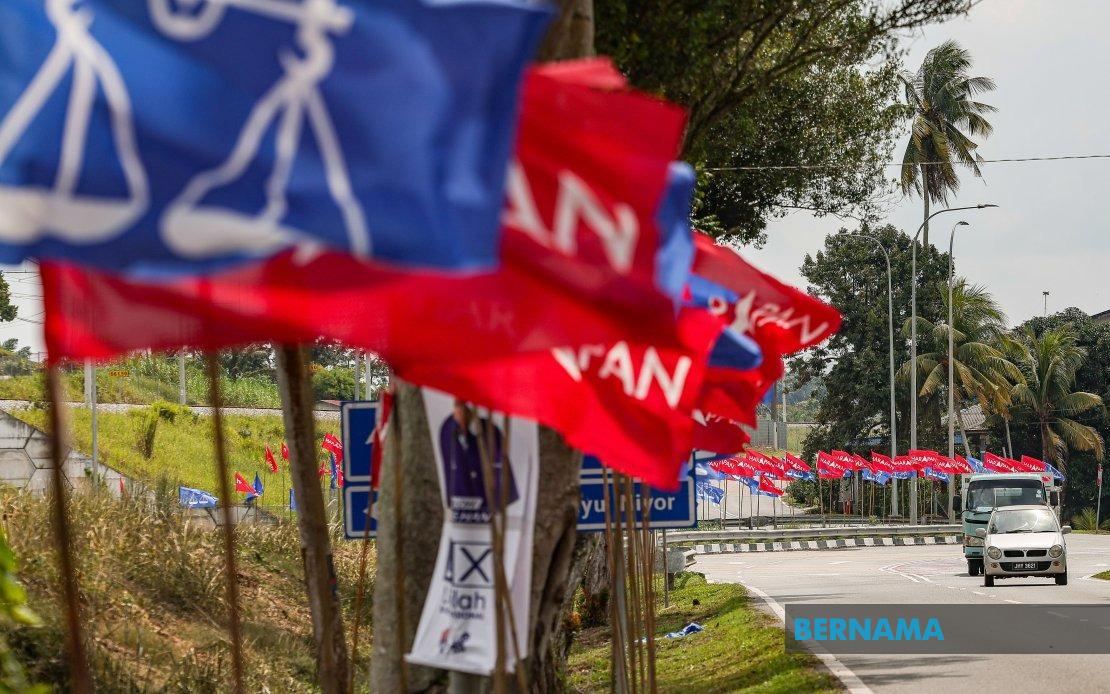
Pakatan Harapan's push to reclaim the Larkin seat in Johor faces a critical test on July 11, with candidate Suhaizan Kaiat banking on a significant rise in voter participation to overturn the incumbent's narrow 6,178-vote majority from the last state election. Speaking after engaging with constituents in his constituency, the Pulai Member of Parliament laid out a straightforward electoral calculus: stronger turnout would translate into better prospects for PH in a seat that has swung between coalitions in recent electoral contests.
Suhaizan's optimism draws heavily on the lessons of the 14th General Election, when Larkin delivered victory to a Pakatan-aligned candidate despite later falling to Barisan Nasional in 2022. That reversal, he argues, cannot serve as an accurate gauge of constituent sentiment. The 2022 state election saw voter participation plummet to just 51 per cent, a suppression he attributes to pandemic-related restrictions that discouraged many voters from casting their ballots. This figure stands well below typical turnout rates, suggesting that a substantial pool of potential supporters may have sat out that contest entirely.
The distinction between general elections and state elections has historically mattered in Johor politics. General elections typically attract higher participation rates as voters view them as more consequential for national governance. State elections, by contrast, often suffer from lower engagement, particularly when held during periods of uncertainty or disruption. In Larkin's case, the 51 per cent turnout in 2022 represents a significant departure from normal patterns, providing Suhaizan with a plausible narrative for recovery. If turnout edges back towards 65 or 70 per cent—figures more common in routine state elections—the candidate contends that PH's standing in the constituency would strengthen appreciably.
Beyond the mechanics of voter turnout, Suhaizan has identified a potential wellspring of support among Bersatu voters navigating uncertain political terrain. Relations between Bersatu and its former ally PAS have deteriorated visibly in recent months, creating openings for competing coalitions to poach discontented voters. Since PH previously governed alongside Bersatu in the Pakatan Harapan alliance that ruled Malaysia from 2018 to 2020, some Bersatu supporters may view a vote for Suhaizan as a nostalgic return to that period of cooperation. The fact that Bersatu is not fielding a candidate in Larkin this time removes the option of a direct protest vote for the party, potentially nudging its supporters toward alternative options.
Larkin's recent electoral history illustrates the seat's volatility and the narrow margins separating victory from defeat. In 2018, the seat went to Datuk Mohd Izhar Ahmad, who stood under the Bersatu banner as part of the original Pakatan Harapan coalition. Four years later, incumbent Mohd Hairi Mad Shah of Barisan Nasional flipped the seat with a margin of 6,178 votes. That swing, while meaningful, hardly suggests an impregnable BN fortress. For a coalition seeking to rebuild its presence in Johor after suffering significant losses in recent cycles, reversing such a narrow defeat represents an achievable target if conditions align.
The three-way contest structure also warrants consideration. Suhaizan competes not only against the BN incumbent Mohd Hairi but also against Norsinah Abu of Bersama, a smaller coalition component. Depending on how Bersama's vote share divides between BN-inclined and PH-inclined voters, the third candidate could influence the final outcome. In some constituencies, the emergence of a three-cornered contest dilutes the primary challenger's vote, while in others it cannibalizes the incumbent's support. Larkin's specific voter demographics and recent political alignments will determine which dynamic predominates.
The broader 16th Johor state election encompasses 56 seats across the state, with 172 candidates competing in what represents a significant test of voter appetite after recent political turbulence. The state has experienced considerable coalition realignment in recent years, with defections and party switches creating confusion among some voters about which formations currently hold which seats. In such fluid environments, incumbent advantage becomes even more pronounced, as voters may retain existing preferences absent compelling reasons to switch. Conversely, sustained efforts at the grassroots level—exactly the engagement Suhaizan emphasized—can gradually shift perceptions and mobilize previously disengaged voters.
For Malaysian observers and regional political analysts, the Larkin contest encapsulates larger questions about voter behavior in post-pandemic Southeast Asia. Many democracies in the region have grappled with suppressed turnout in recent elections, whether from lingering pandemic caution or from political fatigue. Johor's 2022 result may have reflected genuine voter indifference rather than settled preferences. If Suhaizan's theory proves correct and turnout rebounds to historical norms, Larkin could shift back toward Pakatan Harapan, signaling that the 2022 outcome was a statistical anomaly rather than a durable realignment.
The candidate's strategy also reveals how opposition coalitions are attempting to rebuild in states where they have lost ground. Rather than making sweeping promises of transformation, Suhaizan frames his candidacy around small, measurable improvements in voter participation—a grounded appeal focused on mobilization rather than policy transformation. This approach recognizes that in closely contested seats, victory often goes not to the coalition with the most compelling vision but to the one that successfully turns out its supporters on election day. For Larkin voters deciding between familiar options on July 11, the fundamental question will be whether the dormant enthusiasm evident in 2018 can be reactivated in 2024.

