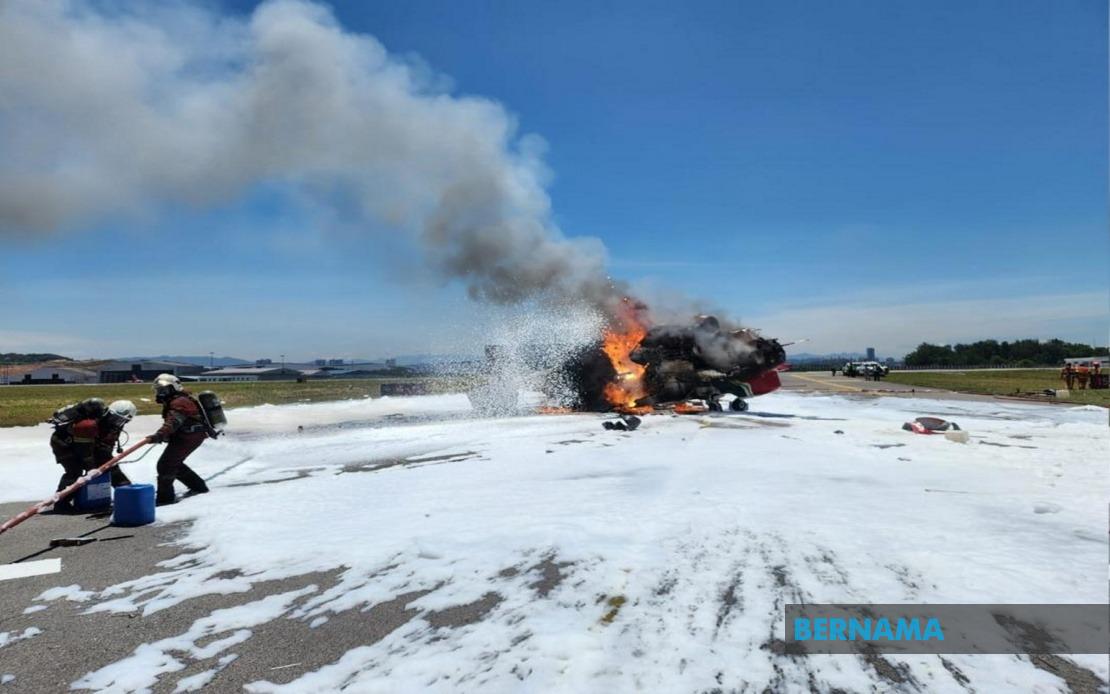
The runway at Sultan Abdul Aziz Shah Airport in Subang returned to operational status on August 15 following a brief suspension caused by a helicopter fire incident that occurred during routine maintenance. The aircraft, a Kamov KaV-32S registered to a Ukraine-based company, ignited while undergoing an engine run-up test—a critical phase in aircraft maintenance where engines are tested at ground level to verify performance before actual flight operations. The incident unfolded at Taxiway Victor, a designated aircraft movement area within the airport complex, prompting immediate response from aviation authorities and emergency personnel.
According to Malaysian Civil Aviation Authority chief executive Capt Datuk Norazman Mahmud, the runway reopened for scheduled air traffic at 2.57 pm the same day, allowing normal airport operations to resume. The authority had imposed a temporary suspension of all departures and arrivals as a precautionary measure while investigating the incident and assessing runway conditions. This swift restoration of services reflected the airport's disaster preparedness protocols and the rapid coordination between emergency responders and aviation authorities.
The disruption, though contained to a few hours, nonetheless created operational challenges across Subang's flight schedule. Eight inbound aircraft destined for the airport were diverted to alternative facilities while the runway remained closed, spreading the impact across Malaysia's broader aviation network. Additionally, three departing flights experienced delays as crews awaited clearance to proceed with ground operations and eventual departure. The flight information display systems at the terminal were subsequently updated to reflect adjusted schedules, enabling passengers to remain informed of revised boarding times and destinations.
The maintenance team involved in the incident comprised four Ukrainian nationals—the pilot, co-pilot, and two additional crew members—who were performing the engine testing as part of the helicopter's maintenance cycle. One team member sustained minor injuries from debris ejected during the explosion, highlighting the inherent risks associated with aircraft maintenance procedures even in controlled ground environments. Such incidents, while statistically rare at major airports with robust safety systems, underscore the critical importance of rigorous testing protocols and protective measures during maintenance operations.
Helicopters like the Kamov KaV-32S, typically employed for specialized aviation services including heavy-lift operations and industrial applications, require periodic comprehensive maintenance to ensure airworthiness and safety compliance. Engine run-up tests form an essential component of this maintenance regimen, allowing technicians to verify that power plants operate within established performance parameters. However, the extreme mechanical stresses and high temperatures involved in such testing occasionally result in catastrophic failures if components have degraded or been improperly serviced.
For Malaysian aviation stakeholders, the incident at Subang highlights the regulatory and safety considerations surrounding foreign-registered aircraft operating within domestic airspace. Sultan Abdul Aziz Shah Airport, located in the Klang Valley and serving as a secondary hub for the Kuala Lumpur metropolitan area, handles a diverse range of aircraft operations beyond scheduled commercial flights, including maintenance, cargo services, and specialized aviation activities. This operational diversity, while beneficial for the broader aviation ecosystem, necessitates stringent oversight to prevent incidents that could disrupt regional connectivity.
The Malaysian Civil Aviation Authority's coordinated response—from swift incident containment to rapid runway restoration—demonstrated institutional capability in managing aviation emergencies. The authority's communication with airlines and timely public updates through Capt Norazman's statements reflected commitment to transparency and passenger awareness during disruptive incidents. Such protocols prove essential in maintaining public confidence in aviation safety systems, particularly following high-profile incidents.
From a regional perspective, the Subang incident serves as a reminder of the interdependencies within Southeast Asia's aviation infrastructure. Diversions of inbound flights affect not only passenger schedules but also cargo operations and airline connectivity across the Asean region. The ability of Malaysian airports to swiftly redirect traffic to alternative facilities and resume normal operations speaks to the maturity of the country's aviation network, which includes alternative options such as Kuala Lumpur International Airport.
The investigation into the precise technical cause of the helicopter explosion would likely examine maintenance records, component condition assessments, and adherence to prescribed testing procedures. Such post-incident analysis contributes to the global pool of aviation safety knowledge, potentially informing regulatory refinements or operational adjustments across the industry. Malaysia's participation in this investigative process reinforces its commitment to international aviation safety standards and continuous improvement in maintenance protocols.
Looking forward, incidents such as this underscore the necessity for aviation personnel—whether Malaysian nationals or foreign contractors—to maintain the highest standards of technical proficiency and procedural compliance. The presence of foreign maintenance crews at domestic facilities, common throughout the aviation industry, requires effective regulatory oversight to ensure that international best practices are followed consistently. Sultan Abdul Aziz Shah Airport's resumption of normal operations within hours of the incident reflected not only efficient emergency response but also the underlying resilience of Malaysia's civil aviation infrastructure, a critical asset for regional economic connectivity and passenger mobility.

