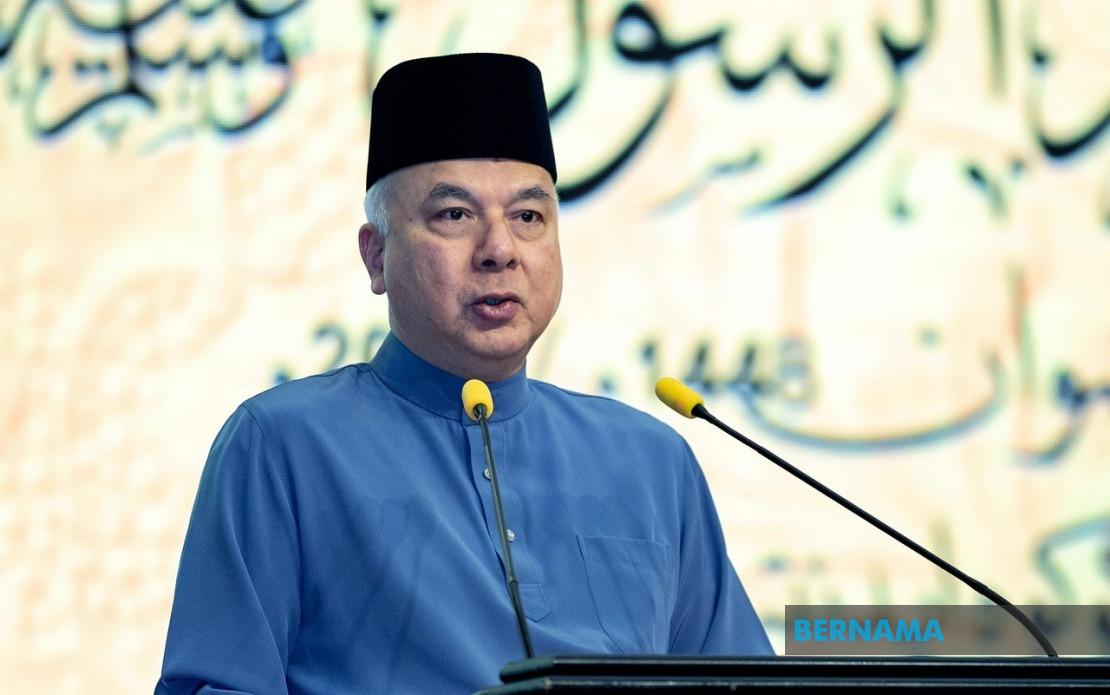
Sultan Nazrin Shah of Perak has raised fresh concerns about the fragmentation of Muslim solidarity, attributing deterioration to entrenched divisions spanning political affiliation, theological schools, ethnicity and personal ambitions. Speaking during the Perak-level Maulidur Rasul celebration in Ipoh on August 25, the Sultan underscored how these fractures are compounded by competition for influence, status, material wealth and comfort, progressively eroding the foundational ethos of Islamic brotherhood that should bind the community together.
The royal address arrives at a moment when Malaysian Islam navigates competing pressures from multiple directions. Within Southeast Asia's largest Muslim-majority nation, the interplay between political contestation and religious identity remains volatile, with electoral cycles frequently invoking Islamic credentials and religious authority. Sultan Nazrin's intervention signals concern that such instrumentalisation of faith—coupled with genuine theological disagreements and socioeconomic disparities—threatens the cohesion necessary for the ummah to navigate contemporary challenges effectively.
Central to the Sultan's message was a direct appeal to Muslim leadership at institutional and grassroots levels. He advocated that Islamic organisations, religious scholars and political figures consciously de-escalate unnecessary confrontations and restrain partisan rivalry. Instead, he proposed redirecting collective energy and resources toward initiatives demonstrating tangible benefit for Muslim societies and the broader Islamic civilisation. This reframing seeks to shift discourse from zero-sum political competition to shared advancement frameworks.
The Sultan highlighted several domains where such constructive focus could yield results. Islamic economics and finance represent growing fields where Muslim-majority nations and communities can establish alternatives to conventional systems, embedding religious values into financial architecture. The halal industry, increasingly central to Malaysia's export strategy and positioning as a global halal hub, exemplifies how religious compliance intersects with commercial opportunity. Similarly, waqf—the Islamic endowment tradition—offers mechanisms for wealth redistribution and community welfare that align religious obligation with social welfare provision.
Digital dakwah, or Islamic propagation through modern communication channels, reflects recognition that younger Muslims increasingly consume religious content online rather than exclusively through traditional institutional pathways. By professionalising and systematising these platforms, Muslim organisations can shape narratives in spaces where they have historically been marginalised or where misinformation flourishes. Strengthening family institutions addresses concerns about social fragmentation and generational transmission of Islamic values amid rapid urbanisation and cultural change across the region.
The Sultan also articulated a crucial anxiety animating contemporary Islamic discourse across Southeast Asia: the tension between modernisation and religious identity preservation. Exposure to global cultural products, entertainment media and digital platforms presents unprecedented challenges to traditional frameworks of Islamic knowledge and practice. Social media algorithms, designed for engagement rather than religious authenticity, can amplify sensationalism over substance in religious discourse. Popular culture increasingly portrays lifestyles incompatible with conservative Islamic norms, creating conflict especially for younger adherents navigating multiple value systems.
This challenge proves particularly acute for Malaysia, which positions itself as both a modern, technologically advancing nation and a constitutionally Islamic state. The Sultan's emphasis on striking balance—ensuring modernisation does not precipitate wholesale abandonment of Islamic principles—reflects the delicate equilibrium required. Without such balance, the Sultan implied, communities risk either stagnation through wholesale rejection of contemporary tools and frameworks, or spiritual hollowing through uncritical adoption of globalised, secularised worldviews.
The institutional attendance at the Maulidur Rasul celebration underscored the political significance of the address. The presence of Perak Menteri Besar Datuk Seri Saarani Mohamad alongside the royal family signalled alignment between executive state authority and the Sultan's framing. In Malaysia's constitutional monarchy system, such royal pronouncements carry symbolic and normative weight beyond formal governmental power, particularly regarding religious and cultural matters that remain constitutionally vested in sultanates.
For Malaysian and broader Southeast Asian policymakers, the Sultan's message suggests that Muslim-majority societies require deliberate strategies to preserve religious identity during periods of rapid technological and social change. This extends beyond rhetorical appeals to concrete institutional investment in Islamic education modernisation, digital literacy programs grounded in Islamic frameworks, and economic structures genuinely embodying Islamic principles rather than merely wearing Islamic labels. The implicit critique directed at political actors suggests that exploiting Islamic identity for electoral advantage while neglecting substantive institutional development ultimately undermines the very unity such political actors claim to represent.
The call for Muslim leaders to move beyond disputes and toward shared platforms of advancement carries implications for interfaith relations as well. Countries like Malaysia, with significant non-Muslim populations, benefit when Islamic institutions project confidence and substance rather than defensive antagonism. A ummah visibly investing in intellectual, economic and social contributions demonstrates vitality and forward momentum, potentially reducing zero-sum framings of religious coexistence.
Ultimately, Sultan Nazrin's intervention reflects broader recognition across Southeast Asia that Muslim societies cannot address transnational challenges—climate change, economic inequality, technological disruption, pandemic response—while fragmenting along political and sectarian lines. The enumerated initiatives from Islamic finance to family institution strengthening represent practical domains where religious identity and contemporary necessity align rather than conflict. Whether Malaysian and regional Islamic institutions can translate such royal exhortation into sustained, coordinated action remains the essential question animating contemporary Islamic discourse in the region.

