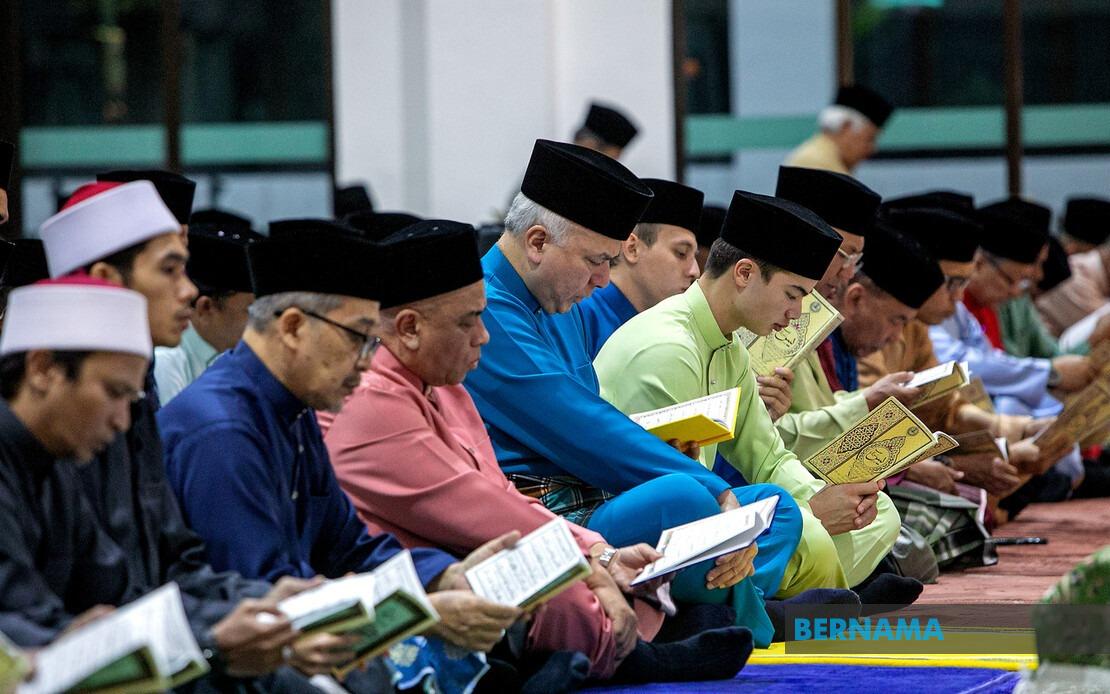
Sultan Nazrin Shah, the Sultan of Perak, presided over a significant religious gathering in Ipoh on the evening of August 30, combining the ceremonial opening of a major new mosque with spiritual observances marking the nation's National Day celebration. The occasion brought together state leadership and the broader Muslim community in a display of religious and civic unity at Masjid Imam As Syafie, situated in the state capital.
The event encompassed multiple religious components, including the recitation of Surah Yasin, tahlil (Islamic glorification), and doa selamat (prayer for blessing and protection), all conducted within the framework of Perak's official National Day observance. This integration of religious ceremony with national commemoration reflects the significant role that Islam and spiritual practice play in Malaysia's public life and state-level celebrations across the federation.
Joining Sultan Nazrin were prominent state figures including Menteri Besar Datuk Seri Saarani Mohamad and Tan Sri Mohd Annuar Zaini, president of the state Islamic Religious and Malay Customs Council (MAIPk). Their attendance underscored the official nature of the gathering and demonstrated the alignment of both executive and religious authority in the state's governance structure. The congregation swelled to approximately 1,000 worshippers, indicating substantial public participation and community interest in the combined civic and religious occasion.
The mosque itself represents a substantial infrastructure investment for the state. Completed in the preceding year at a cost of RM8.7 million, Masjid Imam As Syafie stands as one of Perak's modern Islamic institutions, designed with considerable capacity to serve the religious needs of Ipoh's Muslim population. The facility can accommodate approximately 1,600 worshippers simultaneously, positioning it as a major prayer venue in the state capital and addressing growing demand for mosque spaces in urban areas across Malaysia.
The formal officiation ceremony followed traditional protocols befitting a royal opening. Sultan Nazrin performed the symbolic gesture of drawing back the ceremonial curtain covering the mosque's dedication plaque, a customary practice that marks the official inauguration of public buildings in Malaysia. This ritual carries particular significance when performed by the monarch, as it represents not merely administrative approval but also royal blessing and endorsement of the institution's role in community life.
Following the plaque unveiling, His Royal Highness participated fully in the religious proceedings rather than observing from a position of ceremonial detachment. Sultan Nazrin joined the doa selamat alongside the congregation, demonstrating active engagement with the spiritual purpose of the gathering. He subsequently participated in the Yasin recitation and tahlil, performed under the direction of Masjid As Syafie's Imam II, Muhammad Luqmaan Mohd Helmi, ensuring that the royal presence carried both symbolic and substantive religious meaning.
The ceremonial programme concluded with Sultan Nazrin joining the evening congregational Isyak prayer, the five-timed obligatory Muslim prayer conducted in the late evening. This final act of devotion represented not only the completion of the formal proceedings but also affirmed the Sultan's role as a leader committed to Islamic observance and the spiritual welfare of his subjects. Such demonstrations of religious participation by Malaysia's sultans carry historical weight, given the constitutional role of the Malay rulers as protectors of Islam in their respective states.
The timing of this mosque opening during National Day celebrations carries broader symbolic resonance for Malaysia's multi-layered national identity. By combining the nation's secular civic commemoration with explicitly religious observance, the event reflected how Islamic practice and national pride intertwine within the Malaysian context. For Perak specifically, this approach illustrates how state leadership integrates religious authority with administrative governance in ways that resonate with the predominantly Muslim Malay population while maintaining institutional frameworks for broader national cohesion.
Masjid Imam As Syafie's establishment in Ipoh addresses practical needs within the state's religious infrastructure. Urban centres across Malaysia have experienced consistent growth in Muslim populations, creating sustained demand for prayer facilities that can accommodate diverse neighbourhoods and communities. A mosque of this scale—capable of hosting 1,600 worshippers—represents significant capacity that will serve multiple functions beyond the five daily prayers, potentially hosting Islamic educational programmes, community gatherings, and religious instruction for different demographic groups throughout Ipoh.
For Malaysian readers, the event illustrates how state-level governance integrates religious and civic leadership in ways distinct from many other countries. The presence of both the Sultan and the Menteri Besar, alongside senior figures from the state's Islamic council, demonstrates the coordinated approach that characterises Islam's institutional role within Malaysia's constitutional monarchy framework. Such ceremonies reinforce the legitimacy of both religious and political authority through their collaborative demonstration of commitment to Muslim community welfare and spiritual advancement.
The investment of RM8.7 million in mosque infrastructure also reflects broader patterns of religious facility development across Malaysian states. As urban populations expand and diversify, state governments and religious councils increasingly allocate resources toward constructing and upgrading prayer facilities. This particular project in Ipoh contributes to what remains an ongoing process of ensuring that Muslim communities have adequate access to spaces for religious observance, education, and community interaction.
Looking forward, the completed mosque will serve as a focal point for Islamic practice and community organisation within its surrounding area. The scale of the facility and its official inauguration by the Sultan position it as not merely a neighbourhood prayer space but as a significant institution within Perak's broader religious and social landscape. Such major mosques typically become centres for Islamic learning, charitable activities, and interfaith dialogue initiatives, extending their influence beyond purely devotional functions.

