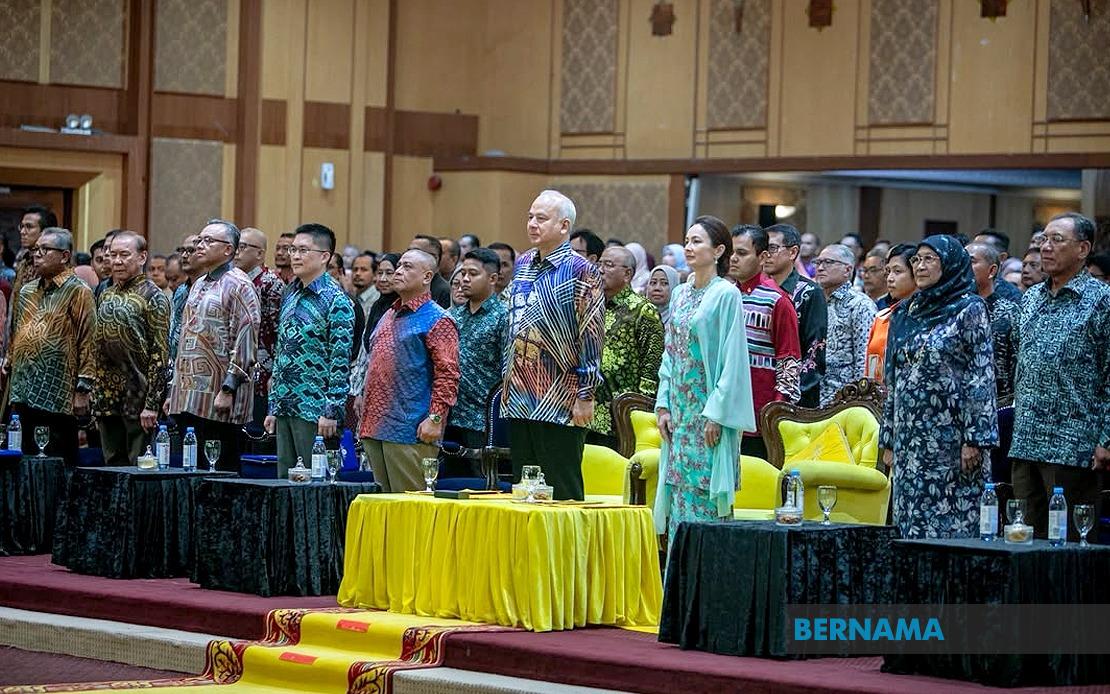
Sultan Nazrin Shah, the Sultan of Perak, officially opened the state-level Merdeka Month programme on August 15 at Bangunan Perak Darul Ridzuan in Ipoh, marking a significant occasion to reinforce the values of loyalty to the monarchy and nation amongst the younger generation. The gathering, which brought together education leaders, government officials and school representatives, underscored the continued importance placed by the state administration on civic engagement during the annual national celebration period.
Joining the Sultan were Raja Permaisuri Perak Tuanku Zara Salim, Menteri Besar Datuk Seri Saarani Mohamad and Deputy Education Minister Wong Kah Woh, a lineup reflecting the programme's standing as a key educational initiative. The presence of senior figures from both the state government and federal education apparatus signalled broad institutional backing for an event that has become a centrepiece of Perak's Independence Month calendar.
The 2026 edition demonstrated remarkable growth in student participation, with the Perak Education Department recording 214,095 entries encompassing 83.6 per cent of the state's primary and secondary school population. This scale of involvement represents not merely a logistical achievement but reflects deeper engagement with the programme's core mission of fostering patriotic consciousness and individual development among young Malaysians during their formative years.
Zulkafli Mohamed Mokhtar, the Perak Education Department director, highlighted that participation had surged by 15 per cent compared to the previous year, indicating the programme's expanding influence and appeal among schools across urban and rural districts alike. He emphasised that the initiative transcends surface-level participation, instead functioning as a genuine vehicle for identifying hidden talents, bolstering student confidence and creating structured opportunities for young people to develop capabilities spanning academic, cultural and competitive domains.
The director articulated a vision aligned with the Malaysia Education Plan 2026-2035, positioning the Merdeka Month programme as instrumental in cultivating graduates who combine academic prowess with moral grounding, critical thinking skills and authentic patriotism. In an era when Malaysian education grapples with balancing knowledge transmission against character formation, such initiatives attempt to bridge that divide by embedding national values and historical consciousness into competitive and creative activities that naturally engage student interest.
Central to the celebration were recognition ceremonies acknowledging both institutional and individual achievement. The Kinta Utara District Education Office received the Special Award for Best Achievement by District Education Office, accompanied by a RM20,000 cash prize—a gesture underscoring the state's investment in recognising administrative excellence at the grassroots education level. This award category reflects the reality that programme success depends substantially on dedication from district-level educators and coordinators who manage implementation across disparate schools.
Student competitors vied across multiple categories reflecting the programme's breadth. Ifwat Arrafi Mohd Amin from Sekolah Menengah Kebangsaan Tun Abd Razak in Bagan Datuk claimed the upper secondary Malay Language Public Speaking Championship, while E Johnnes Abysia representing SMK Sungai Pari in Kinta Utara triumphed in the English-language equivalent. The parallel structure of competitions in both national and international languages reflects Malaysia's bilingual educational landscape and ensures inclusive participation pathways for students across language-learning backgrounds.
The awards extended across artistic and literary competitions spanning primary through upper secondary cohorts. Choral speaking, choral recitation, choral performance and caricature drawing awards—distributed by Sultan Nazrin—recognised students' creative and collaborative capacities beyond conventional academic metrics. Similarly, Tuanku Zara presented prizes for essay writing, poetry composition and poster design competitions, together covering the full spectrum of linguistic and visual expression that contemporary education seeks to nurture.
The programme's architecture reveals a sophisticated understanding that young people demonstrate aptitude and enthusiasm across diverse domains. Rather than concentrating solely on examination-driven outcomes, the Merdeka Month initiative deliberately constructs space for oratory skill, artistic expression, imaginative writing and collaborative performance, thereby acknowledging that societal leadership and national contribution draw upon multifaceted human capacities that traditional schooling sometimes marginalises.
For Malaysian educators and policymakers, the Perak experience offers instructive findings on scaling patriotic engagement without resorting to hollow ceremonialism. The 15 per cent year-on-year participation growth suggests that when competitive opportunities align with student interests and receive institutional support from district through state levels, voluntary participation can flourish organically. The 83.6 per cent school-population penetration indicates near-universal inclusion rather than participation concentrated among elite or motivated subgroups.
The touring of drawing and caricature exhibitions by the royal couple following award presentations signalled engagement extending beyond performative formality—a recognition that artistic output merits direct consideration by state leadership. Such gestures, however symbolic, communicate to students that their creative efforts command attention from the highest levels of state hierarchy, potentially encouraging sustained commitment to artistic development.
Within the broader Southeast Asian context, Perak's approach to embedding patriotic values through competitive, creative platforms offers a model potentially adaptable elsewhere in the region. As societies navigate tensions between globalisation and national identity, between standardised assessment and multifaceted development, initiatives like the Merdeka Month programme attempt middle-ground solutions that celebrate national consciousness without sacrificing educational dynamism or individual creative expression. The participating students, now numbering over 214,000 across Perak, represent a generation actively engaged in reimagining what Malaysian patriotism might entail in an increasingly complex world.

