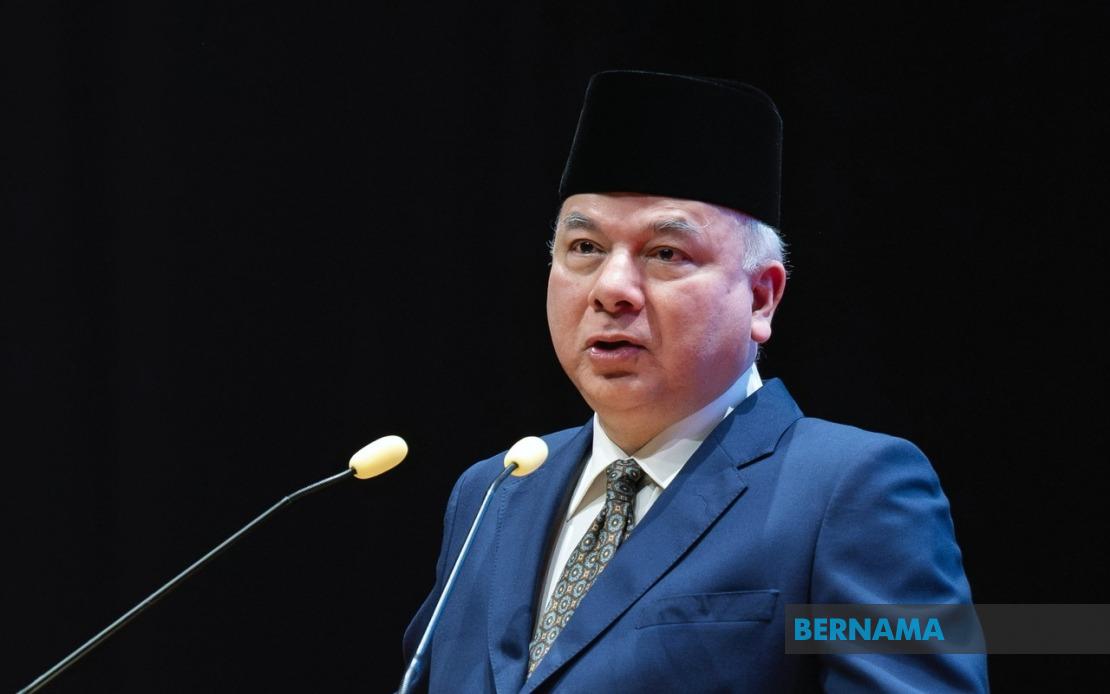
Sultan Nazrin Shah has launched a significant push for the development of internationally consistent governance standards for waqf institutions, arguing that the Islamic world possesses sufficient existing models to build upon rather than create anew. Speaking at the International Waqf Da'wah Convention 2026 in Kuala Lumpur, the Perak Sultan outlined a vision for strengthening the management of Islamic endowments through collaborative frameworks that could be voluntarily adopted across borders. His intervention addresses a longstanding challenge in the Muslim world: the underutilisation of waqf assets despite their potential to fund social development, education, and charitable works.
The Sultan's proposal centres on establishing core principles that would draw from successful governance initiatives already piloted in Indonesia, frameworks developed by the Accounting and Auditing Organisation for Islamic Financial Institutions (AAOIFI), and practices implemented in Kazakhstan. Rather than commissioning entirely new standards, Sultan Nazrin advocates for a consultative international working group that would synthesise existing best practices into a coherent, flexible set of guidelines. He suggested that INCEIF University, Malaysia's premier institution for Islamic finance education, could serve as the operational secretariat for such an initiative. This approach reflects pragmatic recognition that the groundwork has been laid; what is required now is coordination and consensus-building among diverse stakeholders across the Muslim world.
The governance crisis in waqf administration represents a persistent constraint on the sector's development. Sultan Nazrin highlighted several structural problems that plague waqf institutions: incomplete record-keeping, disputed land titles, weak administrative capacity, and inadequate management systems. These deficiencies mean that potentially valuable assets—land, buildings, financial reserves—remain idle or underproductive. In Malaysia specifically, debates over waqf administration have exposed tensions between state religious authorities, federal oversight, and questions about accountability and transparency. By proposing internationally recognised standards, Sultan Nazrin is tacitly acknowledging that localised approaches have not sufficiently resolved these longstanding inefficiencies.
Central to the Sultan's vision is the deployment of digital cash waqf platforms supported by real-time public dashboards. This technological dimension addresses a critical weakness in current systems: the opacity that often characterises waqf fund management. Digital platforms would enable contributors to track how their donations are deployed, while public dashboards would permit external scrutiny and enhance accountability. Such transparency mechanisms are increasingly recognised as essential for maintaining public trust, particularly as younger Muslim populations expect greater visibility into how charitable institutions deploy resources. The move toward digitisation also reflects global trends in financial governance, positioning waqf institutions as modern stewards of Islamic wealth rather than custodians of archaic systems.
Beyond governance infrastructure, Sultan Nazrin proposed a concrete regional initiative termed "Waqf for Peace and Planetary Resilience." This pilot programme would involve selected institutions across Malaysia, Indonesia, and other ASEAN member states, channelling waqf funds into renewable energy projects and climate-resilient infrastructure. The proposal is particularly significant for Southeast Asia, a region vulnerable to climate impacts including rising sea levels, extreme weather events, and agricultural disruption. By linking waqf funding to environmental sustainability and community resilience, Sultan Nazrin is reframing waqf not merely as traditional charitable institutions but as vehicles for addressing contemporary crises. The inclusion of "peace" in the initiative's title signals intent to leverage waqf's moral authority toward conflict prevention and community cohesion in a region marked by religious and communal tensions.
The Perak Sultan's emphasis on fundamental Islamic principles—balance, justice, mercy, and trusteeship—grounds the governance agenda in theological foundations rather than presenting modernisation purely as technical reform. By invoking the concept of amanah (sacred trust), Sultan Nazrin positions effective waqf stewardship as a religious obligation rather than an administrative convenience. This framing is strategically important in Malaysia's context, where religious authorities often invoke theological arguments in policy debates. It also reinforces the notion that improved governance standards do not represent Western-imposed regulatory frameworks but rather a return to the ethical principles embedded in Islamic jurisprudence.
The initiative carries particular resonance for Malaysia, where waqf administration has been a recurring point of contention. State Islamic Religious Councils (SIRCs) manage most waqf assets, but inconsistency between states and questions about efficiency have periodically surfaced in public discourse. A common international framework, if adopted by Malaysian authorities, could provide a reference point for reforms while lending legitimacy to governance improvements that might otherwise face resistance from traditional stakeholders. The involvement of prominent figures—Sarawak Premier Tan Sri Abang Johari Tun Openg, who heads the Malaysian Islamic Welfare Organisation (PERKIM), and Minister Zulkifli Hasan overseeing religious affairs—signals that the proposal enjoys substantial political backing.
The Sultan's vision also addresses the regional dimension of Islamic finance and wealth management. Southeast Asia has emerged as a significant hub for Islamic banking and finance, yet the waqf sector has not kept pace with sophistication evident in sukuk markets or Islamic insurance. By positioning waqf governance as an international collaboration, Sultan Nazrin is proposing that Malaysia and neighbouring countries play leading roles in shaping global standards. This reflects Malaysia's aspirations to leadership in Islamic finance and positions INCEIF as a centre of expertise for emerging economies.
The generational challenge articulated by Sultan Nazrin—that the current era should add to rather than merely admire the achievements of predecessors—resonates beyond Malaysia. Across the Muslim world, waqf institutions face demographic pressures as younger trustees struggle to manage inherited assets and donor bases fragment. The proposal for internationally coherent standards could help distribute knowledge and best practices, enabling smaller institutions to benefit from lessons learned elsewhere. It also acknowledges that effective governance requires technical expertise that not all waqf institutions currently possess, suggesting pathways for capacity-building and knowledge transfer.
Implementing such an international framework will require navigating considerable political and jurisdictional complexities. Waqf law differs substantially between Islamic legal schools and varies by nation, reflecting both theological differences and distinct historical trajectories. A voluntarily adoptable set of core principles must therefore be sufficiently flexible to accommodate these variations while establishing genuine standards that prevent the framework from becoming merely advisory or toothless. The success of Sultan Nazrin's initiative will ultimately depend on the willingness of governments, religious authorities, and waqf institutions themselves to embrace common standards even when doing so requires modifying existing practices.
Looking forward, the proposal offers Malaysia an opportunity to position itself at the forefront of Islamic institutional reform. If the working group is established and produces credible standards that gain acceptance across the Islamic world, Malaysia's institutions would gain prestige and influence. Conversely, if the initiative stalls or produces standards that prove too rigid or unpalatable, the failure would reflect poorly on Malaysian leadership in Islamic affairs. The Sultan's call for action is clear, and the timeframe implicit in his remarks suggests that deliberation should give way to concrete steps in the coming months.

