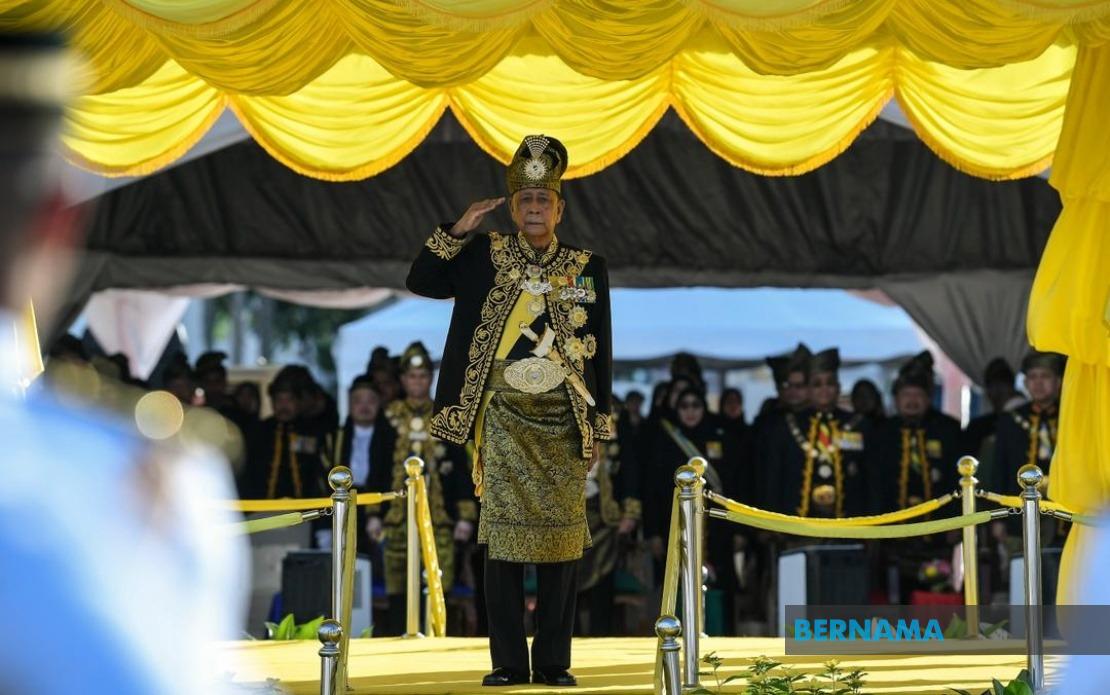
The Sultan of Kedah, Al Aminul Karim Sultan Sallehuddin Sultan Badlishah, was formally celebrated on July 5 when the state capital of Alor Setar hosted a ceremonial guard of honour parade in recognition of his 84th birthday. The event, staged at Dataran Medan Bandar, drew an array of dignitaries and state officials to pay tribute to the long-reigning royal figure who has been a significant presence in Malaysia's constitutional monarchy for decades.
The occasion brought together the kingdom's political and military leadership to demonstrate respect and honour for the Sultan. Alongside the Sultan in attendance was Tengku Sarafudin Badlishah Sultan Sallehuddin, the Raja Muda of Kedah, representing the royal line of succession. The ceremony underscored the formal protocols that govern royal celebrations in Malaysia's sultanates, where such milestone birthdays are marked with considerable ceremonial pageantry to recognise the sovereign's role and service to the state.
State-level leadership participated prominently in the festivities, with Kedah Menteri Besar Datuk Seri Muhammad Sanusi Md Nor and State Secretary Datuk Seri Norizan Khazali in attendance alongside members of the Kedah State Executive Council. This representation reflected the integrated nature of executive governance in Malaysian states, where the Sultan and the elected administration work within a constitutional framework that grants the monarchy significant ceremonial and advisory powers. The presence of these officials reinforced the state government's recognition of the Sultan's constitutional role.
The military dimension of the ceremony exemplified the deep institutional connections between Malaysia's armed forces and the monarchy. The parade featured 103 other ranks and three officers from the 6th Battalion of the Royal Malay Regiment (RAMD), under the command of Major Muhammad Nasrullah Abdullah. Such military involvement in royal celebrations reflects historical traditions where the armed forces serve as custodians of national and state symbolism, with ceremonial parades representing both respect for the Sultan and a visible demonstration of military discipline and precision.
The parade's structure incorporated several ceremonial elements that adhered to established Malaysian military and royal protocols. Lieutenant Mohamad Aiman Hanif Samsudin carried the colour bearer position, while Warrant Officer 1 Mohd Fairuz Ramli held the regimental standard, both roles of significant ceremonial importance within military hierarchy. These positions, assigned to specific ranks and individuals, underscore how Malaysian military culture maintains formal traditions that bridge colonial heritage and modern constitutional practice.
The RAMD Central Band, led by Captain Muhamad Fauzee Japar and assisted by Sergeant Mohd Shahrilaizad Bakhtiar, provided musical accompaniment to the proceedings. The inclusion of a dedicated military band at such ceremonies is a standard feature of high-level royal and state occasions across Malaysia, serving both to enhance the formality of the event and to recognise the cultural importance of martial music in Southeast Asian ceremonial contexts.
A distinctive feature of the celebration was the aerial dimension provided by the Flying Training Institute, which contributed significantly to the visual spectacle. Two EC120B helicopters from INSPEN 2 participated in a coordinated flypast, alongside three PC-7 MK II training aircraft from INSPEN 1. Such aerial displays have become increasingly common at major Malaysian royal and state celebrations, providing a dramatic visual element that showcases the capabilities of national defence assets while adding grandeur to official ceremonies.
The artillery component of the ceremony demonstrated the coordinated involvement of multiple military branches. The 41st Battery of the Royal Artillery Regiment (Ceremonial), based at Sungai Buloh Camp in Selangor, delivered a 21-gun salute in accordance with established protocols for royal celebrations. Major Hafizan Md Ghani led this unit in executing the ceremonial gunfire, a tradition that carries significant historical weight in Commonwealth nations and remains an important element of Malaysian royal pageantry. The distance travelled by this unit from Selangor to Kedah illustrates how major state celebrations can mobilise military resources across state boundaries.
The timing of the celebration in July reflects Malaysia's system of royal birthday observances, which vary across the thirteen states depending on each Sultan's actual date of birth. Unlike the federal-level celebration of the Yang di-Pertuan Agong's birthday, which is observed nationwide on a set date, state-level celebrations occur according to individual monarchs' schedules. This decentralised approach to royal protocol reinforces the federal nature of Malaysian governance, where states retain significant autonomy in ceremonial matters affecting their respective sovereigns.
The 84th birthday milestone represents a significant achievement in longevity and demonstrates the Sultan's continued active engagement with state affairs despite his advanced age. In the Malaysian context, where sultans serve constitutional roles that extend beyond symbolic representation to include advisory functions on matters of state importance, the continuation of such active participation signals stability and continuity within Kedah's governance structure. The formal nature of the celebration, with full military honours, reflects recognition of his enduring significance to the state.
For Malaysian observers and regional commentators, such ceremonial occasions provide insights into the functioning of constitutional monarchy within a federal system. The careful orchestration of the parade, the involvement of multiple military and civilian agencies, and the attendance of senior state officials all demonstrate how Malaysia's unique constitutional arrangements maintain continuity with historical traditions while operating within modern administrative frameworks. The celebration of the Sultan's birthday thus becomes more than a personal commemoration but rather a public affirmation of institutional stability and constitutional governance in Kedah state.

