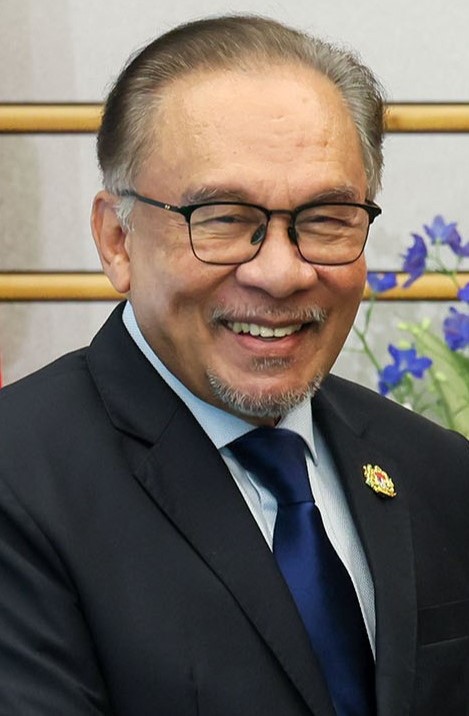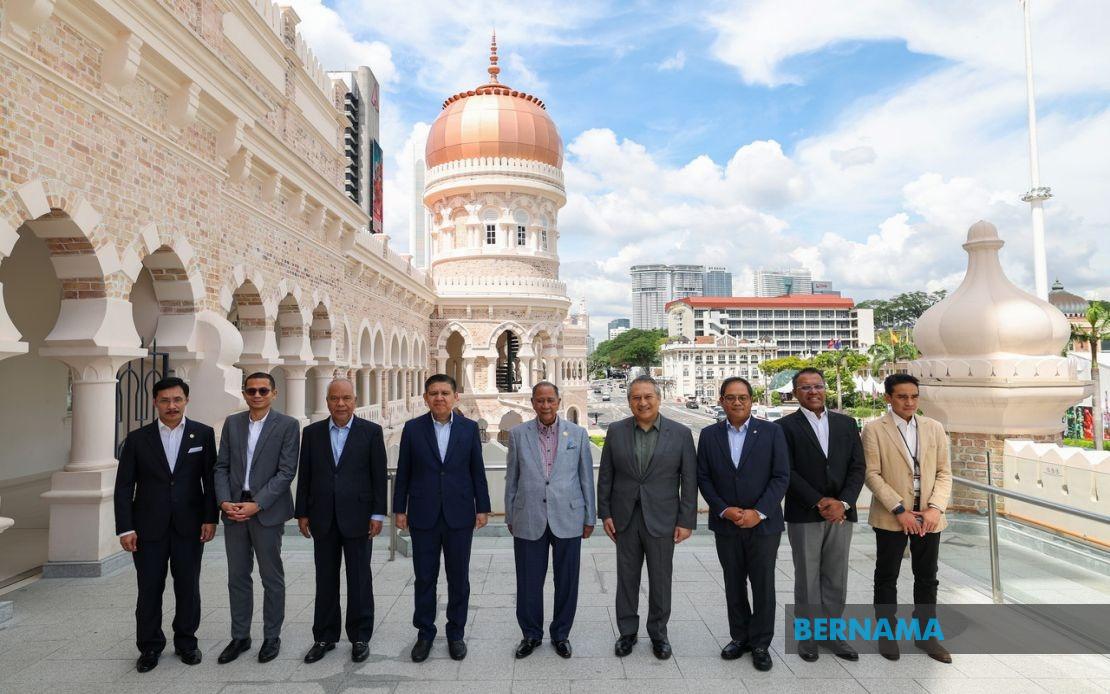
The Sultan of Kedah, Al Aminul Karim Sultan Sallehuddin Sultan Badlishah, made a significant visit to the Sultan Abdul Samad Building in Kuala Lumpur on June 24, touring the meticulously restored heritage landmark that stands as a physical embodiment of Malaysia's democratic and administrative journey. The morning visit, which commenced at approximately 10.30 am, underscored the symbolic importance that Malaysia's royal institution continues to place on preserving and celebrating the nation's institutional history, particularly the structures that witnessed pivotal moments in the country's formation.
Receiving the distinguished royal guest was Khazanah Nasional managing director Datuk Amirul Feisal Wan Zahir, accompanied by other senior officials including chief corporate officer and general legal adviser Datuk Mohamed Nasri Sallehuddin and head of real assets Selvendran Katheerayson. The presence of Khazanah's leadership team reflected the significance of the visit to the state-owned investment holding company, which has taken stewardship of the building through its Heritage Fund restoration programme. This multi-layered reception demonstrated how the building's preservation has become a matter of institutional pride and responsibility for Malaysia's major government-linked entities.
During his tour, the Sultan engaged with the building's carefully curated exhibition spaces, beginning with the Confluence Hall, which presents a comprehensive gallery documenting the origins and historical development of Kuala Lumpur from its early foundations through modern times. Think City senior manager Mariana Isa provided detailed briefings on the various exhibits, helping the royal visitor understand the narrative arc that the restoration team had crafted to illuminate the capital's evolution. This educational component of the visit highlights how heritage preservation in Malaysia increasingly focuses on storytelling and contextualisation, transforming physical spaces into active vehicles for historical understanding rather than merely maintaining structures as monuments to the past.
The Sultan subsequently visited the Visionary Hall, where multimedia displays and architectural models illustrate Kuala Lumpur's trajectory as an urban centre and its role as the seat of Malaysia's government. The technological integration within this exhibition space represents a contemporary approach to heritage interpretation, allowing visitors to visualize the capital's transformation across decades. Following these gallery visits, His Royal Highness proceeded to the distinctive balcony above the Porte Cochere, the building's iconic grand entrance, which offers commanding views of Merdeka Square and the surrounding civic precinct.
The Sultan's itinerary also encompassed a visit to the School of Hard Knocks, a social enterprise operated by Royal Selangor that provides vocational training and employment pathways for disadvantaged individuals. This portion of the programme reflected how the restored Sultan Abdul Samad Building now functions as a multi-purpose venue integrating heritage preservation with contemporary social initiatives. The inclusion of this stop suggests a deliberate effort by administrators to position the historic structure not merely as a museum or ceremonial space but as a living institution serving diverse community functions.
Following a light luncheon served within the building's premises, the Sultan departed at approximately 1.15 pm, concluding a visit that lasted roughly three hours. This extended duration suggested a thorough engagement with the site's multiple dimensions rather than a perfunctory ceremonial appearance. The substantial time investment demonstrated the royal family's serious commitment to understanding and validating the restoration efforts undertaken by Khazanah Nasional.
Amirul Feisal subsequently commented on the significance of the royal patronage, characterising the visit as a profound acknowledgment of Khazanah Nasional's ongoing stewardship of the heritage structure. He emphasised that the preservation initiative extends well beyond the conventional conservation of physical architecture, encompassing instead a broader mission to animate and celebrate the interwoven histories of Kuala Lumpur, Selangor, and the Malaysian nation itself. This articulation reflects a philosophical shift in how heritage institutions across Southeast Asia increasingly conceptualise their responsibilities, viewing them as custodians of national narrative rather than merely guardians of old buildings.
The Sultan Abdul Samad Building has successfully attracted approximately 200,000 visitors since its public opening on February 2, a figure that indicates substantial popular interest in accessing this previously restricted space. This visitor volume suggests that the restoration and opening initiative has fulfilled a genuine public appetite to engage with Malaysia's institutional and architectural heritage. For a heritage site in Southeast Asia, such visitor numbers within a five-month window represent considerable success and validate the resource investments made toward its restoration.
The royal visit acquired additional resonance given that His Majesty Sultan Ibrahim, the Yang di-Pertuan Agong, had formally inaugurated the completion of Phase One restoration works on January 31, following eleven months of intensive conservation efforts conducted under the auspices of the Khazanah Heritage Fund programme. This cascading succession of high-level royal engagements with the building—from the reigning monarch to the Sultan of one of Malaysia's constituent states—underscores how deeply the royal institution values the structure's symbolism and historical significance.
Originally constructed as the Secretariat Building, the Sultan Abdul Samad Building occupies a unique position in Malaysia's political mythology as the site where the Union Jack was lowered and the Federation of Malaya flag was raised for the first time in 1957, marking the nation's transition to independence. This singular historical moment, which crystallised decades of anti-colonial political struggle and institutional negotiation, permanently consecrated the building within Malaysian collective memory. The physical infrastructure thus carries an almost sacred quality for Malaysians regardless of their political orientation, as it represents the threshold moment between colonial subjection and national sovereignty.
For Malaysian and broader Southeast Asian observers, the sustained royal engagement with the Sultan Abdul Samad Building's restoration represents a significant signal about how the region's monarchical institutions perceive their role in contemporary society. Rather than retreating from active involvement in cultural and institutional matters, Malaysia's royal families continue demonstrating commitment to heritage preservation and public education around national history. This engagement pattern may influence how other Southeast Asian monarchies and state institutions approach their own responsibilities toward historical conservation and public interpretation of national narratives.