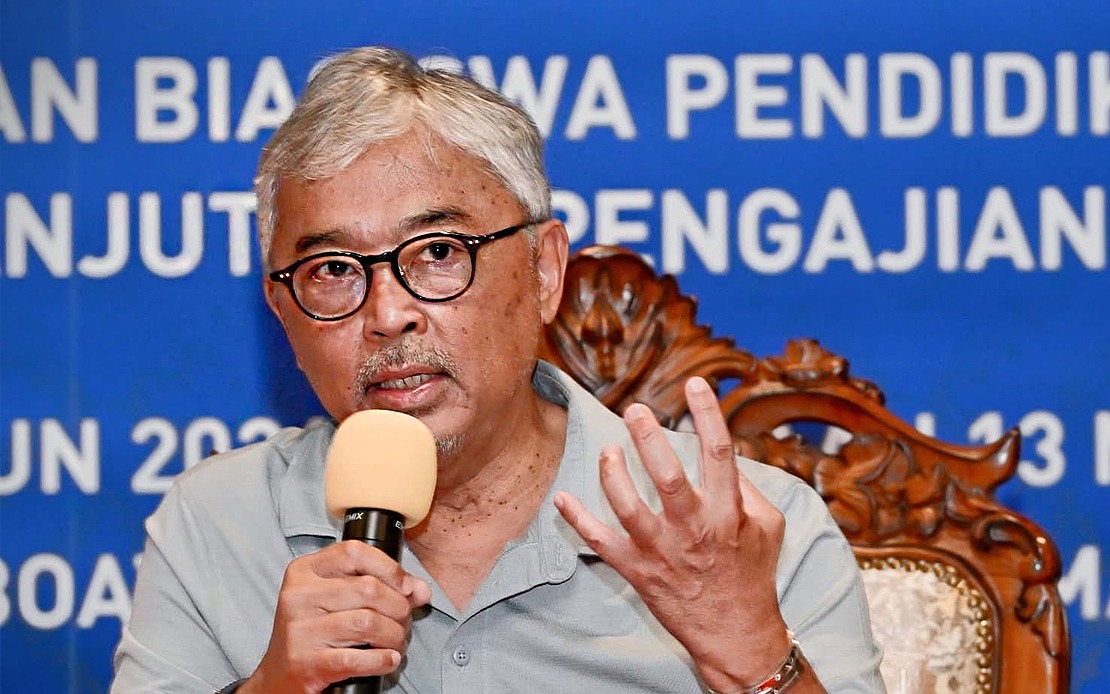
The Sultan of Pahang, Al-Sultan Abdullah Ri'ayatuddin Al-Mustafa Billah Shah, has issued a directive urging higher education institutions across the state to expand scholarship opportunities for students originating from Tioman Island, one of the country's most geographically isolated communities. Speaking through a statement released on the Pahang Sultanate's official social media channels, His Royal Highness positioned educational access as a matter of state priority, emphasising that geographic remoteness should not serve as a barrier to quality higher learning for promising young people.
The Sultan's appeal was prompted by Institut Jantung Negara University College's decision to award scholarships to two academically outstanding students from Tioman Island. Rather than treating this as an isolated charitable gesture, the Sultan framed the initiative as a template that other Pahang-based institutions should emulate and expand upon. His intervention reflects growing concern among Malaysia's traditional rulers about the educational disparities facing youth in peripheral and island communities, where limited local opportunities often force families to choose between financial hardship and foregoing tertiary education entirely.
In his statement, the Sultan emphasised that Tioman residents, despite their geographical separation from the peninsula's urban centres, remain integral members of the Pahang state community deserving of equal developmental opportunities. The phrasing of his remarks—that island students "are still our children who must be given the opportunity to further their studies"—underscores a fundamental principle of inclusive nation-building that transcends administrative boundaries. This language suggests the Sultan views scholarship provision not as philanthropic discretion but as institutional responsibility.
The two Tioman recipients being supported through Institut Jantung Negara's programme represent a significant development in widening access to university education in Southeast Asia's less-developed regions. Their selection based explicitly on academic merit and excellence signals that the scholarship framework prioritises genuine talent identification rather than compensatory hand-outs, a distinction the Sultan reinforced in his public remarks. This approach should theoretically encourage other institutions to develop similar merit-based programmes targeting underrepresented geographic constituencies.
In addressing the scholarship recipients directly, the Sultan delivered remarks emphasising the gravity of their opportunity and the broader implications of their success. His instruction that failure should not be entertained and that the students must serve as benchmarks for future Tioman youth reflects an understanding that scholarship recipients often carry symbolic weight within their home communities. The students' success or otherwise may substantially influence whether younger siblings and peers pursue higher education, making their individual trajectories consequential at the community level.
The Sultan also prescribed specific behavioural expectations, advising the students to maintain strict discipline, manage their time efficiently, and remain academically focused during their studies in Kuala Lumpur. These exhortations, while standard advice to scholarship holders, take on particular resonance given that these students are relocating from an island community to the capital city, likely experiencing significant cultural and environmental adjustment alongside academic demands. The emphasis on focused commitment suggests recognition of the multiplicative challenges facing students from peripheral areas.
Institut Jantung Negara itself received prominent commendation from the Sultan, who acknowledged both its regional standing as a leading cardiac treatment facility and its sustained commitment to corporate social responsibility initiatives across Pahang. The institution's annual engagement with state government bodies to implement community development programmes in remote areas including Kampung Bantal was specifically cited as exemplary, indicating that the Sultan perceives CSR engagement as integral to institutional legitimacy, particularly for medical centres that serve affluent urban populations alongside poorer rural communities.
The Sultan's confidence in Institut Jantung Negara's excellence extends to its international recognition within Asian medical circles, positioning the institution as a regional exemplar whose scholarship decisions carry particular weight. When an internationally respected medical institution commits resources to rural education scholarships, it lends credibility and visibility to the cause, potentially influencing other leading universities to develop comparable programmes. This demonstration effect may prove more influential than directive alone.
For Malaysian policymakers and educational administrators, the Sultan's intervention raises important questions about systematic approaches to geographic equity in higher education access. While individual scholarships address immediate student needs, they do not necessarily address structural barriers including inadequate pre-tertiary educational infrastructure in remote areas, limited guidance counselling, and information asymmetries regarding university pathways. The Sultan's call implicitly suggests that multiple universities should collectively address these systemic challenges rather than relying on sporadic institutional initiatives.
The emphasis on producing quality human capital from rural and island areas reflects broader Southeast Asian demographic and economic trends. As traditional economies in peripheral regions face increasing pressure from globalisation and resource depletion, education represents perhaps the primary pathway through which young people can transition toward knowledge economy participation. The Sultan's intervention thus addresses not merely individual opportunity but regional economic resilience and national competitiveness in an increasingly skill-dependent global marketplace.
Beyond Pahang, this initiative carries implications for other Malaysian states with significant island or remote populations, including Sabah, Sarawak, and the eastern coast territories. Should the Sultan's call generate momentum among Pahang universities, other states may experience pressure to develop comparable programmes, gradually expanding educational access across the archipelago's most marginalised communities. Regional coordination could potentially emerge, allowing universities across state boundaries to jointly identify and support talented students from geographically dispersed areas.
The Sultan's decision to personally grace the scholarship presentation ceremony and publicly champion the cause through social media demonstrates the continued significance of institutional monarchy in Malaysian education policy formation. Traditional rulers retain substantial symbolic and moral authority that can mobilise institutional action, particularly when channelled toward inclusive development objectives. This mechanism, though informal, may prove more agile than bureaucratic processes in generating responsive institutional change at the grassroots level.
Moving forward, measuring the success of this initiative will require monitoring not merely scholarship distribution numbers but also graduate employment outcomes, community feedback, and whether other universities respond meaningfully to the Sultan's call. The ultimate test lies in whether Tioman and similar communities experience sustained improvements in higher education access and completion rates, translating the Sultan's aspirational vision into measurable structural change within Malaysia's educational landscape.

