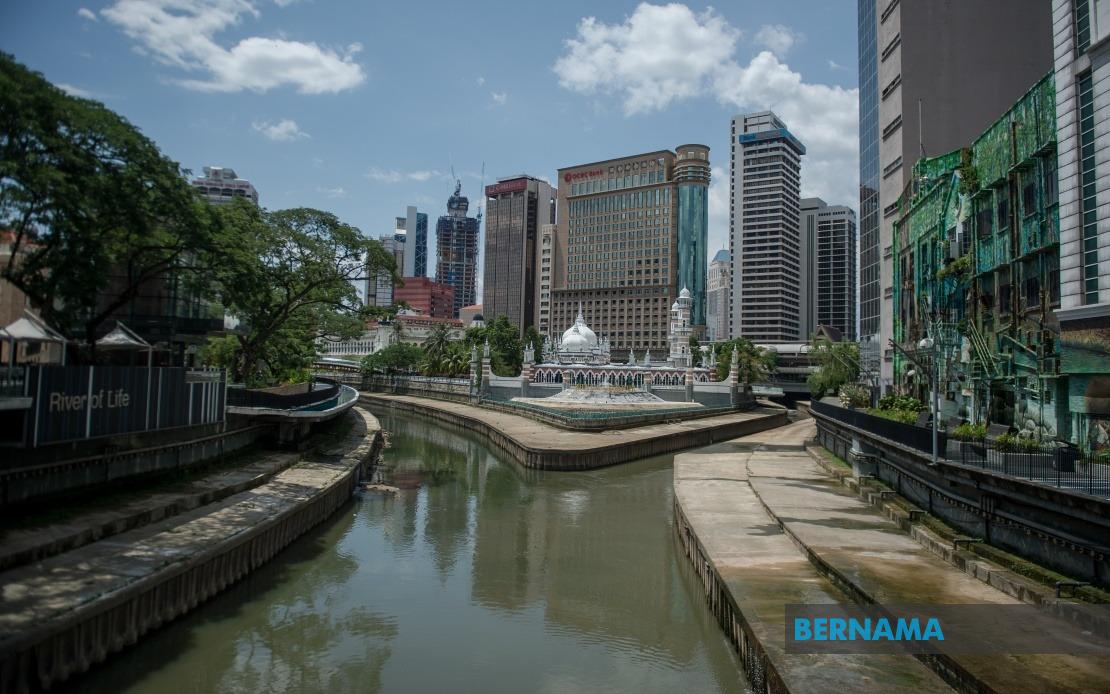
Selangor's struggle with seasonal flooding has taken a significant turn following a major infrastructure intervention on Sungai Klang, where authorities have successfully elevated the river's water-holding capacity to 22 per cent—a dramatic leap from its previous level of less than five per cent. This improvement represents a pivotal shift in the state's approach to managing one of the most flood-prone waterways in the Klang Valley, directly addressing vulnerabilities that have persistently plagued residential and commercial zones during monsoon seasons.
The transformation stems from an ambitious 56-kilometre river rehabilitation programme focused on systematic widening and deepening operations. According to Landasan Lumayan Sdn Bhd managing director Syaiful Azmen Nordin, the initiative has achieved 68 per cent completion to date, with planners targeting full implementation by the end of next year. The project's methodology centres on removing accumulated sediment and reinforcing riverbanks in particularly vulnerable precincts, notably the densely populated Taman Sri Muda neighbourhood, where water overflow has historically triggered cascading property damage and displacement.
Since the programme's inception in 2017, engineering teams have extracted approximately 1.2 million cubic metres of material from the riverbed and surrounding channels. This vast excavation operation fundamentally alters the river's hydraulic efficiency, allowing greater volumes of water to flow through without breaching protective embankments. The dredging works function as preventive infrastructure rather than reactive flood management, reducing the likelihood of the catastrophic overflows that devastated Selangor in 2021, when residential areas found themselves inundated during unprecedented rainfall events.
Critically, Syaiful Azmen distinguished between structural failure of the river system and surface drainage inadequacy, clarifying that recent localised flooding in Selangor resulted from internal drainage complications rather than Sungai Klang reaching capacity. This distinction carries important implications for flood response strategies, indicating that while the main river system is strengthening, parallel investments in tertiary drainage networks and local stormwater management remain essential. Comprehensive flood prevention thus requires coordinated action across multiple infrastructure layers rather than reliance on a single megaproject.
The ultimate ambition extends beyond the current 22 per cent achievement, with planners projecting that completed dredging will elevate Sungai Klang's capacity to 40 per cent. This staged progression reflects realistic construction timelines and acknowledges that capacity alone cannot solve flooding entirely—other factors including rainfall intensity, upstream watershed conditions, and land-use patterns in catchment areas fundamentally shape flood outcomes. The federal government has separately committed to widening and deepening operations along the Shah Alam to Mid Valley corridor, suggesting recognition that water-management challenges transcend administrative boundaries and demand coordinated planning across state and federal jurisdictions.
Parallel to excavation operations, a persistent river-cleaning programme has removed more than 98,000 tonnes of accumulated waste at an investment of RM19.6 million since 2017. Rubbish accumulation within river channels creates bottlenecks that impede water flow and increase overflow risk, making sanitation integral to flood prevention. The cleaning initiative has markedly reduced annual waste generation from 16,000 tonnes to between 5,000 and 6,000 tonnes—reflecting either improved waste management upstream or successful behavioural change campaigns, though the distinction matters for policy design.
Water quality indicators have similarly benefited from intensified maintenance, with Sungai Klang's classification improving from Class 5 (severely polluted) to Class 3 and 4 (moderately polluted). For Malaysian readers familiar with environmental assessments, this reclassification signals that while the river remains compromised relative to pristine standards, it has transitioned from ecological catastrophe toward managed rehabilitation. Cleaner water correlates with reduced sediment deposition, which in turn supports improved drainage capacity and reduces the organic blockages that compound flooding risks.
Public awareness campaigns accompanying the infrastructure works have seemingly contributed to behavioural shifts regarding riverine waste disposal. The reduction in annual rubbish from 16,000 to 5,000-6,000 tonnes suggests that community engagement strategies have reinforced the connection between individual disposal practices and collective flood vulnerability. This represents a potentially sustainable advantage over infrastructure alone, as public stewardship reduces operational maintenance burdens and embeds flood prevention within everyday decision-making rather than treating it as a technical problem solved exclusively through engineering.
For Southeast Asian policymakers and Kuala Lumpur residents, the Sungai Klang intervention offers lessons about managing urbanisation pressures in rapidly developing tropical regions. The project demonstrates that chronic infrastructure underinvestment can be reversed through sustained commitment—the seven-year timeline from 2017 onward reflects realistic execution rather than aspirational planning. However, the modest 22 per cent improvement from a baseline of less than five per cent also illustrates how far Selangor's water-management infrastructure lagged behind contemporary standards, raising questions about whether historical budget allocations adequately anticipated flood risks in a densifying metropolitan area.
The completion target of end-2025 will test whether the state maintains political and financial commitment when competing infrastructure priorities emerge. Flood management projects lack the immediate visibility of new expressways or shopping districts, potentially leaving them vulnerable to budget reallocation during economic downturns. The success of Sungai Klang's rehabilitation will partly depend on whether completion deadlines hold firm and whether maintaining the improved system receives equivalent funding priority in subsequent years.
Looking forward, the capacity improvements offer breathing room for Selangor's urban planners, but should not encourage complacency about growth management. If catchment-area development continues unchecked and impervious surfaces expand without offsetting stormwater retention measures, increased Sungai Klang capacity merely postpones rather than prevents future flooding. Sustainable urban water management ultimately requires integrated land-use planning that balances economic development with hydrological reality, treating flood prevention not as an engineering afterthought but as a foundational consideration shaping development patterns.

