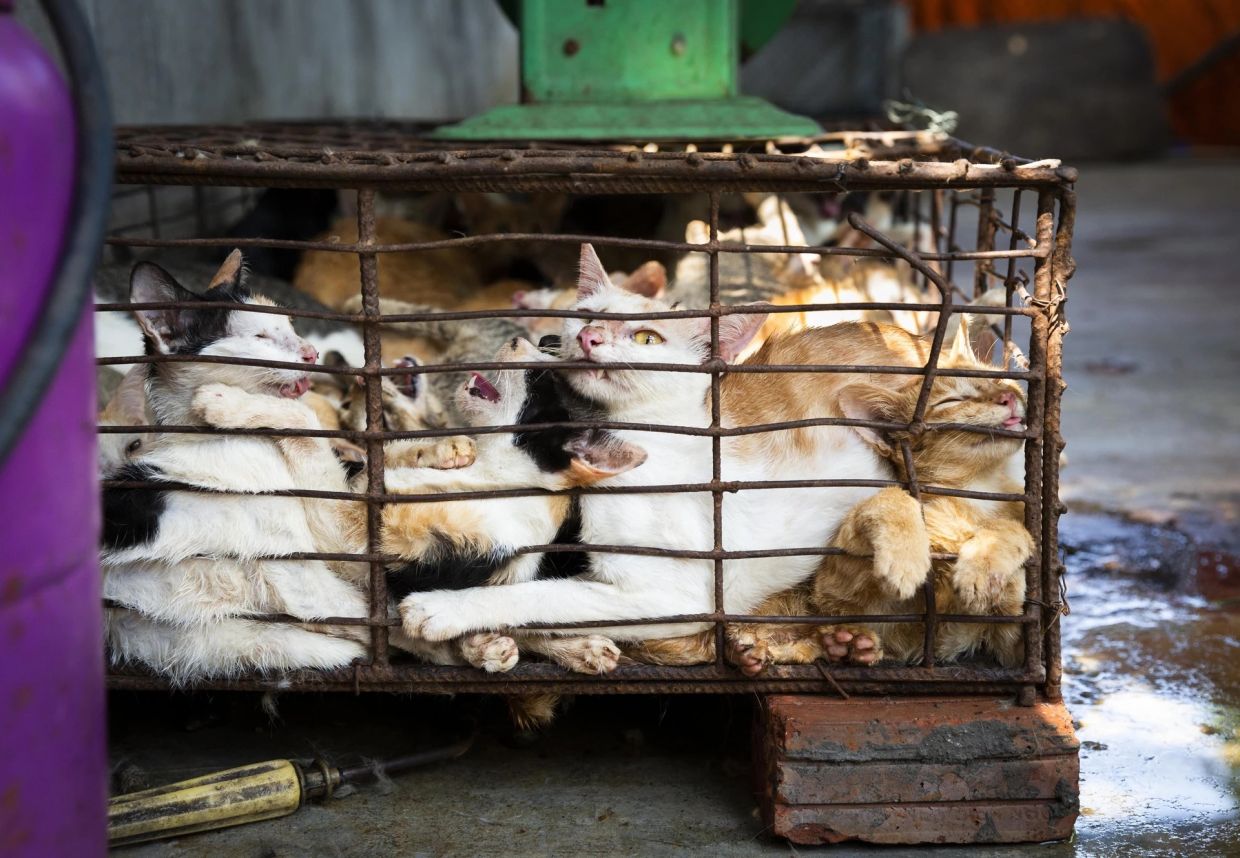
An estimated one million cats are killed every year in Vietnam to feed an underground trade rooted in superstition and cultural belief, according to global animal welfare organisation FOUR PAWS. The brutal practice, which also occurs in remote areas of Cambodia and Laos, involves cats being stolen from homes and streets, trafficked across borders, and slaughtered to meet demand from consumers who believe the meat brings good fortune or offers medicinal benefits. The persistence of this trade represents a striking disconnect between public sentiment and actual practice across the Indochina region, where animal welfare activists continue to document suffering on a massive scale.
Belief systems surrounding cat meat consumption vary across the region but centre on notions of luck and health. In Vietnam specifically, some consumers adhere to the superstition that eating cat meat during particular phases of the lunar calendar can reverse bad luck or invite good fortune into their lives. Others consume the meat believing it possesses genuine medicinal properties that can treat various ailments. Black cats command premium prices in the illicit trade because they are particularly prized for their purported special properties relating to luck and healing. This cultural association with supernatural benefit drives demand despite the absence of any scientific evidence supporting health claims. Jon Rosen Bennett, who oversees dog and cat welfare issues at FOUR PAWS, explained that consumption patterns reflect these deeply embedded cultural narratives rather than any genuine dietary need.
The scale of the trade became apparent when Ho Chi Minh City police dismantled a smuggling operation just days before this report, rescuing approximately 500 cats and detaining nine gang members suspected of stealing and selling felines across provincial boundaries over a three-year period. The bust exposed the organised nature of the trafficking network, which operates despite decades of awareness campaigns by governments and international animal rights groups. Investigators found that live cats were being sold for between US$6 and US$8 per kilogramme in 2020, with processed cat meat fetching US$10 to US$12 per kilogramme. The higher prices for black cats underscore the premium consumers willingly pay based on superstitious beliefs about their special properties.
A critical paradox undermines the legitimacy of this trade: overwhelming majorities in the region actively oppose it. According to FOUR PAWS surveys, nearly 90 per cent of Vietnamese respondents indicated they would support a comprehensive ban on both dog and cat meat trading. More strikingly, over 90 per cent of respondents stated they do not view cat meat consumption as part of authentic Vietnamese culture. This data suggests the trade is sustained not by broad cultural acceptance but by a small segment of the population whose purchasing power drives widespread animal suffering. The gap between public opinion and actual practice indicates that regulatory measures have failed to match the demonstrated will of ordinary people to end the practice.
The absence of legal protection at the national level enables the trade to flourish. Vietnam currently lacks a nationwide ban specifically prohibiting the slaughter, sale, or consumption of cat meat, creating a regulatory vacuum that allows traffickers and traders to operate with minimal legal consequences. This legal gap stands in contrast to growing public awareness about animal welfare and the increasing recognition of cats as companion animals rather than livestock. The Ho Chi Minh City police operation, while notable, represents enforcement against smuggling rather than against the fundamental practice of cat meat trading itself. Without comprehensive legislation establishing clear prohibitions, law enforcement efforts remain reactive rather than preventative.
Beyond animal welfare concerns, the trade poses significant public health risks that extend beyond individual consumers to threaten wider populations. The undocumented movement of live cats across borders creates conditions for disease transmission, particularly rabies and other zoonotic pathogens that jump from animals to humans. Bennett noted that the unregulated, clandestine nature of the trade means there is no health screening, no quarantine procedures, and no traceability mechanisms that would typically accompany legitimate animal commerce. The mass trafficking of animals through informal networks, unmonitored by veterinary authorities, increases the probability that infected animals will be transported across regional boundaries, potentially introducing pathogens to new territories.
The cat trade exists within a broader pattern of animal exploitation across Southeast Asia. Dogs face similar fates, with animal activists estimating that more than 10 million dogs are slaughtered for meat annually across the entire region. However, public sentiment against the dog meat trade is also shifting, with increasing numbers rejecting it as culturally inappropriate. The growing cultural divide between those who view dogs and cats as companion animals deserving protection and those who treat them as commodities reveals fundamental changes in values, particularly among younger and urban populations. These changing attitudes provide openings for policy reform, yet political action remains inconsistent across the region.
International animal welfare groups have intensified efforts to challenge the trade through awareness campaigns and documentation. FOUR PAWS launched an online public reporting platform in early June as part of its anti-trafficking initiative in Cambodia, allowing citizens to report suspected illegal trading. Such initiatives aim to mobilise public support and provide authorities with actionable intelligence. The emphasis on Cambodia reflects the reality that the trade, while most prevalent in Vietnam, extends throughout the Indochina region and requires coordinated regional responses. Digital platforms enable reporting while protecting informant identities, potentially increasing the flow of information to enforcement agencies.
For Malaysia and other Southeast Asian nations, the situation across Indochina serves as a cautionary example of how superstition-driven demand can sustain cruel practices despite modernisation and development. While Malaysia has stronger legal protections for companion animals, the persistence of belief systems similar to those driving the cat trade in Vietnam—linking animal consumption to health or luck—remains relevant to understanding consumer behaviour throughout the region. The disconnect between public opinion supporting animal welfare and the continuation of harmful practices suggests that legal reform alone proves insufficient without accompanying cultural change and effective enforcement mechanisms.
The path forward requires action on multiple fronts. Governments in Vietnam, Cambodia, and Laos must enact explicit legal bans on the cat meat trade, establishing clear penalties for violations. Enforcement mechanisms must be strengthened to prosecute trafficking operations and dismantle supply chains. Simultaneously, sustained public education campaigns must challenge the superstitious beliefs underlying demand, particularly targeting younger generations less invested in traditional practices. Regional cooperation through ASEAN frameworks could harmonise standards and prevent trafficking across borders. Until such comprehensive measures are implemented, the suffering of an estimated one million cats annually will continue, driven by beliefs that the vast majority of people in the region openly reject.

