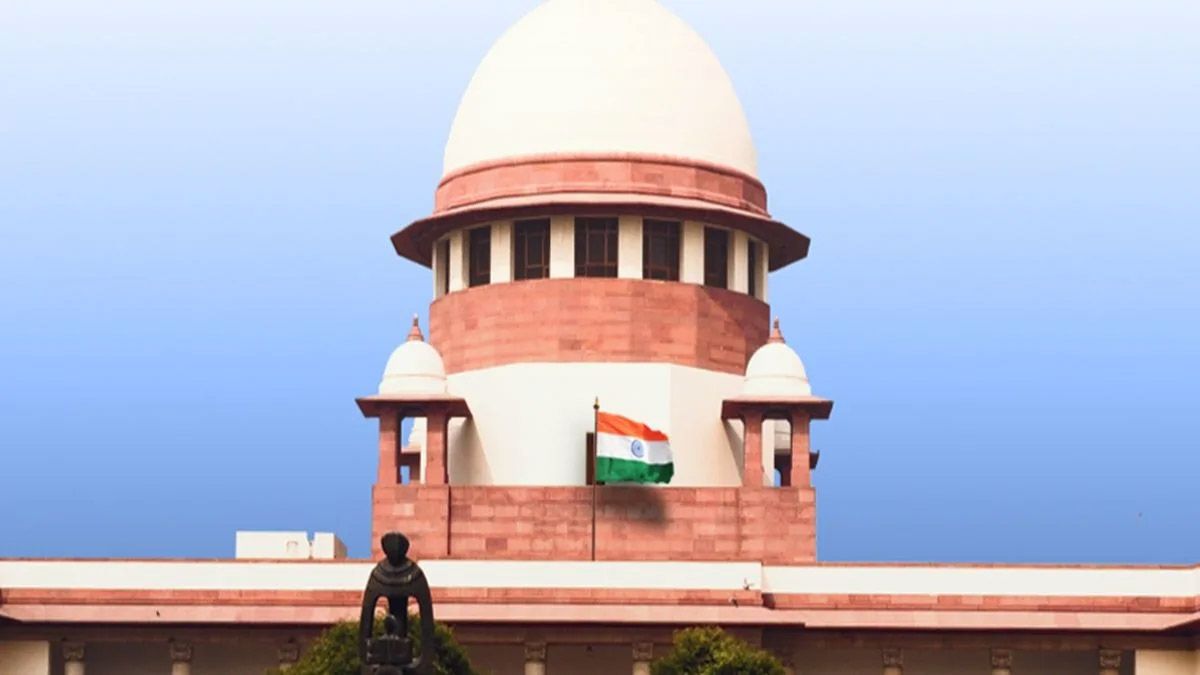
India's Supreme Court has intervened in a contentious Tamil Nadu livestock dispute by staying a blanket prohibition on cattle slaughter imposed by the Madras High Court, signalling judicial concern about the lower court's scope of authority. A Bench comprising Justices Vikram Nath and Sandeep Mehta issued the interim suspension on Monday while hearing the Tamil Nadu government's appeal against the May 27 judgment, effectively halting implementation of the High Court's sweeping directive. The top court's decision underscores the delicate balance between constitutional animal welfare principles and legitimate state regulatory authority—a tension increasingly relevant as religious and cultural sensitivities intersect with animal protection law across India and neighbouring South Asian democracies.
The Madras High Court's original order, rooted in a public interest petition filed by Hindu Makkal Katchi General Secretary K Surya Prasanth, had sought to ban cattle slaughter entirely throughout Tamil Nadu. Mr Prasanth's complaint centered on temporary sheds erected in Coimbatore for Bakrid festivities, yet the High Court's response dramatically expanded the remedy by prohibiting not merely public slaughter but cattle slaughter universally, including within designated slaughterhouses and on any day regardless of religious significance. The High Court justified this expansive prohibition by invoking Article 48 of the Constitution, which encourages states to prohibit cattle slaughter, and cited a 1976 Government Order previously banning cow and heifer slaughter in licensed facilities across Tamil Nadu.
Tamil Nadu's government mounted a vigorous challenge, contending that the High Court had fundamentally misinterpreted both the petition's scope and the applicable legislative framework. The state government argued persuasively that the original relief sought was narrowly tailored to preventing slaughter in unauthorised public spaces and ensuring that any permitted slaughter occurred exclusively within authorised slaughterhouses—a far cry from the absolute prohibition the High Court imposed. This distinction carries profound practical implications: whereas regulated slaughter in designated facilities aligns with established law and international best practice for animal welfare, a blanket ban disrupts long-standing statutory regimes designed to balance cultural practices with humane standards.
The regulatory architecture that Tamil Nadu referenced remains comprehensive. The state pointed to the Tamil Nadu Animal Preservation Act, 1958, which establishes conditions permitting cattle slaughter rather than instituting outright prohibition, alongside the Prevention of Cruelty to Animals Act, 1960, the Prevention of Cruelty to Animals (Slaughter House) Rules, 2001, and modern food safety legislation. These instruments together create a framework premised on regulation and oversight, not absolute restriction. The appeal documents emphasise that existing law contemplates slaughter under prescribed conditions—a recognition that complete bans, however well-intentioned, may violate the legal hierarchy and statutory intent governing livestock management in India's federal structure.
Justice Vikram Nath's observation during proceedings that the impugned order required "correction" signals the Supreme Court's concern extends beyond mere procedural matters. His remark suggests substantive doubts about whether constitutional ambitions alone justify overriding explicit statutory frameworks. The granting of interim relief prior to final adjudication indicates the court recognised a real risk of irreparable harm should the High Court's order remain in force—harm not merely to cattle traders but to the rule of law itself if judicial orders routinely expand far beyond the grievances they purport to address.
For Malaysian and broader Southeast Asian observers, this dispute illuminates recurring tensions in the region regarding animal welfare, religious practice, and judicial restraint. Malaysia's own constitutional framework, with Islam as the federal religion yet protection of minority faiths enshrined, frequently encounters similar pressures when courts navigate animal-related regulations that implicate religious or cultural ceremonies. The Tamil Nadu case demonstrates how judicial overreach, even when motivated by sincere animal protection concerns, can undermine the balanced statutory schemes that democracies develop through legislative deliberation. When courts substitute their policy preferences for statutory language, they risk destabilising the predictability upon which commerce, farming communities, and regulated industries depend.
The Supreme Court's interim stay preserves the status quo ante the High Court's May 27 judgment, meaning existing regulations governing cattle slaughter remain operative. The state's statutory framework—permitting slaughter under defined conditions—continues to govern practice pending final determination. This approach respects established law whilst the Supreme Court considers whether the High Court erred in expanding the PIL into a tool for wholesale legislative revision. The procedural positioning also suggests the Supreme Court may ultimately uphold or substantially modify the Madras High Court's reasoning, potentially establishing important precedent regarding the proper scope of public interest litigation in animal welfare matters.
The case reflects broader questions about animal protection in South Asia. Cattle hold profound significance across religious, cultural, and economic contexts: revered in Hindu tradition, central to Muslim practices during Bakrid, and essential to dairy farming and livelihoods. Sound animal welfare policy must accommodate these diverse interests through durable legal frameworks developed via legislative and regulatory processes, not through judicial fiat that discards established statutes. The Supreme Court's willingness to intervene suggests recognition that however commendable the lower court's animal protection objectives, the means employed—a blanket prohibition exceeding the petition's scope—could not be justified.
For Tamil Nadu specifically, the immediate effect is restoration of regulatory authority to implement the existing statutory regime. The state government, through its Chief Secretary and police apparatus, regains discretion to enforce the animal preservation and animal cruelty prevention laws as written, including permitting slaughter in authorised facilities subject to prescribed conditions. This matters considerably to Tamil Nadu's dairy, leather, and meat industries, which employ substantial populations and contribute meaningfully to state revenue. Any blanket cattle slaughter ban would have created unprecedented disruption across these sectors and the agricultural supply chains upon which they depend.
The Supreme Court's decision also carries institutional implications. By staying the Madras High Court's order, the top court reinforces that judicial power, however broad in constitutional adjudication, remains bounded by the specific relief sought and the statutory authority invoked. Public interest litigation has expanded judicial reach in South Asia, often productively, yet this case suggests courts should hesitate before using PIL as a vehicle for imposing comprehensive prohibitions uncontemplated by the original pleadings or legislative design. The principle—that judges should decide cases, not remake law—remains foundational to rule of law, even when the underlying cause commands moral sympathy.
The dispute now returns to the Supreme Court for full merits review. That forum will ultimately determine whether the High Court's constitutional interpretation, however appealing to animal welfare advocates, can override explicit statutory provisions and legislative judgments about permissible slaughter. The interim stay buys time for reasoned deliberation on questions that extend beyond Tamil Nadu: whether constitutional exhortations to protect cattle override democratically enacted statutes permitting regulated slaughter, and whether courts should rewrite law in service of causes, however laudable, that legislatures have already addressed through different means. Until final judgment, the regulatory balance established by statute governs Tamil Nadu's cattle slaughter practices, and the judicial boundaries around PIL remain unsettled.

