Sustainable finance has shifted from niche market positioning to becoming a core pillar of regional banking strategy, driven by surging consumer appetite for electric vehicles, renewable energy systems and climate-aligned investments across Southeast Asia. This transformation reflects a fundamental reorientation in how financial institutions approach their role in supporting the region's energy transition, with traditional lending parameters giving way to more complex sustainability assessments and long-term climate risk evaluation.
The momentum is particularly evident in the automotive sector, where consumer adoption of electric vehicles has accelerated dramatically across the region. Malaysia witnessed a doubling of electric car sales in 2025, while Indonesia's EV market more than doubled year-on-year according to International Energy Agency data. This explosive growth has created immediate financing needs that extend far beyond conventional vehicle loans, encompassing charging infrastructure development, battery technology investments and supply chain financing for EV manufacturers and components suppliers throughout Southeast Asia.
Maybank Group's expanded commitment illustrates the scale of institutional confidence in this trajectory. The banking group has pledged to mobilise RM300 billion in sustainable finance across ASEAN member states between 2026 and 2030, representing a substantial acceleration from its previous five-year programme. More tellingly, the group's track record suggests this target is achievable: its initial 2021-2025 commitment of RM80 billion was exceeded by more than 120 percent, with the bank ultimately channelling RM176 billion into sustainable finance by the end of 2025. This performance indicates that market demand for green financing far exceeds what many institutions anticipated even three years ago.
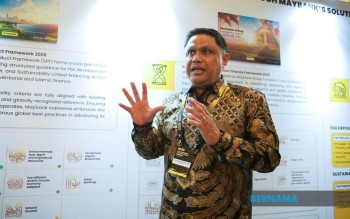
Datuk Shahril Azuar Jimin, Group Chief Sustainability Officer at Maybank, emphasised during the inaugural Maybank Indonesia Sustainable Finance Forum 2026 that the banking sector had moved beyond questioning whether sustainable finance was commercially viable. The persistent perception that green financing suffered from liquidity constraints or insufficient investor appetite has been decisively disproven by market performance. Banks now recognise sustainable finance not as a compliance exercise or reputational initiative, but as a core revenue opportunity with strong underlying demand from both institutional and retail customers seeking to align their investments with climate and sustainability objectives.
Policy support mechanisms in key markets are amplifying this trend. Malaysia's Energy Transition and Water Transformation Ministry expanded the residential quota under the Net Energy Metering (NEM) Rakyat programme by 100 megawatts in May 2025 after existing allocations were fully subscribed within weeks. This oversubscription reflects genuine household interest in rooftop solar installation, which in turn drives demand for green home financing products and related services that banks are now positioning as core offerings rather than peripheral specialities.
The scope of sustainable finance has broadened considerably beyond the traditional definition of pure green projects. Maybank's Sustainable Product Framework now encompasses transition finance for carbon-intensive industries undertaking decarbonisation efforts, dedicated EV financing schemes, green mortgages for energy-efficient homes, social finance supporting community development alongside environmental outcomes, and green bond issuance platforms. This diversification recognises that the transition to a low-carbon economy involves varied pathways across different sectors, geographies and income levels, each requiring tailored financial solutions.
This expansion has necessitated a fundamental reimagining of how banks interact with clients. Relationship managers historically functioned primarily as intermediaries arranging credit facilities based on collateral and repayment capacity assessments. The new sustainable finance paradigm requires these professionals to function as sustainability advisors, capable of explaining climate risks, environmental benefits, social impacts and long-term transition strategies to corporate and retail clients. Maybank has invested substantially in capacity-building programmes and professional sustainability certifications for relationship managers, transforming them from transactional lenders into strategic advisors navigating increasingly complex sustainability landscapes.
Indonesia's experience demonstrates how sustainable finance is cascading through the regional economy at multiple levels. Maybank Indonesia mobilised approximately Rp17 trillion in sustainable financing under the previous 2021-2025 commitment, with transportation emerging as the strongest segment as EV adoption accelerates. Significantly, sustainable finance is not limited to large-scale infrastructure or corporate transition projects. Maybank Indonesia's portfolio increasingly includes financing for affordable housing developments and low-cost electric two-wheelers targeting lower-income communities, illustrating how green finance is becoming embedded in everyday consumer lending rather than remaining accessible only to affluent borrowers.
Maria Triffany Fransiska, Head of Sustainability at Maybank Indonesia, noted that the new five-year commitment is progressing well despite being in early implementation stages. The bank is expanding beyond pure financing into broader sustainable banking ecosystem development, with Indonesia becoming the first market within the Maybank group to introduce an environmental, social and governance deposit product that enables retail customers to direct their savings toward sustainable investments. Malaysia is expected to launch similar products, suggesting that ESG-aligned banking products will become standard offerings across major Southeast Asian markets within the coming year.
The strategic importance of sustainable finance extends beyond individual bank profitability to encompass regional economic resilience and climate objectives. Southeast Asia faces significant climate vulnerabilities including rising sea levels, changing monsoon patterns and extreme weather events that threaten infrastructure, agricultural productivity and financial stability. By channelling capital into renewable energy, climate adaptation, sustainable agriculture and resilient infrastructure, regional banks are not merely responding to market demand but actively reducing systemic economic vulnerabilities. This alignment between commercial incentives and development imperatives has created a rare policy window where sustainability and profitability reinforce rather than contradict each other.
Green bond initiatives represent another frontier in sustainable finance expansion. Maybank Indonesia is preparing to develop comprehensive green bond platforms, building on experience in other Southeast Asian markets. Green bonds allow institutional investors including pension funds, insurance companies and asset managers to invest in sustainability-aligned projects while diversifying portfolios across geographies and sectors. This capital market dimension will eventually dwarf traditional bank lending in volume, enabling larger scale investment in regional energy transition infrastructure.
The acceleration of sustainable finance across Southeast Asia reflects convergence of multiple drivers: rising consumer demand for green products and services, growing recognition of climate risks among institutional investors, policy support from national governments and regional bodies, technological improvements reducing renewable energy costs, and crucially, demonstration by leading institutions that sustainable finance is commercially attractive. For Malaysia and the broader region, this trend offers an opportunity to finance the energy transition while establishing regional financial centers as leaders in sustainable capital allocation, potentially attracting significant international investment flows seeking exposure to Asia's growing sustainability sector.

