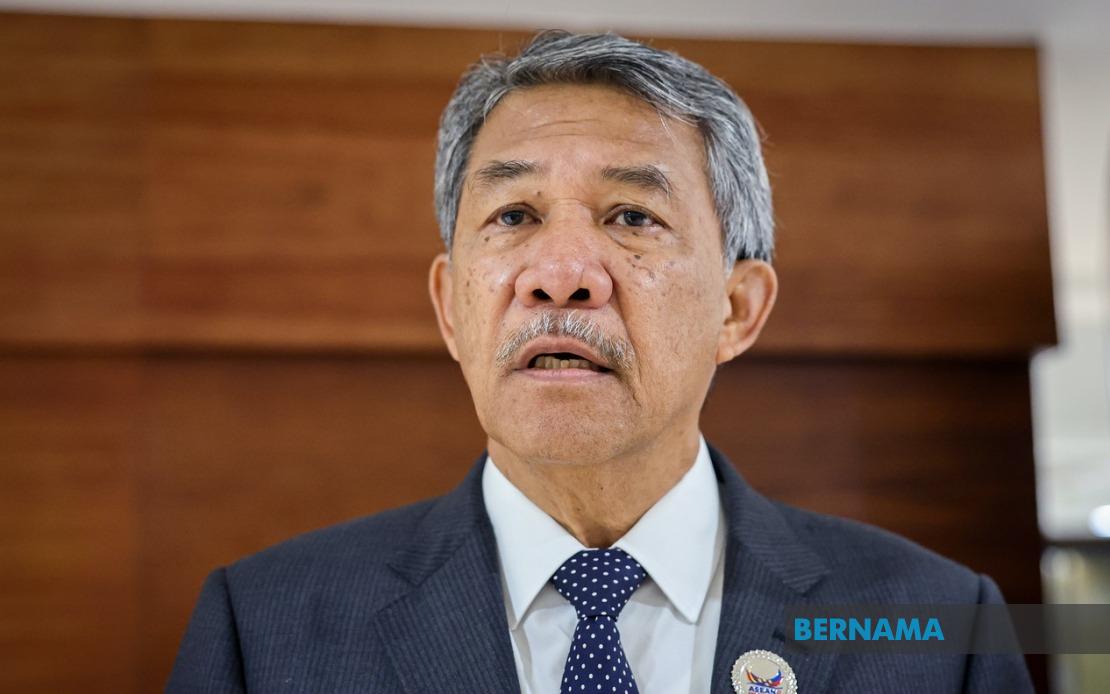
Sweden, Poland, Romania and Lithuania have been formally admitted as the newest signatories to the Treaty of Amity and Cooperation in Southeast Asia (TAC), a development that reflects deepening international engagement with the regional bloc's foundational principles. The acceptance was announced during the 59th ASEAN Foreign Ministers' Meeting held in Manila on July 21, with Malaysia's Foreign Minister Datuk Seri Mohamad Hasan confirming that the four European nations will sign their instruments of accession during a ceremony scheduled for the following day, coinciding with the treaty's 50th anniversary celebration.
The TAC represents one of ASEAN's most significant diplomatic instruments, having been established in 1976 as a framework governing interstate relations across Southeast Asia. It enshrines core doctrines including peaceful coexistence, mutual respect for sovereignty, non-interference in internal affairs, and regional cooperation. By welcoming these four nations, ASEAN extends its influence beyond Asia-Pacific boundaries and invites external powers to formally subscribe to principles that have guided the region's relative stability for nearly five decades.
The expansion of TAC membership carries particular significance for Southeast Asia at a moment of geopolitical complexity. The treaty serves as a confidence-building mechanism and signals that countries across Europe and beyond view alignment with ASEAN's stated values as strategically worthwhile. For Malaysia and other ASEAN members, the accession of Sweden, Poland, Romania and Lithuania demonstrates that the regional bloc's diplomatic framework has cross-continental relevance and resonates with nations facing their own security and sovereignty challenges.
Datak Seri Mohamad Hasan articulated that the decision reflected international confidence in ASEAN as a peaceful regional bloc committed to preservation of stability through cooperation rather than confrontation. His comments suggest that ASEAN sees these new memberships as validation of its approach to regional governance during a period marked by great power competition and competing strategic interests in the Indo-Pacific. The admission process, occurring during the Philippines' ASEAN Chairmanship under the theme "Navigating Our Future, Together," underscores the organisation's commitment to inclusive engagement.
With the addition of Sweden, Poland, Romania and Lithuania, the TAC now encompasses 58 High Contracting Parties, including all 11 ASEAN member states. The treaty's reach extends globally, with signatories from the Asia-Pacific region joined by established powers including Australia, Japan, New Zealand, the United States and China, as well as nations from the Middle East, Africa and Latin America. This geographic breadth positions the TAC as a genuinely transnational covenant on state behaviour, though enforcement mechanisms remain limited to diplomatic pressure and consensus-building.
The current application pipeline reveals substantial interest in joining the treaty framework. The ASEAN Secretariat in Jakarta is processing multiple applications from countries seeking to accede to the TAC, which will subsequently be forwarded to individual ASEAN member states for formal consideration. This suggests that the expansion announced in Manila may represent merely the first wave of a broader shift toward institutionalised international endorsement of ASEAN's principles. The backlog of pending applications indicates that many governments view association with the treaty as conferring diplomatic legitimacy and as a means of engaging constructively with Southeast Asian states.
For Malaysian readers and policymakers, the inclusion of four European nations in the TAC framework has practical implications for regional stability and economic cooperation. European countries increasingly recognise Southeast Asia's importance to global trade, security and technological development. By formally acceding to the TAC, Sweden, Poland, Romania and Lithuania signal their intention to pursue engagement with the region according to established norms of non-confrontation and respect for sovereignty. This alignment becomes strategically relevant as Southeast Asian nations balance relationships between major powers competing for influence.
The treaty's fifty-year history demonstrates both the durability of ASEAN's founding principles and their adaptability to changing international circumstances. The TAC was conceived when the Cold War divided the world into competing blocs, yet it has remained relevant through subsequent decades of decolonisation, economic integration and technological transformation. Its continued attractiveness to diverse countries suggests that principles emphasising non-interference, peaceful settlement of disputes and mutual respect retain genuine appeal in an era of multipolar competition.
The admission process also illustrates ASEAN's consensus-based decision-making, which requires agreement among all member states before extending TAC membership. This requirement has allowed smaller nations within ASEAN to exercise influence over the bloc's external relations and has prevented any single dominant power from unilaterally determining who may join the treaty framework. The unanimity required reflects ASEAN's commitment to collective decision-making, even as it occasionally slows the pace of institutional expansion.
For the four European nations, accession to the TAC represents a formal commitment to engage Southeast Asia according to established regional norms rather than imposing external frameworks or priorities. This stance proves particularly significant given contemporary tensions surrounding technological standards, security arrangements and economic arrangements in the region. By joining the treaty, Sweden, Poland, Romania and Lithuania acknowledge Southeast Asia's right to determine its own future and to resist external pressure to align with particular geopolitical blocs.
The broader implications extend beyond symbolic diplomacy. The TAC framework creates structures for dialogue, consultation and cooperation that can facilitate trade, investment and educational exchanges. European accession may encourage Southeast Asian nations to deepen engagement with European institutions and markets, potentially diversifying economic partnerships beyond traditional Asian and American relationships. This rebalancing could strengthen regional resilience and reduce economic vulnerability to disruptions in any single relationship.
As ASEAN continues processing additional applications for TAC membership, the organisation faces questions about the treaty's future scope and utility. Expansion risks diluting the instrument's significance if admission becomes routine, yet exclusion contradicts the treaty's inclusive principles. ASEAN will need to balance these considerations carefully, ensuring that TAC membership remains meaningful while remaining open to genuine partners committed to regional peace and cooperation. The admission of Sweden, Poland, Romania and Lithuania suggests the organisation remains confident in its ability to navigate these tensions successfully.

