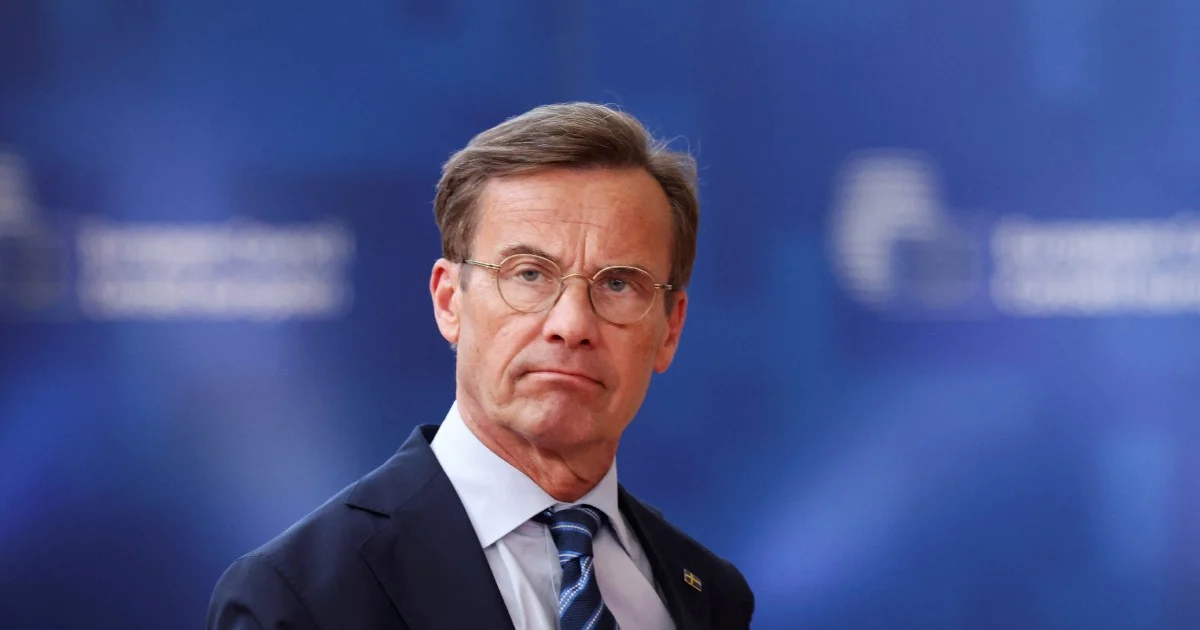
Swedish Prime Minister Ulf Kristersson has demonstrated a remarkable capacity to survive political turbulence that might have toppled leaders in many other democracies. Throughout his four years in office, the prime minister has navigated a minefield of scandals, each time emerging from the controversy with minimal political damage. Now, with legislative elections just three months away, Kristersson confronts fresh corruption allegations that test whether his political fortune can hold once more.
The accumulation of controversies surrounding Kristersson suggests a pattern rather than isolated incidents. His administration has repeatedly faced questions about propriety and governance, yet each scandal has failed to generate the momentum necessary to force his resignation or trigger widespread calls for his government's collapse. This resilience reflects partly on the fractious state of Swedish opposition politics, where no single alternative has crystallised sufficient public support to capitalize on governmental vulnerability. The left-leaning bloc remains divided and comparatively weak, while the centre-right coalition under Kristersson, despite its rifts, has held sufficiently firm to prevent parliamentary collapse.
The timing of these latest allegations creates particular pressure on the Swedish political system just as voters prepare to make their electoral calculations. Three months represents a compressed timeframe in which new information can reshape campaign narratives, yet it also offers Kristersson's coalition a window to manage the story's evolution. Swedish voters may feel fatigued by successive controversies, a sentiment that could paradoxically limit the impact of any single new revelation. Whether the public perceives each scandal as a serious breach of democratic norms or merely as the inevitable friction of governance remains crucial to understanding how these allegations might influence electoral sentiment.
The international dimension of Kristersson's political survival merits consideration. Sweden's recent NATO membership, secured after Russia's invasion of Ukraine, has elevated the country's geopolitical profile and shifted focus toward security concerns that dwarf domestic governance questions. Major international challenges can redirect public and media attention away from internal scandals, particularly when voters perceive foreign policy as existential. This structural advantage may provide Kristersson with additional insulation against domestic criticism during a period when national security concerns dominate political discourse across Scandinavia.
For Malaysian and Southeast Asian observers, Kristersson's experience offers intriguing lessons about the resilience of democratic systems under stress. Malaysian politics has witnessed its own cascade of scandals and corruption allegations affecting senior figures, yet the mechanisms through which accountability operates differ substantially from Swedish practice. Sweden's relatively robust institutions, transparent judicial processes, and functioning free press provide guardrails that, while imperfect, function quite differently from systems with weaker institutional checks. The comparison highlights how institutional strength shapes whether scandals translate into actual political consequences or merely occupy news cycles.
The corruption allegations now facing Kristersson represent a more serious category of misconduct than many preceding controversies. Corruption charges strike at fundamental questions about whether leaders prioritize personal or partisan advantage over the public interest. Swedish voters may be inclined to tolerate various forms of political mismanagement or poor judgment, yet corruption allegations historically carry greater moral weight in Nordic democracies where anti-corruption sentiment runs particularly deep. This cultural context suggests that the character of these allegations, distinct from previous scandals, may prove consequential in ways earlier controversies did not.
Kristersson's ability to navigate controversy reflects his positioning within Sweden's political coalition. The centre-right alliance controlling the Riksdag depends upon maintaining sufficient discipline to preserve its parliamentary majority, yet the coalition comprises ideologically diverse parties with distinct voter bases. Any coalition partner faces incentives to distance itself from scandals affecting the prime minister, creating instability. That Kristersson has maintained coalition unity despite recurring crises speaks to either the political weakness of potential challengers within the coalition or mutual recognition that electoral prospects improve through coalition maintenance rather than internal recrimination.
The Swedish electorate's apparent equanimity regarding Kristersson's troubles may reflect pragmatic calculations about policy priorities. If voters perceive the coalition government's policies on immigration, economic management, or security as substantially preferable to alternatives offered by the opposition, they may discount scandals as secondary considerations. Swedish voters, like electorates elsewhere, balance multiple criteria when determining their political preferences, and governance controversies do not automatically override policy satisfaction. This reality explains why scandals, even serious ones, do not inevitably produce electoral punishment.
Looking toward the legislative elections three months hence, several factors will determine whether the latest corruption allegations shift political calculations. The pace at which these allegations develop and the degree to which media attention sustains scrutiny will matter considerably. Additionally, how effectively the opposition mobilises public concern around corruption charges will shape their electoral impact. A fragmented opposition struggling to present unified messaging may fail to capitalize on even substantive accusations against the government. Conversely, if allegations prove sufficiently grave or documented, they may overcome political fragmentation and generate momentum against Kristersson regardless of structural advantages he has enjoyed.
The coming months will test whether Sweden's democratic institutions can effectively address corruption allegations while maintaining political stability. The stakes extend beyond Kristersson's political future to encompass broader questions about whether accountability mechanisms in mature democracies function adequately when powerful figures face serious misconduct allegations. Swedish voters, institutional actors, and international observers will be watching closely to see whether, this time, the scandals prove more consequential than previous turbulence or whether Kristersson's apparent political immunity continues to hold.