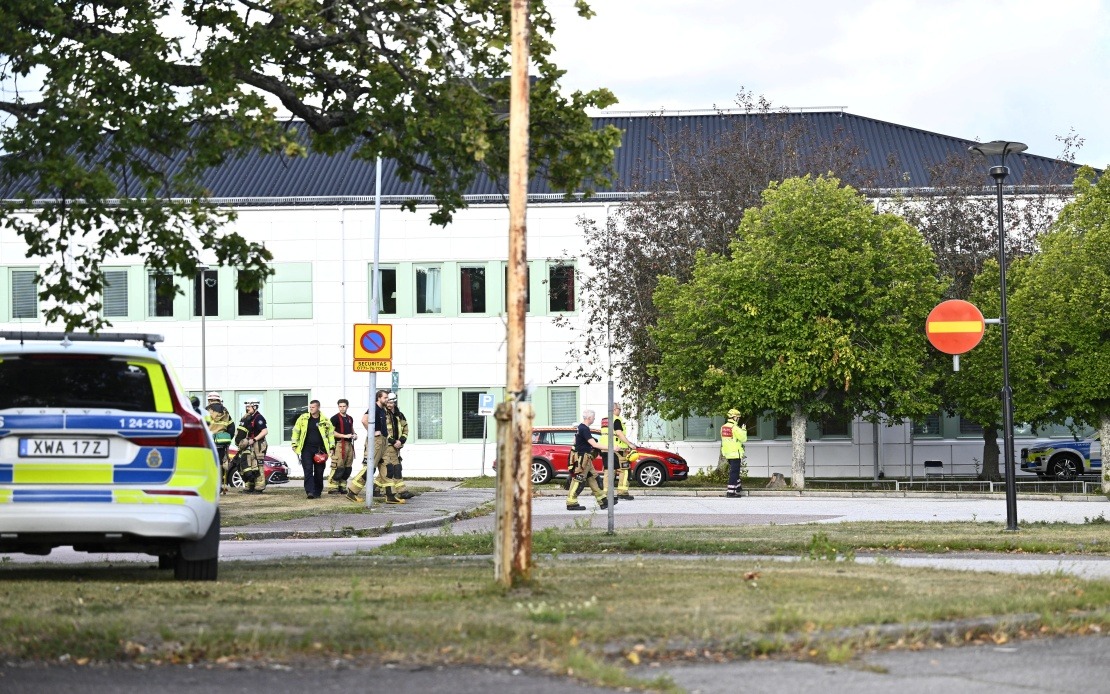
A fatal sword attack at a school in central Sweden has left one person dead and two teenagers in serious condition, marking a disturbing breach of security at an educational institution in one of Europe's typically safest countries. The assault occurred at Brinell School in the town of Fagersta when an armed individual entered the premises and launched the attack shortly after 2 p.m. local time on August 22, prompting an immediate response from police and emergency services.
The two victims who sustained severe injuries are both boys under 18 years of age and remain in serious but stable condition following medical treatment, according to local authorities. A third person at the school suffered minor injuries during the incident. The rapid arrival of emergency responders and the subsequent medical intervention appear to have prevented additional fatalities, though the psychological impact on the school community remains substantial.
Police have detained an 18-year-old male in connection with the attack. Investigations revealed that the suspect is a former student of Brinell School and has residential links to two addresses within Fagersta, suggesting he maintained some connection to the locality despite no longer being enrolled. The circumstances surrounding his motivation for the attack remain under investigation by Swedish law enforcement agencies.
In response to the incident, authorities implemented comprehensive security measures across the municipality to prevent any escalation or copycat incidents. Seven educational and recreational facilities were placed under lockdown, including Olympen, Fagerstahallen, Risbroskolan, Skogsglantan, Bjorksta, Prastkragen, and Norrbybacken. These precautions kept students and staff confined to secure locations until officials determined the threat had been fully contained and the immediate danger had passed.
Swedish Justice Minister Gunnar Strommer promptly addressed the nation regarding the developing crisis, emphasizing the government's commitment to coordinating with law enforcement. In a statement, Strommer confirmed that authorities had mobilized substantial investigative resources and established direct communication channels between the government and police command. His remarks underscored the seriousness with which Swedish officials regard the breach of school safety, a matter of paramount importance in a nation that has experienced relatively low rates of violent crime in educational settings compared to many international peers.
For Malaysian observers and Southeast Asian policymakers, this incident serves as a sobering reminder that school violence transcends geographical and socioeconomic boundaries. While Sweden maintains comprehensive social welfare systems and low poverty rates—factors typically associated with reduced criminal violence—the attack demonstrates that institutional vulnerabilities and individual perpetrators can circumvent preventative structures. The fact that the suspect was a former student raises questions about the adequacy of security protocols regarding individuals with prior institutional knowledge.
The situation in Fagersta parallels concerns that have emerged in various countries regarding school security and the psychological vulnerability of young people. In the Malaysian and broader Southeast Asian context, where schools serve as central social institutions and traditionally function as relatively open environments, such incidents prompt necessary discussions about balancing accessibility with protective measures. Educational administrators across the region may find the Swedish response instructive—the rapid lockdown procedures, coordinated emergency services response, and transparent government communication each demonstrate crisis management protocols worth examining.
Motive and planning behind the attack remain under investigation, though the targeting of a specific institution by someone with prior connection to it suggests this was not a random act of violence. This pattern—where perpetrators possess knowledge of locations and potentially grievances connected to them—has emerged in similar incidents elsewhere and warrants attention from security professionals monitoring threats to educational facilities throughout the region.
The recovery process for Fagersta will extend far beyond the immediate medical treatment and criminal investigation phases. Schools serve not merely as educational venues but as anchors for community identity and social cohesion, particularly in smaller municipalities. The trauma experienced by students, teachers, and families will require sustained psychological support and community rebuilding initiatives. Local administrators will need to reassess security protocols while maintaining the open, welcoming environment that characterizes Nordic educational philosophy.
From a regional security perspective, this incident underscores the universal nature of threats to educational institutions regardless of a nation's economic development or existing safety infrastructure. Malaysian and Southeast Asian education officials should consider whether their current threat assessment frameworks adequately account for insider threats posed by former students or individuals with institutional knowledge. The Fagersta case provides a concrete example of how security planning must evolve to address vulnerabilities specific to the school environment.
As Sweden's law enforcement agencies continue their investigation into the circumstances and motivations surrounding the attack, the broader implications for educational security policy across Europe and internationally will become clearer. The incident has undoubtedly accelerated discussions within Swedish policy circles about school safety enhancements, and stakeholders across the region will monitor how authorities balance enhanced security measures with preservation of the open, inclusive school environments that characterize Scandinavian educational tradition.

