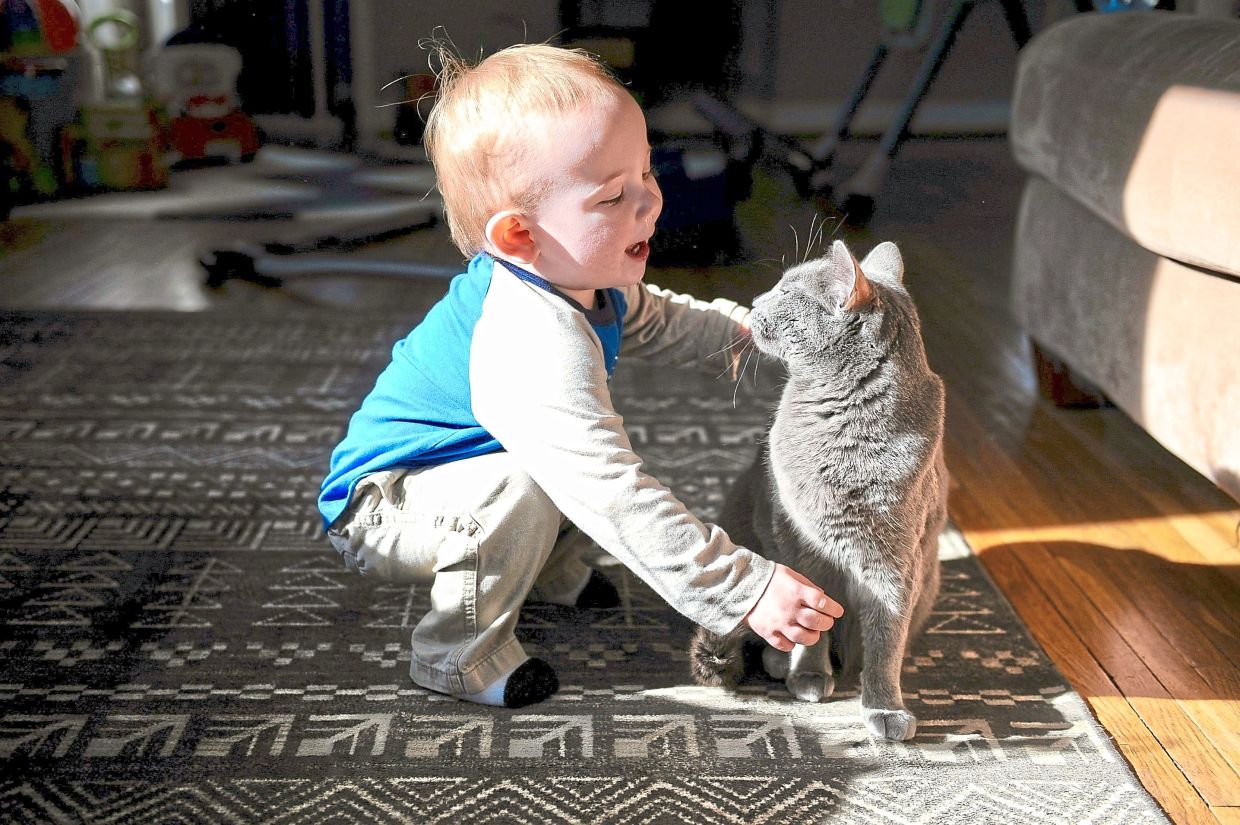
Cats have long held a reputation as household asthma triggers, with many parents removing their pets when a child receives an asthma diagnosis. Yet emerging research from Sweden suggests this precaution may be unnecessary. A major new study spanning 24 months has found no meaningful difference in asthma severity or control between children living with cats and those without them, potentially upending decades of patient advice and clinical assumptions about feline allergen exposure.
Asthma remains the most prevalent chronic disease affecting children globally, a leading cause of hospitalisation in younger age groups, and a significant public health burden across developed and developing nations alike. The Global Asthma Network estimates current prevalence at 9.1% for children and 11% for adolescents, though these figures fluctuate substantially depending on geography, socioeconomic factors, and environmental conditions. In Malaysia and other Southeast Asian countries, childhood asthma rates vary by region, with urban areas typically reporting higher incidence than rural zones. Understanding which triggers genuinely worsen the condition is therefore critical for families, healthcare providers, and policymakers seeking to improve outcomes without unnecessarily restricting children's quality of life.
Established risk factors for developing asthma include exposure to air pollution and tobacco smoke, recurrent viral infections during childhood, obesity, and pre-existing allergic conditions such as eczema or hay fever. Cat ownership has long been assumed to rank among these dangers, with countless asthma sufferers and their families reporting subjective worsening of symptoms following contact with feline dander. However, the scientific evidence supporting this belief has remained surprisingly thin. Most prior studies examining the link operated on small, non-representative populations, yielding conflicting results that left clinicians uncertain about definitive guidance. This evidence gap created a situation where widespread clinical advice rested on anecdotal reports rather than robust epidemiological data.
Swedish researchers, led by postdoctoral fellow Dr Resthie R Putri at Karolinska Institutet in Stockholm, sought to resolve this ambiguity by examining a nationwide cohort of children with diagnosed asthma or airway allergies. Beginning in 2023, the team tracked 30,277 children aged four to seventeen years, all born between 2006 and 2020, over a subsequent 24-month period through 2024. This unusually large sample size allowed researchers to detect genuine associations if they existed while minimising the influence of statistical chance. The team accessed comprehensive clinical records from Sweden's National Patient Register, Prescribed Drug Register, and National Airway Register, creating a detailed picture of each child's asthma trajectory including emergency department visits, prescribed medications, asthma control assessments, and lung function measurements via spirometry tests.
Sweden's mandatory National Cat Register, required for all pets born after 2008 since 2023, provided the study with reliable data on cat ownership within participating households. This regulatory infrastructure proved invaluable for research purposes, enabling researchers to accurately identify which children had feline companions rather than relying on parental recall or questionnaire responses. At study baseline, 9.4% of the cohort—roughly 2,800 children—lived in households with at least one registered cat, while the remainder had no feline pets. The researchers then compared asthma outcomes between these two groups, controlling for other known risk factors and demographic variables.
The findings were striking in their consistency. Among children exposed to household cats, moderate-to-severe asthma requiring substantial medication—a key marker of poor disease control—occurred in 9.6% compared to 10.1% among unexposed children. Asthma exacerbations or attacks, potentially the most clinically significant outcome for families managing the condition, appeared in 3.3% of cat-exposed children versus 3.5% in the non-exposed group. These minimal differences fell well within normal statistical variation and suggested no meaningful protective or harmful effect from cat residence. Even when examining more granular factors such as the number of cats per household, the cat's sex, or the cat's age, researchers detected no patterns suggesting differential asthma outcomes.
Among the 1,428 children for whom detailed spirometry testing was available—a gold-standard objective measure of lung function—97 lived with cats. When researchers compared standard measures of lung capacity and airflow between cat-exposed and non-exposed subgroups, no significant differences emerged. Dr Putri emphasised the consistency of these results across multiple outcome measures: "We show in a nationwide cohort of children in Sweden with asthma and allergies, that children living with a cat had similar asthma severity, exacerbation, asthma control and lung function to children living without cats in the short term." This multilevel analysis strengthened confidence that the lack of association reflected genuine biological reality rather than measurement error or statistical artefact.
One compelling explanation for these unexpected findings involves the ubiquity of cat allergen exposure beyond the home environment. Dr Putri noted that children without household cats may encounter feline dander in shared spaces such as schools, public transportation systems, shopping centres, and friends' homes. This environmental exposure could partially sensitise non-cat-owning children's immune systems, narrowing any difference that might otherwise appear when comparing strictly cat-exposed versus completely unexposed populations. In densely populated regions like Malaysia's Klang Valley or Singapore, where many children share confined urban spaces, such background allergen exposure likely approaches the levels found in cat-owning households. This hypothesis suggests that removing a family cat may not substantially reduce a child's total allergen burden, particularly in metropolitan settings where exposure proves nearly inescapable.
However, the researchers acknowledged important methodological limitations that warrant consideration when interpreting these results. The study lacked detailed information about which specific allergens individual children's immune systems recognised as problematic—a critical distinction because not all asthmatic children develop allergic sensitisation to cat proteins. A subset of children may experience purely non-allergic asthma triggered by viral infections, exercise, or environmental irritants rather than allergens. The National Cat Register's relative newness meant that some children cohabiting with cats born before 2008 may have been incorrectly classified as non-exposed, potentially obscuring associations if such misclassification occurred systematically. These limitations suggest the study's findings, while robust, represent current population-level patterns rather than universal truths applying equally to every individual child.
For Malaysian families and Southeast Asian healthcare systems more broadly, these findings carry substantial practical implications. Many parents face genuine distress when advised to rehome beloved family pets following their child's asthma diagnosis, an emotionally and psychologically costly intervention now appearing scientifically unjustified. The research suggests clinicians should reconsider reflexive recommendations to remove cats, instead focusing on addressing documented risk factors such as air pollution exposure, smoking in the home, obesity management, and treating pre-existing allergic diseases. In the Malaysian context, where air quality frequently deteriorates due to transboundary haze and urban pollution, such reframing could direct family resources and medical attention toward more impactful interventions while preserving the documented benefits of pet ownership for child development, psychological wellbeing, and family cohesion.
This Swedish study exemplifies how large-scale registry-based research can challenge entrenched clinical assumptions. Rather than perpetuating advice based on anecdotal reports and small, non-representative samples, policymakers and healthcare providers should increasingly demand high-quality epidemiological evidence before issuing sweeping recommendations that affect families' daily lives. The consistency of findings across multiple outcome measures and subgroup analyses suggests these results deserve serious consideration in clinical practice guidelines. Future research might explore whether specific allergen sensitisation profiles predict which individual children might actually benefit from reduced cat exposure, allowing personalised rather than blanket recommendations. Until then, families need not view beloved cats as asthma enemies.

