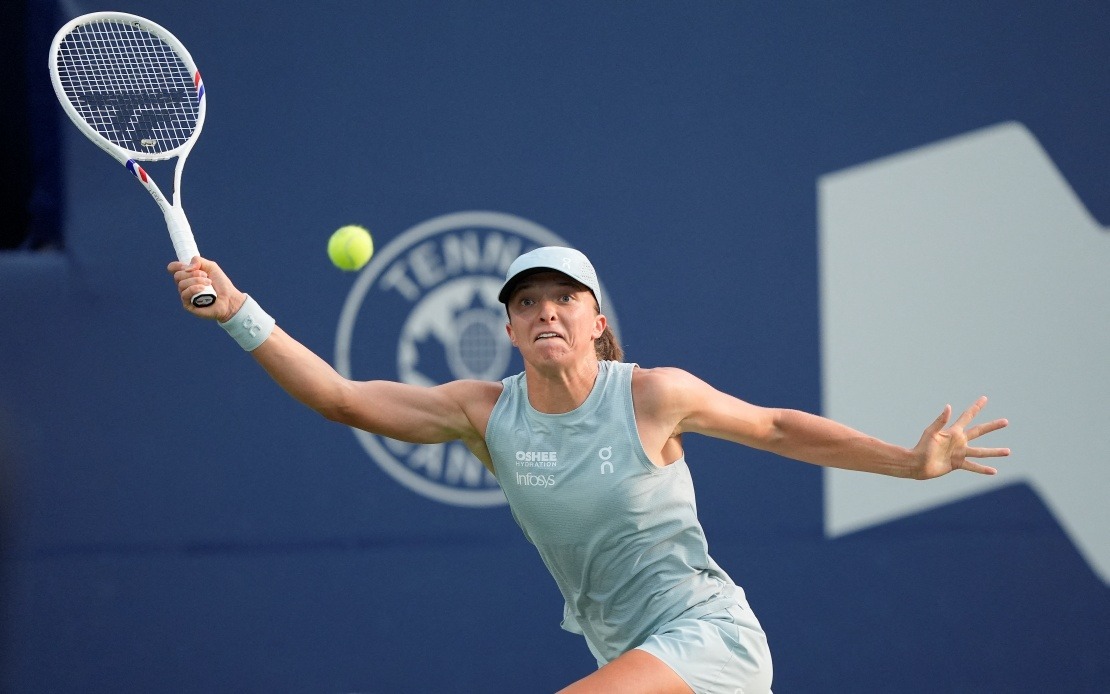
Iga Swiatek has broken an eleven-month championship drought, capturing the National Bank Open title in Toronto with a display of controlled aggression that left Elena Rybakina struggling to find rhythm against the Polish seventh seed. The decisive victory, coming with a scoreline of 6-2, 6-3, marked Swiatek's return to the winner's circle since September of the previous year, underscoring her continued relevance among tennis's elite despite a quiet earlier stretch of the season.
The trajectory of the match tilted decisively in Swiatek's favour from the opening moments, as Rybakina, despite carrying the distinction of being tennis's second-ranked player, gifted her opponent an early opportunity through a pair of consecutive double faults that surrendered a crucial break point. This mishap proved consequential, setting the tone for the remainder of the contest and allowing Swiatek to establish the commanding position from which she would never relinquish control.
Swiatek's performance throughout the tournament leading up to the final had demonstrated compelling form, and this momentum carried through into the championship match without interruption. She seized the opening set with relative ease, consolidating her early break and maintaining the defensive solidity required to protect it across the remainder of the first frame. The Polish champion's serve proved reliable when it mattered, while her baseline control and movement created the foundation upon which her victory was constructed.
The second set told a similar narrative, with Rybakina unable to arrest the slide in her own performance despite the quality expected from someone of her ranking and accomplishment. Unforced errors continued to accumulate on Rybakina's racquet, particularly a pair of missed backhand attempts that offered Swiatek the second break needed to put the match beyond realistic doubt. These mechanical failures, rather than brilliant attacking from her opponent, characterised the manner in which Rybakina's challenge unravelled.
While Rybakina managed to extend the contest by saving a championship point as she fought desperately to recover ground in the closing moments, the reprieve proved temporary. Swiatek converted at the second opportunity presented to her, closing out the final with the decisive finish that tournaments demand. The victory represented not merely a statistical accomplishment but validation of the form that Swiatek had been assembling throughout the week on Canadian courts.
For Malaysian and Southeast Asian tennis enthusiasts, Swiatek's resurgence carries particular interest as a reminder of the competitive depth among the sport's female contingent. While Asian players have made inroads into the professional tennis landscape, the continued dominance of European stars like Swiatek and the challenge posed by players such as Rybakina highlights the competitive benchmarks that emerging regional talent must target. The National Bank Open, as one of the WTA's prestigious 1000-level events, serves as a significant barometer of form and consistency at the highest levels of professional tennis.
Swiatek's remarks following her victory offered a window into the psychological resilience required to sustain success at professional tennis's pinnacle. Her statement about dedicating the achievement to those facing unfair judgment and hatred suggested an awareness of the pressures and scrutiny that accompany sporting prominence, particularly for female athletes operating in an increasingly scrutinised environment. The sentiment reflected a maturity in handling the extratennis dimensions of professional sport that extends beyond simple court performance.
The champion's post-match advice to "keep pushing, keep growing, keep focusing on yourself" carried implications that transcended the moment. Her emphasis on maintaining focus despite external pressures and on recognising the potential that lies ahead offered a template for athletes across disciplines and regions who navigate the complex landscape of modern professional competition. Such messages resonate particularly in Southeast Asian contexts where athlete development often occurs amid competing societal expectations and limited infrastructure support compared to established tennis nations.
Swiatek's victory also underscores the cyclical nature of professional tennis achievement. A top-seven ranked player claiming a major title after an extended drought demonstrates both the volatility and the opportunity that characterise the women's game. Unlike some sports where consistent excellence becomes entrenched, tennis rewards both established champions and emerging challengers with regular opportunities to assert their capabilities on prestigious stages. The Toronto final served as precisely such a moment for Swiatek.
The victory positions Swiatek advantageously as the professional calendar heads toward its closing stages. With momentum restored through a major title capture and her confidence recharged by a decisive final performance, she enters the remainder of the season with the psychological advantage that championship experiences provide. For Rybakina, the defeat, while disappointing given her elevated ranking, provides opportunity for analysis and adjustment ahead of forthcoming competitions.
From a regional perspective, the continued prominence of Polish and Kazakhstani athletes—representing Central and Western European interests respectively—maintains the geographic skew toward established tennis markets. Malaysian and Southeast Asian observers following professional tennis continue to witness competitions dominated by players from nations with extended sporting infrastructure traditions and investment pathways far exceeding those available in the region. While local talent continues developing, events like Toronto serve as reminders of the standards required to compete at sport's highest levels.

