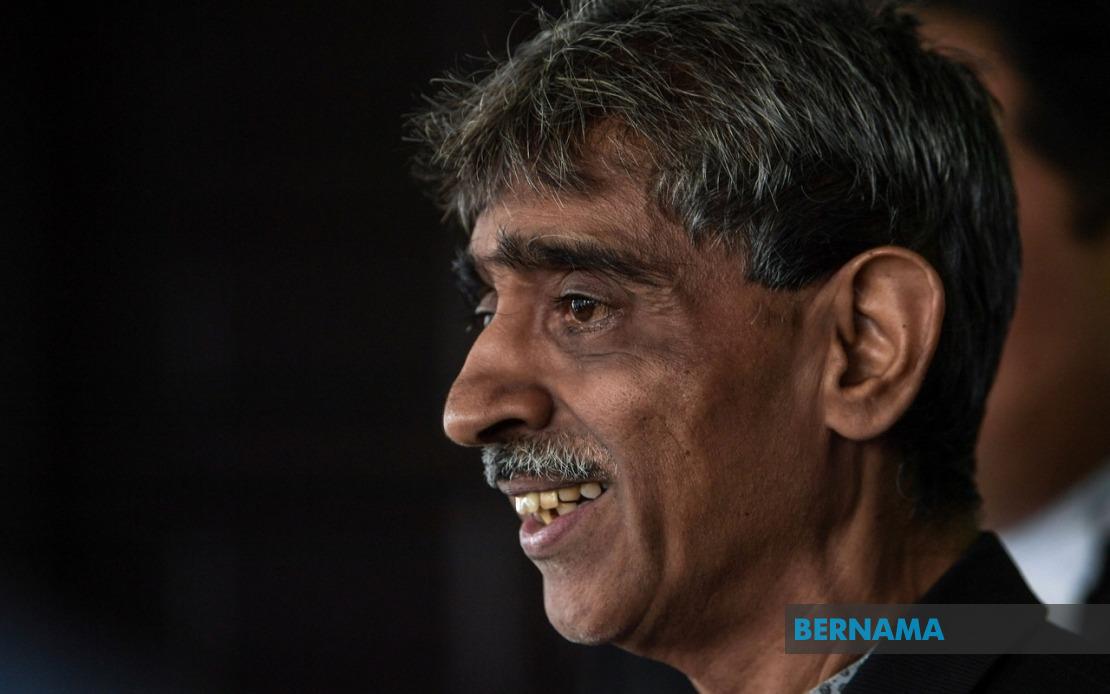
Criminal charges must be pursued without delay against anyone implicated in wrongdoing at Tabung Haji once investigators have gathered adequate evidence, according to Mohamed Haniff Khatri Abdulla, a lawyer who participated in the Royal Commission of Inquiry into the troubled pilgrim fund. His call underscores the delicate balance between delivering accountability and maintaining institutional credibility as authorities sift through the complex financial and governance failures that have shaken depositor confidence in Malaysia's largest Islamic savings institution.
The timing of prosecutions carries political and social weight beyond mere legal procedure. Mohamed Haniff stressed that demonstrating resolve through decisive action—regardless of the seniority or connections of those involved—forms a cornerstone of public confidence restoration. He emphasized to the national news agency Bernama that people expect to see meaningful consequences translate from the inquiry's findings into courtroom convictions, rather than watching recommendations languish in bureaucratic limbo. This expectation reflects broader Malaysian public sentiment about accountability for institutional failures, particularly when ordinary depositors' life savings hang in the balance.
However, the lawyer cautioned against creating a false impression that launching individual prosecutions signals the completion of investigations stemming from the RCI report. The distinction matters critically for public perception and institutional credibility. Authorities must communicate that while certain cases may reach trial relatively quickly, substantial investigative work continues across numerous other allegations and leads. Without this clarity, critics might later dismiss subsequent prosecutions as politically motivated or retroactive actions triggered by electoral changes rather than evidence-based decisions made by professional investigators.
The scale of the underlying investigation underscores why such communication strategy proves essential. According to information available to Mohamed Haniff, the Royal Malaysia Police and the Malaysian Anti-Corruption Commission have summoned approximately 200 individuals to provide statements. This unprecedented scale reflects the institutional complexity of Tabung Haji and the breadth of alleged irregularities spanning governance structures, investment practices, and potential legal violations. Each statement must be carefully documented, corroborated, and analyzed within the broader investigative framework—a process that necessarily consumes considerable time and resources.
Mohamed Haniff projected that the investigation will likely require an additional three to six months beyond already elapsed time, a realistic assessment given the multifaceted nature of the Tabung Haji situation. The fund's operations span decades of investment decisions, governance transitions, and institutional relationships, all of which require forensic examination. Criminal investigations cannot be expedited arbitrarily without compromising evidentiary standards that prosecutors will need to secure convictions that withstand judicial scrutiny. Malaysian courts maintain rigorous standards of proof, and cases built on inadequate groundwork face dismissal regardless of political pressure to prosecute.
To enhance efficiency within this demanding timeline, Mohamed Haniff proposed establishing a specialized prosecution unit within the Attorney General's Chambers dedicated exclusively to Tabung Haji RCI matters. This unit should comprise three experienced Deputy Public Prosecutors with expertise in anti-corruption cases and conventional criminal law, working in coordinated fashion to evaluate investigation papers submitted jointly by PDRM and MACC. The institutional fragmentation between two law enforcement agencies with divergent investigative protocols creates opportunities for oversight gaps and duplicated effort. A centralized prosecution unit would impose consistent analytical standards and facilitate seamless transitions from investigation to charging decisions.
Former Court of Appeal judge Datuk Yaacob Md Sam provided crucial legal context that explains why the investigative phase cannot be bypassed regardless of external pressure. RCI reports, while politically significant and carrying investigative weight, possess no inherent legal standing in criminal or civil proceedings under the Commissions of Inquiry Act 1950. The inquiry's factual findings and recommendations cannot be deployed as evidence in court; they serve rather as a foundation prompting enforcement agencies to conduct their own parallel investigations. This legal distinction, often misunderstood by public commentary, means that even conclusive RCI findings require complete re-examination by PDRM and MACC through their established investigative procedures before material can be presented before judges.
Yaacob's experience conducting multiple RCIs, including inquiries into major infrastructure failures, informed his observation that RCI proceedings and criminal investigations operate within fundamentally different legal frameworks. An RCI follows its government-mandated terms of reference and produces findings and recommendations; it functions as a fact-finding mechanism rather than a prosecutorial instrument. Enforcement agencies must independently gather admissible evidence through witness interrogations, document examination, and forensic analysis. Only material obtained through these proper channels, conforming to Malaysian criminal procedure rules and evidence law, can be presented in court. This sequential process explains why even swift RCIs do not translate into immediate prosecutions.
The implications for Malaysian governance extend beyond Tabung Haji itself. As Southeast Asia's largest Islamic financial institution, the fund's credibility affects not only domestic savings but also the reputation of Malaysia's Islamic finance sector internationally. Depositors considering whether to trust Islamic financial institutions will watch how authorities handle the investigation and whether meaningful accountability emerges. This scrutiny encompasses not merely whether prosecutions occur, but whether they appear thorough, impartial, and grounded in genuine evidence rather than political calculation. Premature prosecutions lacking solid evidentiary foundations would prove counterproductive, potentially leading to acquittals that undermine public confidence further.
The government's challenge involves threading a narrow needle between public demands for visible action and professional investigative standards that cannot be compressed without consequence. Mohamed Haniff's recommendation that authorities issue staged public updates explaining which investigations have concluded and which remain active represents a pragmatic solution. By regularly communicating investigation progress in granular fashion, authorities can demonstrate momentum while managing expectations about resolution timelines. Such transparency also inoculates against future claims that prosecutions represent retroactive political vengeance rather than evidence-based accountability, preserving institutional legitimacy across potential electoral transitions.
Looking forward, the Tabung Haji investigation will likely establish precedent for how Malaysian authorities handle large-scale institutional probes involving multiple agencies and complex financial evidence. The approach adopted—whether emphasizing speed at the risk of prosecutorial weakness, or prioritizing evidentiary rigor while accepting extended timelines—will influence how similar inquiries are conducted in future. For Malaysian stakeholders monitoring this process, the coming months will reveal whether the country's prosecutorial and investigative systems can deliver credible accountability within reasonable timeframes, or whether institutional shortcomings will once again disappoint public expectations for justice.

