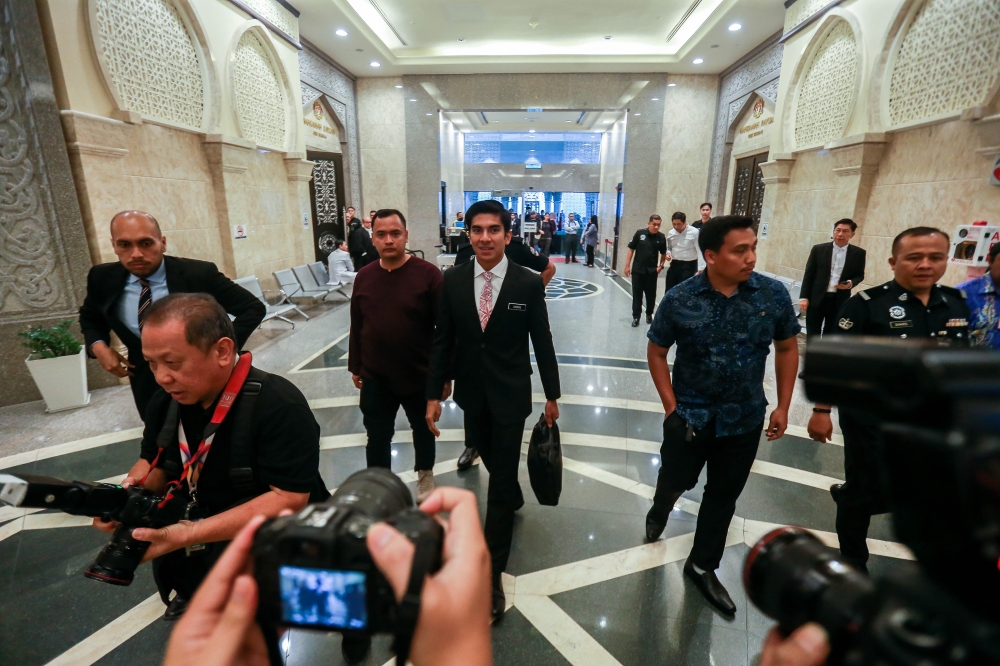
Muar Member of Parliament Syed Saddiq Syed Abdul Rahman arrived at the Palace of Justice in Putrajaya on July 13 for what observers characterise as one of the most consequential legal proceedings of his political career. The politician's presence at Malaysia's highest court signals the gravity of the matter under consideration, drawing significant public attention to the proceedings. His arrival, accompanied by family members and his fiancée, underscored the personal stakes involved alongside the formal legal dimensions of the case.
The gathering of crowds outside the Palace of Justice before proceedings began reflected the level of public interest in the outcome. Supporters and observers had assembled in the early morning hours, indicating the prominence of the case within Malaysian political circles and among the general public. This visible show of support highlighted the polarised nature of the proceedings and the intense media and public scrutiny surrounding Syed Saddiq's legal situation.
Syed Saddiq's prominence in Malaysian politics stems from his leadership of Muda, a younger-oriented political party that has attempted to carve out space within the country's competitive political landscape. His involvement in various political activities has made him a recognisable figure, particularly among younger voters and those seeking alternatives to traditional political establishments. The attention garnered by this Federal Court case demonstrates the elevated profile he maintains within the political sphere.
The presence of his fiancée and immediate family members at the court suggested the ruling carried implications extending beyond professional or political consequences. Such accompaniment in high-profile legal matters typically signals that personal circumstances may be affected by the court's decision, emphasising the human dimension underlying formal legal proceedings. The family's visible support underscored the personal toll of extended legal battles on political figures and their households.
Federal Court rulings in Malaysia represent the final arbiter in the country's judicial hierarchy, making any decision rendered effectively conclusive on the matters presented. The court's jurisdiction covers constitutional matters and appeals on points of law of public importance, placing this case within significant legal territory. For Syed Saddiq, the outcome would likely determine crucial aspects of his political future and personal circumstances.
The timing of the ruling during the middle of the year placed it within a broader context of Malaysian political developments. The 2023 general election had reshaped the political landscape, and subsequent months saw ongoing manoeuvrings among various political factions. Syed Saddiq's legal situation existed within this fluid political environment, with potential consequences affecting not only his individual trajectory but potentially broader political alignments.
Muda's positioning as a centrist alternative party gave Syed Saddiq particular visibility within reform-minded circles and among urban Malaysian voters. His legal proceedings therefore carried significance beyond his individual case, potentially influencing perceptions of judicial independence and the treatment of political figures across different parties. The Federal Court's handling of the matter would be scrutinised for its implications regarding fairness and consistency in Malaysia's legal system.
The early arrival of supporters and the deliberate attendance of family members represented conscious decisions to maintain public visibility and demonstrate confidence in the legal process. Such symbolic gestures in high-profile cases serve multiple purposes, from reassuring supporters to potentially influencing public perception of the proceedings. The gathering illustrated how modern political cases generate spectacle alongside their formal legal dimensions.
Observers from across the political spectrum would likely examine the Federal Court's decision closely, seeking insights into broader patterns within Malaysia's judiciary. Whether the ruling favoured Syed Saddiq or imposed unfavourable outcomes would contribute to ongoing assessments of how the courts treat political figures and cases involving younger generation politicians. The decision would inevitably generate reactions from Muda, from other political parties, and from civil society organisations concerned with judicial processes.
The Palace of Justice setting itself carries symbolic weight, representing institutional authority and the finality of superior court determinations. For Syed Saddiq and his supporters, the physical location reinforced the significance of proceedings occurring there. The architecture and formality of the environment underscore how Malaysian legal proceedings invest considerable gravity in their settings and procedures.
Regional observers would likely follow the case's outcome given Malaysian politics' influence within Southeast Asia and the broader implications for how regional democracies treat political figures facing legal challenges. The intersection of generational change in politics, emerging political movements, and judicial processes made the case relevant beyond Malaysia's borders. Syed Saddiq's situation exemplified tensions between established political structures and newer political forces seeking recognition within the system.

