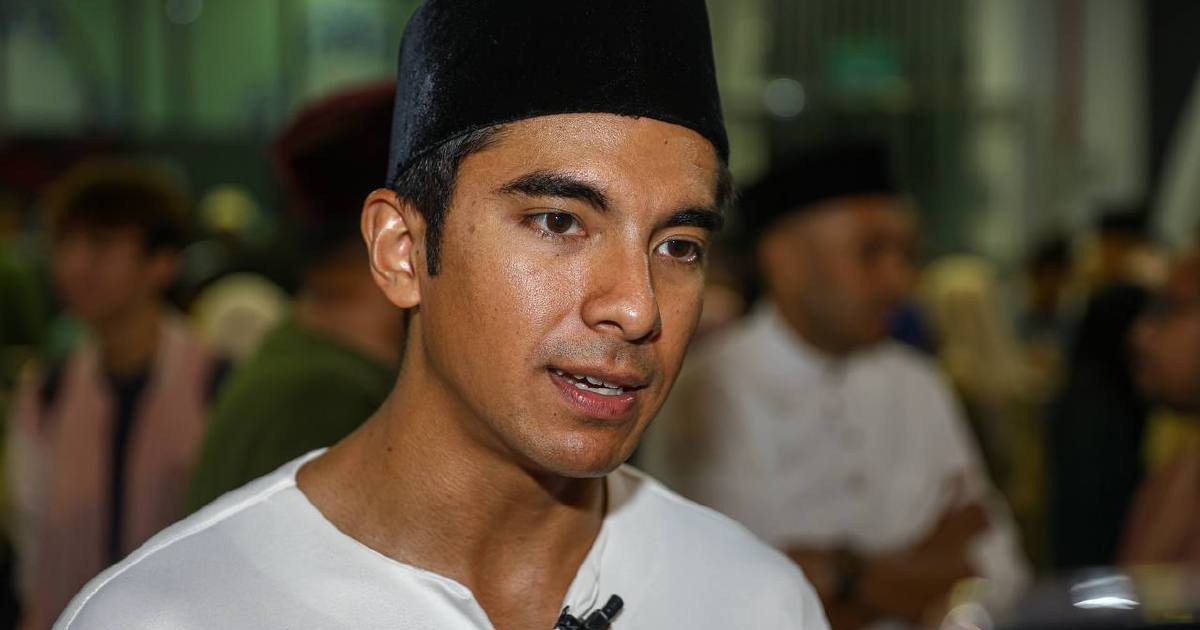
Syed Saddiq Saidin, the former minister for youth and sports who has become a prominent figure in Malaysian politics despite his relative youth, has adopted a contemplative posture ahead of an imminent Federal Court decision that could substantially reshape his political trajectory. His statement that he is leaving his fate in God's hands reflects the gravity of the moment for the Muar member of parliament, who has navigated multiple political challenges in recent years while attempting to establish himself as a voice for younger Malaysians in national governance.
The impending Federal Court ruling represents a critical juncture not only for Syed Saddiq personally but also for the broader landscape of Malaysian politics. His political career has been marked by rapid ascension and notable controversies, positioning him as a figure whose outcomes matter beyond his individual circumstances. The case has attracted significant public attention, with observers across the political spectrum watching closely to gauge its implications for how the judiciary handles matters involving high-profile politicians and whether it signals broader shifts in the nation's approach to political accountability and leadership.
Syed Saddiq's measured response to the approaching judgment demonstrates a degree of political maturity that contrasts with his sometimes combative public persona in parliamentary debates and social media exchanges. By framing the matter in terms of divine will rather than launching aggressive pre-judgment commentary, he appears to be adopting a strategy that avoids further antagonising the court or public opinion while maintaining his dignity and political standing. This approach also resonates with many Malaysians who hold deep religious beliefs and view such sentiments as appropriate during times of uncertainty and vulnerability.
The Federal Court's role in this matter underscores the judiciary's continued prominence in resolving significant political questions. As the apex court in Malaysia's legal hierarchy, its decisions carry profound weight for the nation's political future and the precedents it establishes for how legal proceedings involving politicians are conducted and concluded. The court's judgment will likely influence not only Syed Saddiq's personal future but also set standards that other political figures and their legal teams will reference in their own cases moving forward.
For Malaysian observers, particularly younger citizens who have viewed Syed Saddiq as a representative of their generation in high office, the ruling carries symbolic importance beyond its immediate legal consequences. His generation has grown up with different expectations of political engagement, social media connectivity, and representation in national affairs than their predecessors. Whether the court's decision reinforces or diminishes his political viability could send signals about the nation's openness to generational change in leadership and governance.
The political parties and parliamentary blocs that have either supported or opposed Syed Saddiq are undoubtedly preparing contingency plans based on potential outcomes. His political alignment has shifted notably over recent years, and his current standing within whatever coalition or independent status he maintains will likely be affected by the court's determination. Other parliamentarians are watching closely to understand how this case might influence their own legal and political situations, particularly if similar factual patterns or legal questions apply to their circumstances.
Regionally, this case also attracts attention from observers of Malaysian politics across Southeast Asia. The region has experienced various high-profile cases involving political figures and the judiciary, and Malaysia's handling of this matter contributes to broader perceptions about the region's commitment to rule of law, political accountability, and the proper separation between judicial independence and political influence. The court's reasoning and the decision's implications may reverberate across the ASEAN community.
Syed Saddiq's invocation of faith during this period serves multiple functions within Malaysian political discourse. It demonstrates humility and acceptance of forces beyond personal control, qualities that Malaysian voters often value in their leaders. Simultaneously, it allows him to maintain a dignified public position without admitting wrongdoing or appearing to challenge the court's authority. This careful communication strategy reflects his awareness that his statements during this sensitive period could influence public perception and potentially the broader reception of whatever judgment emerges.
The months ahead will prove decisive for multiple stakeholders. For Syed Saddiq, the ruling will determine whether his political future remains viable at the national level or whether he faces significant restrictions on his public role. For the governing parties and parliamentary coalitions, the decision may alter the balance of forces in parliament and influence coalition dynamics. For the Malaysian electorate, particularly younger voters who have demonstrated strong interest in generational representation and political renewal, the outcome will send important signals about the limits and possibilities of political participation for their cohort.
As the Federal Court prepares to pronounce its decision, Malaysian political observers await clarity on a case that has occupied significant space in the nation's public discourse. Syed Saddiq's philosophical acceptance of the outcome, regardless of his private concerns, positions him to navigate whatever consequences emerge with a degree of political grace. The ruling, when delivered, will likely become a reference point in discussions about political accountability, generational leadership, and the judiciary's role in shaping Malaysia's democratic evolution during a period of considerable political transition.

