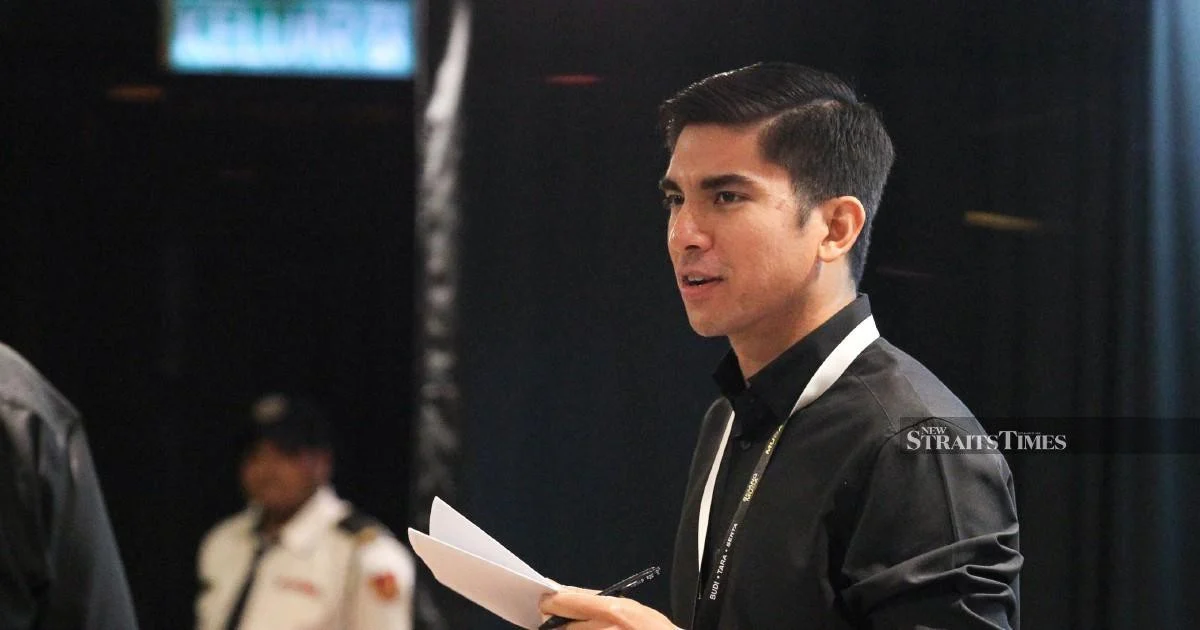
Muar member of parliament Syed Saddiq Syed Abdul Rahman has pledged to direct RM115,000 from a newly undertaken part-time engagement toward developmental initiatives within his constituency, underlining his commitment to reinvesting personal income into community welfare.
The move comes as Malaysian parliamentarians increasingly balance legislative responsibilities with external professional roles, a practice that has drawn both scrutiny and support across the political spectrum. Syed Saddiq's decision to channel the entire amount represents a notable gesture of personal commitment to his Muar constituents, demonstrating that supplementary income streams are being utilised for public benefit rather than private enrichment.
For Muar, a constituency in Johor that has experienced considerable demographic and economic shifts in recent years, the additional RM115,000 injection could address pressing infrastructure or welfare needs. The allocation underscores how Malaysian politicians are navigating the challenge of managing parliamentary duties whilst pursuing professional development, particularly given the relatively modest parliamentary salary structure.
The timing of this announcement carries significance within Johor's political landscape, where multiple constituencies remain competitive and constituents increasingly demand transparency about how their representatives utilise their time and finances. By transparently declaring both the source of his supplementary income and his intention to direct it toward Muar, Syed Saddiq positions himself within an emerging cohort of lawmakers who acknowledge public expectations regarding accountability.
In Malaysia's context, where constituency development funds and government allocations form the traditional backbone of local project financing, personal contributions by elected representatives occupy an interesting middle ground. These voluntary injections of private funds, though often modest compared to official budgetary allocations, carry symbolic weight and can address urgent community needs that fall outside standard bureaucratic channels.
The part-time arrangement also reflects broader trends within Malaysian politics, where younger, professionally accomplished parliamentarians maintain involvement in their original sectors alongside legislative work. This diversification of experience can theoretically enhance parliamentary contributions through outside expertise, though it simultaneously raises questions about time allocation and potential conflicts of interest—concerns that transparency measures aim to mitigate.
Syed Saddiq's specific amount and transparent declaration suggest he may be attempting to establish a clear precedent for how supplementary professional income should be treated by elected officials. In an environment where questions about parliamentary conduct periodically dominate headlines, such proactive disclosure can help rebuild public confidence in institutional integrity.
The RM115,000 commitment also carries practical implications for Muar residents across various socioeconomic strata. Whether directed toward educational scholarships, small business support, community infrastructure, or welfare assistance, this amount could meaningfully improve living standards for vulnerable populations or enhance public facilities that government budgets may not fully address.
Johor, as Malaysia's second-largest state by population and a crucial economic hub, has seen intensifying competition among its representatives to demonstrate constituency focus. Personal financial commitments like Syed Saddiq's announcement differentiate politicians in voters' assessments and contribute to the narrative around local political commitment.
Moreover, the Muar MP's decision occurs within a broader national conversation about parliamentarian remuneration and workload expectations. While calls persist for improved salaries to attract higher-calibre candidates and reduce reliance on external income, the reality of current compensation structures means many legislators pursue supplementary professional engagement. Syed Saddiq's approach of maintaining transparency whilst redirecting such income into constituent welfare represents a pragmatic middle ground in this ongoing debate.
The announcement also touches upon evolving standards of governance transparency in Malaysian politics. Increasingly, constituents and civil society organisations scrutinise how their representatives generate and allocate personal income, with particular attention to potential conflicts of interest or divided loyalties. By publicly committing to channel his part-time earnings directly to Muar, Syed Saddiq appears designed to forestall such concerns preemptively.