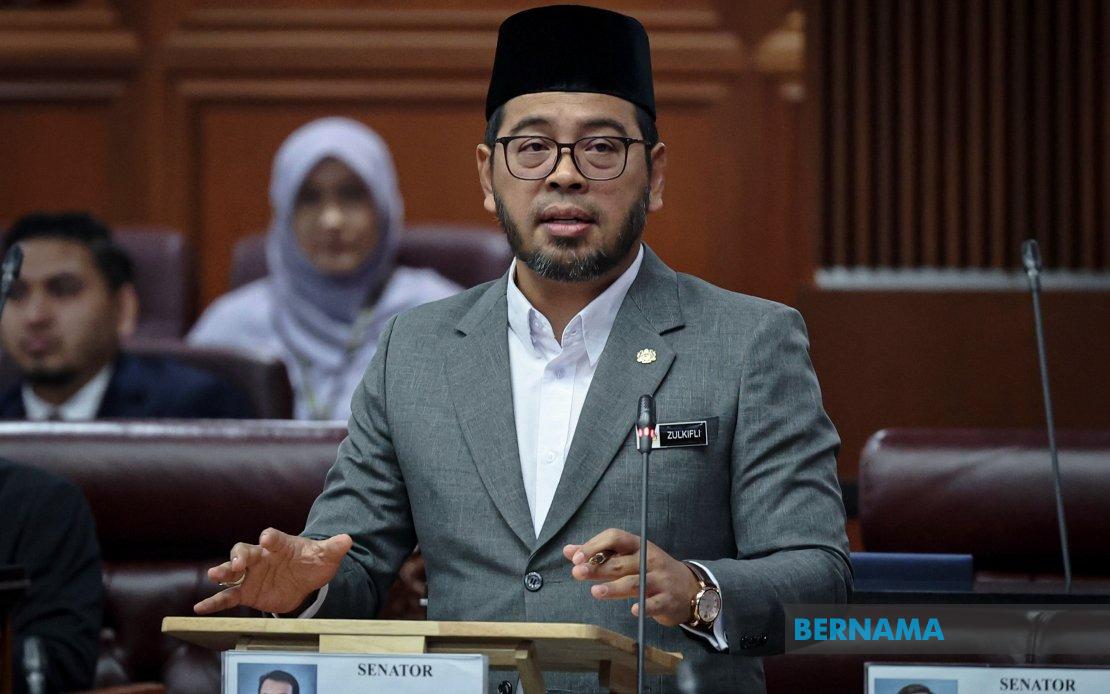
Depositors of Tabung Haji can be assured that their zakat obligations have been properly discharged in accordance with Islamic law, according to Dr Zulkifli Hasan, the Minister in the Prime Minister's Department (Religious Affairs). Speaking during a special parliamentary session on Tuesday, Zulkifli provided clarification on the institution's zakat practices, which had drawn scrutiny in the recent Royal Commission of Inquiry report into the troubled pilgrimage fund.
The minister's reassurances centre on the validation provided by TH's Syariah Advisory Committee, which determined that all zakat payments made on depositors' behalf before 2019 were legally and religiously sound. This validation carries significant weight, as the committee comprises specialists in Syariah law and Islamic finance who oversee the institution's compliance with religious principles. The committee's position reflects a rigorous examination of the various contractual arrangements TH has employed over the years to manage depositor funds.
A crucial backdrop to understanding TH's zakat framework lies in a 1979 decision by the National Fatwa Committee for Islamic Religious Affairs Malaysia. That ruling established that while Tabung Haji itself is not subject to zakat as an institution, it bears the obligation to remit zakat on behalf of each of its millions of depositors. This distinction has shaped TH's operational approach for nearly five decades, creating a direct link between the pilgrimage fund's management practices and the religious obligations of individual savers. The minister confirmed that TH has consistently honoured this requirement throughout its operations.
The specific methodologies used by TH to calculate and distribute zakat have evolved with the institution's contractual frameworks. During the period from 2016 to 2019, when TH employed the Wadiah Yad Damanah contract structure, the fund calculated zakat as business zakat on the collective pool of depositor funds that were actively traded or invested. This approach differs from the subsequent wakalah system introduced in 2019, which fundamentally altered how TH manages depositor assets and their associated religious obligations. The transition between these models raised questions about consistency and compliance that the recent inquiry sought to address.
The Royal Commission of Inquiry into Tabung Haji, commissioned in 2021 and reporting in August 2024, had specifically recommended that matters relating to TH's zakat practices be escalated to the National Council for Islamic Religious Affairs Muzakarah Committee for further scrutiny. This recommendation reflected the complexity surrounding TH's historical zakat management during a period when the institution faced significant financial and operational challenges documented in the 211-page report. The Muzakarah Committee subsequently examined the matter and endorsed the current approach, effectively providing a second layer of religious validation beyond TH's internal Syariah committee.
The endorsement process extended to Malaysia's highest constitutional body for Islamic affairs. During the Conference of Rulers' 267th meeting in October 2024, the views of the Muzakarah Committee regarding TH's zakat operations were formally presented and acknowledged. This multi-level validation—encompassing TH's internal Syariah experts, the national fatwa authority, the Muzakarah Committee, and ultimately the Conference of Rulers—demonstrates the institutional care taken to ensure TH's religious obligations are met transparently and comprehensively.
For Malaysian Muslims who have deposited savings with Tabung Haji, often accumulated over decades in anticipation of performing the hajj pilgrimage, the certainty surrounding zakat fulfilment addresses a fundamental religious concern. Many depositors view their TH savings as subject to the annual zakat obligation, one of Islam's five pillars. The government's public affirmation that this obligation has been properly discharged provides reassurance to millions of savers, particularly given that the institution had faced acute financial difficulties that raised broader questions about its governance and financial management.
The minister emphasised that TH's zakat operations remain continuously monitored and guided by approved Zakat Guidelines overseen by the institution's Syariah Advisory Committee. This ongoing supervisory mechanism suggests that the validation of past practices is complemented by forward-looking institutional controls. The reference to formal guidelines and expert committee oversight indicates a structured approach rather than ad-hoc decision-making regarding religious compliance—an important distinction for depositors seeking assurance about future zakat payments.
Beyond the zakat reassurances, the minister also outlined TH's response to other key recommendations from the Royal Commission report. The fund is refining its hajj management policies in response to inquiry findings, with particular emphasis on clarifying eligibility criteria and standardising waiting periods for pilgrims. These improvements aim to embed the Islamic principle of istito'ah, or financial and physical capacity, more explicitly into TH's hajj allocation system. The redesigned approach is intended to create a more transparent and equitable process for the millions of Malaysians on TH's hajj waiting list.
The implementation track record provides some indication of TH's commitment to the inquiry's findings. As of July 30, 2024, the institution had implemented approximately 75 per cent of the 25 recommendations contained in the RCI report. This substantial compliance rate suggests that TH management has taken seriously the assessment of weaknesses identified during the inquiry period from 2014 to 2020, a span that encompassed significant operational and financial challenges that affected public confidence in the institution.
For Malaysian Muslims considering their religious obligations and relationship with Tabung Haji, the parliamentary clarification represents an important statement of institutional legitimacy from the government's Islamic affairs ministry. The assurances draw on multiple layers of religious authority and oversight, reflecting the multi-institutional nature of Islamic governance in Malaysia. However, the detailed explanation also implicitly acknowledges that questions about TH's zakat practices had circulated sufficiently to warrant formal parliamentary address, suggesting that full public confidence in the fund's religious compliance may still be a work in progress despite these authoritative reassurances.

