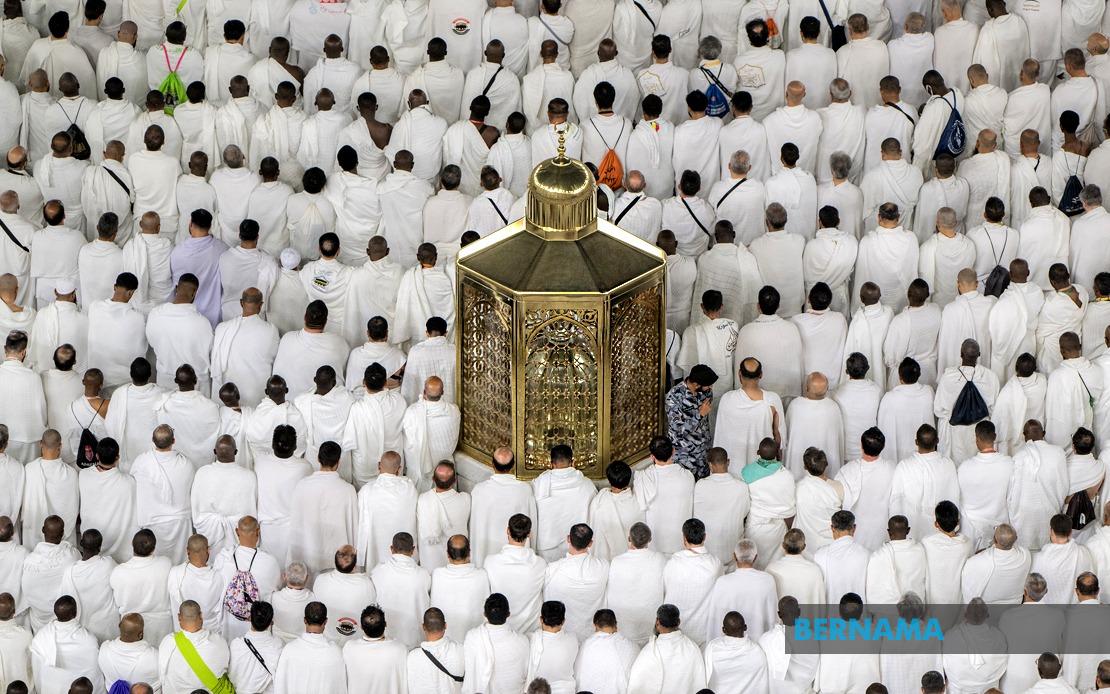
Tabung Haji has reaffirmed its commitment to allocating pilgrimage opportunities strictly according to a first-registered, first-served framework, rejecting proposals to create expedited pathways for specific groups of depositors. The decision, outlined by Deputy Minister in the Prime Minister's Department (Religious Affairs) Marhamah Rosli during parliamentary question time, reinforces the institution's longstanding approach to managing its waiting list, which currently involves hundreds of thousands of Malaysians awaiting their turn to perform the Haj.
The announcement came in response to queries about whether the government might introduce special fast-track categories for employees receiving compulsory retirement gratuity payments. While such individuals may possess the immediate financial capacity to fund their pilgrimage, the argument went, they could still face years-long delays under the existing queue system. However, Marhamah rejected this notion, contending that carving out preferential groups would fundamentally undermine the integrity of the established mechanism and would disadvantage those who have already invested patience and savings over many years.
The rationale for maintaining a unified queue reflects broader principles that Tabung Haji has anchored its operations in for decades: fairness, transparency, and equity. By treating all depositors identically regardless of their employment status, retirement circumstances, or financial position, the institution avoids the complications that inevitably arise when different categories of people receive different treatment. Creating exceptions, Marhamah suggested, would set a precedent that could spiral into further demands for special consideration from other groups, ultimately fragmenting what is currently a coherent, rule-based system.
To support this approach, Tabung Haji has introduced financial safeguards designed to ensure that prospective pilgrims are genuinely prepared when their turn arrives. Beginning with the current Haj season, the institution requires depositors to maintain a minimum savings balance of RM15,000 before they receive an offer letter, even though the full cost of performing the pilgrimage stands at RM33,300. This requirement serves multiple purposes: it encourages consistent saving behaviour, signals the institution's seriousness about financial preparedness, and allows would-be pilgrims several years to accumulate the necessary funds once they know approximately when their turn will come.
Every registered depositor is informed of their estimated Haj year well in advance, giving them time to plan comprehensively. This advance notice covers not only financial arrangements but also health preparations, visa processing requirements, and spiritual and educational preparation for the pilgrimage itself. The institution encourages early action on all these fronts, recognizing that the Haj is not merely a financial transaction but a complex undertaking requiring coordination across multiple dimensions of a person's life.
The queue system does retain some flexibility for exceptional circumstances. Depositors who have not yet reached their designated Haj year remain entitled to submit appeals requesting early consideration. These appeals are evaluated on their individual merits using established criteria and priority rankings, providing a mechanism for genuine hardship cases without dismantling the overall first-served structure. This middle path allows the system to accommodate legitimate emergencies while preserving the general principle that waiting one's turn is the default expectation.
A significant constraint shaping this entire framework is Malaysia's official Haj quota allocated by the Saudi Arabian government. For the current Haj season, this allocation stands at 31,600 pilgrims, a figure that has remained relatively stable despite Malaysia's Muslim population exceeding 19 million. This vast gap between demand and supply—with waiting lists stretching over a decade for many applicants—explains why Tabung Haji maintains such strict protocols. With demand far exceeding available slots, any preferential system would merely shift the queue rather than eliminate it, leaving other groups disadvantaged instead.
Marhamah indicated that Tabung Haji submits annual requests to the Saudi Arabian government seeking additional quotas to accommodate growing demand from Malaysian pilgrims. However, she acknowledged that allocating extra places remains entirely within Saudi Arabia's sovereign discretion. The kingdom has consistently maintained tight control over global Haj quotas, balancing Malaysia's requests against similar demands from the world's other Muslim-majority nations and Islamic communities. Without Saudi agreement to expand Malaysia's allocation, Tabung Haji must work within the existing ceiling.
The institution has also reported success in combating fraud within the Haj ecosystem. During the 1447 Hijrah Haj season, no cases of package fraud were reported to the Haj Fraud Task Force, a collaborative body comprising Tabung Haji, the Royal Malaysia Police, and the Ministry of Tourism, Arts and Culture. This achievement reflects enhanced enforcement operations and the resonance of the "No Visa, No Haj" public awareness campaign, which reinforces the Saudi government's strict "No Haj Without Permit" regulations.
The fraud prevention framework operates on multiple levels. By insisting that pilgrims possess valid visas and permits before departing, the system prevents unauthorized individuals from attempting the pilgrimage while also combating the illicit operators who profit by arranging clandestine or fraudulent Haj packages. The collaborative approach involving police and tourism authorities ensures that enforcement extends beyond Tabung Haji's direct reach, catching intermediaries and unscrupulous agents who prey on pilgrims eager to secure trips through unofficial channels.
For Malaysian Muslims waiting to perform the Haj, these policies reflect institutional trade-offs. The first-registered, first-served approach provides clarity and predictability—everyone knows where they stand in the queue—but offers no relief for those whose circumstances change or who face unexpected obstacles. The minimum balance requirement ensures financial readiness but may exclude or frustrate depositors with irregular incomes or competing financial obligations. The rejection of special categories maintains systemic integrity but denies expedited access even to those with compelling reasons for early pilgrimage.
These tensions point to a deeper reality: with global Haj quotas unlikely to expand significantly and Malaysian Muslim population continuing to grow, the fundamental mismatch between supply and demand will persist. Policy choices about how to allocate scarce pilgrimage places inevitably produce winners and losers. By anchoring allocation in an impersonal, first-come-first-served mechanism, Tabung Haji has opted for institutional simplicity and perceived fairness over case-by-case discretion, a choice that ultimately reflects a conviction that transparent rules, applied uniformly, serve the national interest better than discretionary systems prone to favoritism and dispute.
Looking ahead, the institution's strategy depends on maintaining depositor confidence in the integrity of its queue system while exploring, within realistic constraints, whether additional Saudi quotas might become available. Until significant expansion occurs, however, patience remains the defining requirement for Malaysian pilgrims seeking to fulfill one of Islam's five pillars.

